Philosophy · Book club
The Symposium book club questions
Here are 11 book club questions for The Symposium by Plato, ordered to open easily and end somewhere worth arguing about. Copy them, print them, or bring them up one at a time.
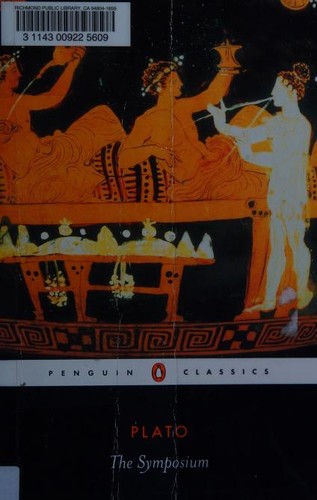
The Symposium is Plato's dialogue on the nature of love, presented as a series of speeches delivered at a dinner party in Athens around 416 BCE.
Plato · 1892 · 1h 45m
Full summary and key takeaways →The 11 questions
- 1.
Diotima says love is always in lack, always pursuing what it doesn't have. Does that match your experience of love, or does it leave something important out?
- 2.
Aristophanes' myth says we seek our other half — someone who completes us. Is that a model of love you find attractive, and what are its implications for relationships?
- 3.
Each speaker defines love in terms of their own values and station. What does that device say about how we theorize love in general?
- 4.
The 'ladder of love' suggests that love of a person should ultimately give way to love of beauty itself. Does that feel like an elevation or an abandonment of the personal?
- 5.
Alcibiades is drunk, humiliated, and devastatingly honest about Socrates. What does his speech add that the earlier speeches couldn't?
- 6.
Socrates claims to know nothing about love except what Diotima taught him. Is that modesty genuine, or is it another instance of Socratic irony?
- 7.
The dialogue suggests that the philosophical impulse and erotic longing are the same energy directed differently. Does that idea resonate with how intellectual passion actually feels to you?
- 8.
Pausanias distinguishes heavenly from common Eros — love that aims at the soul versus love that aims at the body. Is that a useful distinction or an artificial one?
- 9.
What does the dialogue assume about the relationship between beauty and goodness? Do you find that assumption convincing?
- 10.
Plato situates wisdom-seeking as a form of love. What does that framing suggest about how philosophy should be practiced?
- 11.
The party ends in chaos and almost everyone falls asleep. What do you make of that ending as a philosophical statement?
How to run the discussion
- Pick six to eight, not all of them. An hour of real discussion covers fewer questions than anyone expects, and racing the list is what makes a book club feel like homework.
- Open with what people noticed, not what they concluded. Asking for a verdict first hardens opinions before anyone has heard each other.
- Let the disagreement run. The questions below that split a room are the ones worth the time; the ones everyone answers the same way can be skipped.
- Ask the quiet person a specific question. A direct, narrow question is far easier to answer than an open invitation to contribute.
Themes worth steering toward
If the conversation stalls, these are the threads that usually restart it.
Common questions
What are good book club questions for The Symposium?
Here are 11 book club questions for The Symposium by Plato, ordered to open easily and end somewhere worth arguing about. The strongest openers ask what each reader noticed rather than what they concluded, and the discussion usually turns on love, beauty, desire.
How long should a book club discussion of The Symposium last?
Most groups run 60 to 90 minutes of actual discussion. That is roughly six to eight questions, not all of them, so pick the ones that suit your group rather than working down the list in order.
What are the main themes in The Symposium?
Love, Beauty, Desire, Philosophy of mind, Ancient Greece. Those are the threads most likely to divide a room, which makes them the useful places to steer a discussion that has gone quiet.
Picking the next one? See books like The Symposium or questions for other book club picks.
