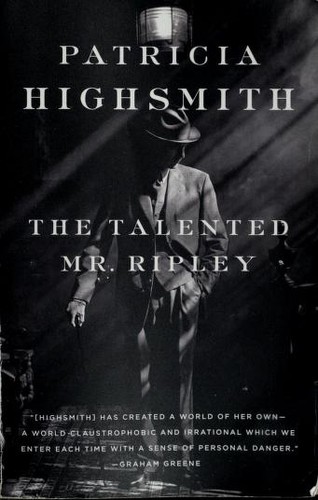
Talk to The Talented Mr. Ripley like its author wrote you back.
Get the ideas that fit your life — not generic summaries.
- Chat with the book
- Audiobook-style main ideas
- Adapts to your life and goals
- Helps you take action
What it argues
Tom Ripley is a small-time con man in New York, barely surviving on petty fraud, when a chance encounter leads a wealthy shipbuilder to hire him as an emissary: go to Italy, find my son Dickie, bring him home. Ripley has never met Dickie Greenleaf, but within weeks of arriving in the sun-soaked idleness of the Italian coast he is obsessed — not with completing the errand, but with becoming Dickie. What follows is not a conventional thriller but something stranger and more psychologically disturbing: a study in how a certain kind of person can will themselves into any identity they need, and what it costs.
Highsmith is not interested in giving you a villain to root against. Ripley is the center of the novel, and she writes him with full interiority — his anxieties, his acute social intelligence, his casual capacity for violence, his genuine aesthetic sensibility, and his relentless calculation about how to survive exposure. The crimes, when they come, are not staged for shock but presented with the same flat matter-of-factness as everything else in Ripley's inner life. That tonal flatness is the novel's most unsettling achievement.
What it gets right
- 1.
Highsmith inverts the standard moral contract of crime fiction: Ripley is the protagonist, not the detective, and the novel generates suspense from wanting him to escape, not be caught.
- 2.
Identity is entirely performable in Highsmith's world. Ripley has no stable self, which is both his method and his tragedy — he envies Dickie because Dickie seems to have a self worth inhabiting.
- 3.
Class anxiety drives the novel as much as psychology does. Ripley's crimes are almost all about acquiring the life he believes he deserves but was denied by accident of birth.
What it covers
Who wrote it
Patricia Highsmith (1921–1995) was an American novelist and short story writer whose psychological crime fiction defined a genre. Born in Fort Worth, Texas, she spent much of her adult life in Europe. She published 22 novels and numerous short story collections, and her work has been adapted extensively for film, most notably in René Clément's Purple Noon (1960), Wim Wenders's The American Friend (1977), and Anthony Minghella's The Talented Mr. Ripley (1999). She received the O. Henry Award and the Crime Writers' Association Silver Dagger, among other honors.
