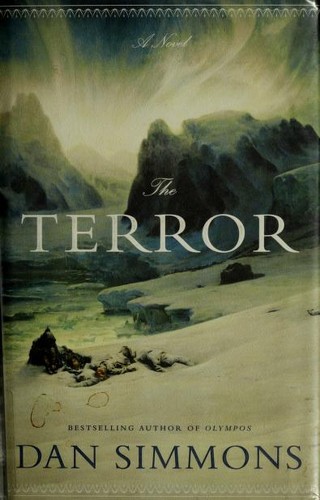
Talk to The Terror like its author wrote you back.
Get the ideas that fit your life — not generic summaries.
- Chat with the book
- Audiobook-style main ideas
- Adapts to your life and goals
- Helps you take action
The Terror, in detail
The Terror is based on the real 1845 Franklin Expedition — two British Royal Navy ships, HMS Erebus and HMS Terror, sent to find the Northwest Passage, which vanished with all 129 men aboard. Simmons takes this historical mystery and turns it into an 850-page novel that combines meticulous historical reconstruction with supernatural horror. His central addition to the historical record is a creature from Inuit mythology stalking the ships and picking off men on the ice. The real cause of the expedition's failure — scurvy, lead poisoning from tinned food, starvation, the cold — is all here too. The monster is an amplification, not a replacement.
The book is fundamentally about the failure of Victorian imperial confidence — the arrogance of sending men into one of the most hostile environments on earth because they believed technology and the certainty of British civilization would be sufficient. Captain Franklin represents this hubris in its pure form; Captain Crozier, his Irish subordinate on Terror, represents something more pragmatic and more tragic. Crozier is the novel's moral center: a man who sees clearly what is happening, who has always been underestimated because of his origins, and who is too late to apply what he knows.
At 270,000 words, The Terror asks for real commitment. Simmons is not in a hurry. The ice, the dark, the progressive deterioration of ships and men are rendered in exhaustive detail that some readers find immersive and others find punishing. The supernatural element is handled with unusual restraint for horror fiction: the creature is present throughout but Simmons delays full revelation and the ambiguity is part of the point. The Inuit storyline — specifically Silence, a Netsilik woman who arrives and becomes central — adds a layer that some readers find profound and others find underdeveloped.
Readers who like their historical fiction long, dark, and serious will find this one of the great examples of the form. Those who want economy, pace, or the familiar pleasures of thriller structure will struggle. This is a book for the patient reader who wants to understand, as far as fiction can provide it, what the ice was like.
The big ideas
- 1.
The Terror uses historical fiction's license to argue that the Franklin Expedition's failure was not just bad luck but a product of the Victorian certainty that British methods and technology were universally sufficient.
- 2.
Crozier is the novel's moral intelligence: experienced, marginalized by his Irish origins, more competent than Franklin, and ultimately more honest about what they are facing.
- 3.
The supernatural creature is drawn from Inuit mythology and functions as the Arctic's response to colonial intrusion — the land fighting back in a form the expedition cannot comprehend.
