Literary fiction · Book club
The Tin Drum book club questions
Here are 12 book club questions for The Tin Drum by Günter Grass, ordered to open easily and end somewhere worth arguing about. Copy them, print them, or bring them up one at a time.
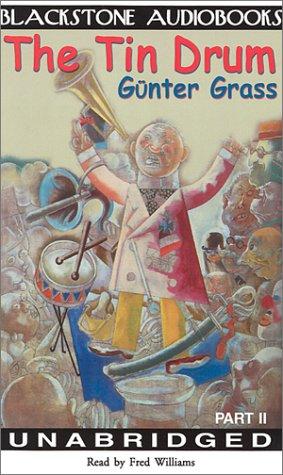
The Tin Drum is narrated by Oskar Matzerath, a man writing from a mental institution in postwar West Germany.
Günter Grass · 1959 · 13h 45m
Full summary and key takeaways →The 12 questions
- 1.
Oskar claims he stopped growing by choice at age three. Is this a reliable account, a metaphor for a psychological truth, or Grass's way of refusing the novel the moral clarity a realistic narrator would provide?
- 2.
How complicit is Oskar in what happens around him? He claims to observe without participating, but the novel keeps catching him in participation. Does his self-presentation as innocent observer hold up?
- 3.
Grass published The Tin Drum in 1959, while former Nazis were still prominent in West German public life. In 2006 he revealed he had served in the Waffen-SS as a teenager. Does that revelation change how you read the novel?
- 4.
The grotesque scenes — the eel fishing, Oskar's conception, the horse's head — are deeply uncomfortable. What is Grass doing with them that a more restrained approach couldn't achieve?
- 5.
Is Oskar sympathetic? At what points do you find yourself aligned with him, and at what points does the novel make that alignment feel like a trap?
- 6.
The tin drum allows Oskar to disrupt Nazi rallies. Is this genuine resistance, or is it another form of evasion — the performance of resistance as a substitute for actual opposition?
- 7.
How does the novel's treatment of Polish characters and the German-Polish border complicate German national identity? Is Grass's treatment of Poland fair?
- 8.
Oskar's account of the postwar period — the black market, the jazz clubs, the prosperity — is as grotesque as his account of the Nazi years. What is Grass saying about West Germany's economic miracle?
- 9.
Compare the narrative strategy of The Tin Drum to another unreliable narrator you've read. What does Grass's version of unreliability add that, say, an Agatha Christie narrator wouldn't?
- 10.
The novel ends with Oskar finally growing up after his adoptive father's death. What does that timing suggest about what it actually took for Germany to confront its past?
- 11.
The Tin Drum won the Nobel Prize largely for its formal innovation. Is formal innovation enough? Does the novel work emotionally, or does the grotesque armor keep you at a distance?
- 12.
Which character in the novel strikes you as the most honest? If none of them qualify, what does that say about the world Grass is depicting?
How to run the discussion
- Pick six to eight, not all of them. An hour of real discussion covers fewer questions than anyone expects, and racing the list is what makes a book club feel like homework.
- Open with what people noticed, not what they concluded. Asking for a verdict first hardens opinions before anyone has heard each other.
- Let the disagreement run. The questions below that split a room are the ones worth the time; the ones everyone answers the same way can be skipped.
- Ask the quiet person a specific question. A direct, narrow question is far easier to answer than an open invitation to contribute.
Themes worth steering toward
If the conversation stalls, these are the threads that usually restart it.
Common questions
What are good book club questions for The Tin Drum?
Here are 12 book club questions for The Tin Drum by Günter Grass, ordered to open easily and end somewhere worth arguing about. The strongest openers ask what each reader noticed rather than what they concluded, and the discussion usually turns on war and collective guilt, memory and distortion, infantilism as resistance.
How long should a book club discussion of The Tin Drum last?
Most groups run 60 to 90 minutes of actual discussion. That is roughly six to eight questions, not all of them, so pick the ones that suit your group rather than working down the list in order.
What are the main themes in The Tin Drum?
War and collective guilt, Memory and distortion, Infantilism as resistance, Nazi Germany and complicity, The unreliable self. Those are the threads most likely to divide a room, which makes them the useful places to steer a discussion that has gone quiet.
Picking the next one? See books like The Tin Drum or questions for other book club picks.
