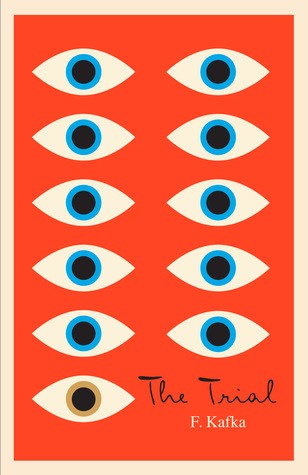
Talk to The Trial like its author wrote you back.
Get the ideas that fit your life — not generic summaries.
- Chat with the book
- Audiobook-style main ideas
- Adapts to your life and goals
- Helps you take action
What it argues
On the morning of his thirtieth birthday, Josef K. is arrested — though no one will tell him what he's charged with. He isn't taken away. He continues going to work at his bank. He attends hearings. He hires a lawyer. The machinery of justice surrounds him without ever quite engaging him, and the charge against him remains opaque until the very end. Published posthumously in 1925 from a manuscript Kafka never finished, The Trial is the definitive portrait of a man caught inside a system designed to produce guilt before a verdict is reached.
The book is really about how institutions corrode people. K. is not stupid or weak — he's competent, skeptical, and energetic in his defense. But the Court operates on a logic he cannot decode. Every door he opens leads to another antechamber. Every official he approaches defers to someone above. The law's authority comes not from what it does but from its sheer persistence. Kafka understood — writing in Austro-Hungarian bureaucratic culture — that power doesn't need to be explicit to be crushing.
What it gets right
- 1.
The charge is never specified. Kafka understood that vague accusation is more psychologically effective than a precise one — you cannot defend yourself against what you don't know.
- 2.
K.'s innocence is asserted but never demonstrated. The novel suggests that inside a sufficiently powerful system, innocence becomes functionally irrelevant.
- 3.
Bureaucracy doesn't need malice to destroy people. Sheer organizational indifference and deferral accomplish the same thing more reliably.
What it covers
Who wrote it
Franz Kafka (1883–1924) was a German-language writer from Prague whose three novels — The Trial, The Castle, and Amerika — were all published posthumously against his wishes, by his friend Max Brod. Working as a lawyer for an insurance company for most of his adult life, Kafka wrote in the early mornings and struggled with tuberculosis in his final years. His name has become an adjective: "Kafkaesque" describes institutional absurdity and disorienting bureaucratic logic. He is among the most influential writers of the twentieth century.
