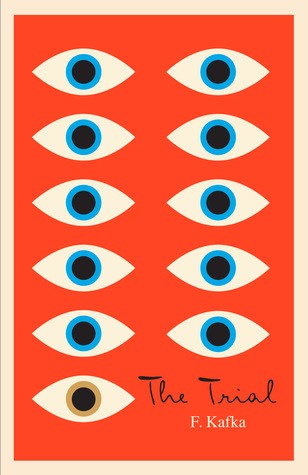
The Trial by Franz Kafka is a 1925 literary fiction book about bureaucratic absurdity, guilt and innocence, power and helplessness. The charge is never specified. Kafka understood that vague accusation is more psychologically effective than a precise one — you cannot defend yourself against what you don't know.
Summary
On the morning of his thirtieth birthday, Josef K. is arrested — though no one will tell him what he's charged with. He isn't taken away. He continues going to work at his bank. He attends hearings. He hires a lawyer. The machinery of justice surrounds him without ever quite engaging him, and the charge against him remains opaque until the very end. Published posthumously in 1925 from a manuscript Kafka never finished, The Trial is the definitive portrait of a man caught inside a system designed to produce guilt before a verdict is reached.
The book is really about how institutions corrode people. K. is not stupid or weak — he's competent, skeptical, and energetic in his defense. But the Court operates on a logic he cannot decode. Every door he opens leads to another antechamber. Every official he approaches defers to someone above. The law's authority comes not from what it does but from its sheer persistence. Kafka understood — writing in Austro-Hungarian bureaucratic culture — that power doesn't need to be explicit to be crushing.
Stylistically, The Trial reads like a lucid dream. The prose is clean, almost bureaucratic itself, while the situations escalate from merely odd to nightmarish. Kafka never signals whether K. is literally arrested or having some breakdown of perception. This ambiguity is the point: the story operates in the gap between inner experience and external reality, which is where anxiety actually lives. The unfinished state of the manuscript gives the novel a structural restlessness that suits the subject perfectly.
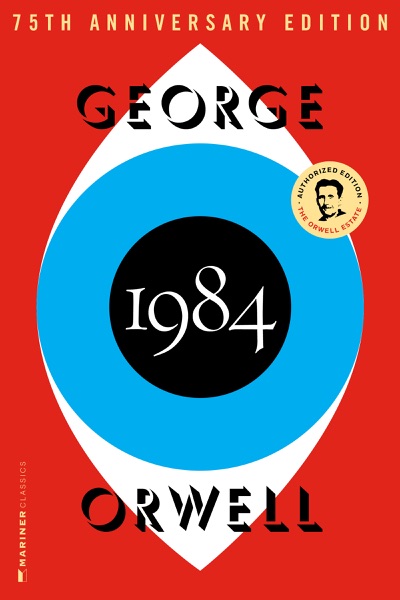
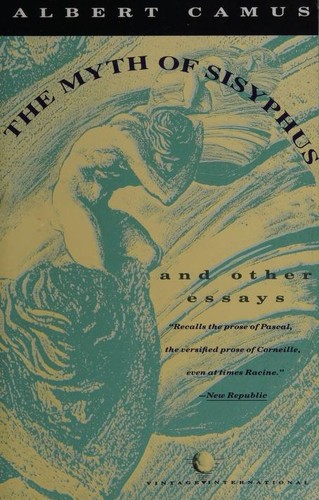
The Trial rewards readers who are willing to sit with unresolved dread. Those who want explanations, closure, or plot momentum will struggle — there isn't much of any of those. But for readers who have ever felt condemned without knowing why, who have faced institutions that seemed designed to exhaust rather than resolve, the book will feel eerily precise. Camus, Orwell, and a century of absurdist literature flow directly from this source.
Talk to The Trial like its author wrote you back.
Get the ideas that fit your life — not generic summaries.
- Chat with the book
- Audiobook-style main ideas
- Adapts to your life and goals
- Helps you take action
Key takeaways
- 1.
The charge is never specified. Kafka understood that vague accusation is more psychologically effective than a precise one — you cannot defend yourself against what you don't know.
- 2.
K.'s innocence is asserted but never demonstrated. The novel suggests that inside a sufficiently powerful system, innocence becomes functionally irrelevant.
- 3.
Bureaucracy doesn't need malice to destroy people. Sheer organizational indifference and deferral accomplish the same thing more reliably.
- 4.
The Court exists everywhere — in attics, apartments, churches. Its pervasiveness signals that institutional power isn't separate from daily life; it runs through it.
- 5.
K. never fully accepts that the system is irrational. His continued attempts to reason with it, to find the right official, make him complicit in his own exhaustion.
- 6.
The lawyer Huld is a portrait of a professional who profits from prolonging rather than resolving his client's case — a dynamic Kafka saw all around him.
- 7.
The parable 'Before the Law' embedded midway through is often read independently, but in context it crystallizes the novel's central image: a door held open for you alone, that you never enter.
- 8.
The novel's unfinished state — Kafka asked Max Brod to destroy the manuscript — gives it a raw quality that finished novels can't replicate. K. never gets resolution because Kafka never found it.
Discussion questions
Use these on your own, with a book club, or as chat starters in Superbook. Book club version, ready to copy or print →
- 1.
K. insists throughout that he is innocent. Does the novel seem to agree with him, or is it more ambiguous about what guilt even means in this context?
- 2.
The Court exists in ramshackle offices, attics, apartments. What does its physical setting say about how Kafka conceives of institutional power?
- 3.
K. never seriously considers ignoring the proceedings. Why does he keep engaging with a system he can see is irrational?
- 4.
The lawyer Huld delays and obfuscates rather than defending. Is he a villain, or is he just being honest about what the Court requires?
- 5.
The parable 'Before the Law' — the man who waits his whole life for a door meant only for him — does it give you more clarity about K.'s situation, or more dread?
- 6.
K. meets several women — Fräulein Bürstner, Leni, the court usher's wife — and the encounters are all slightly off. What is Kafka doing with gender and desire in this novel?
- 7.
By the end, K. goes almost willingly to his execution. Has he been broken, or has he reached some kind of acceptance that the novel treats as legitimate?
- 8.
The Trial was written between 1914 and 1915. How much of it reads as World War I anxiety, and how much reads as something more universal?
- 9.
Compared to 1984, where the terror is explicit and political, The Trial's horror is procedural and depersonalized. Which feels more true to how power actually operates?
- 10.
The book was left unfinished and Kafka asked for it to be destroyed. Does knowing that change how you read the ending he did write?
- 11.
Is K. sympathetic? He can also be arrogant, dismissive, and self-absorbed. Does the novel want you to like him, or just to recognize him?
- 12.
Kafka worked as a lawyer in an insurance bureaucracy. How much of The Trial feels like satire of a specific institution, and how much feels like metaphysics?
Themes
Frequently asked questions
-
What is The Trial actually about?
A man is arrested on an unspecified charge and spends the rest of the novel trying to navigate an opaque, irrational legal system that refuses to explain itself. Whether it's a literal story or a psychological allegory — or both — is deliberately left open.
-
Is The Trial hard to read?
Less difficult than its reputation. The prose is clear and the scenes are specific. The difficulty is interpretive: Kafka never explains the Court, never resolves the charge, and the novel ends abruptly. Readers who want answers will be frustrated; those comfortable with ambiguity will find it absorbing.
-
Why is The Trial considered a classic?
Because Kafka captured a form of anxiety — the feeling of being judged by a system you can't understand or appeal — that has only become more relevant since. The novel anticipated the bureaucratic nightmares of the twentieth century and codified them into a single unforgettable image.
-
Is The Trial finished?
No. Kafka left the manuscript incomplete and asked his friend Max Brod to destroy it. Brod disobeyed and published it in 1925, the year after Kafka died. Editors have arranged the chapters in different orders; the most common arrangement is Brod's.
-
Who shouldn't read The Trial?
Readers who require resolved plots and clear moral frameworks will find it unsatisfying. If you need to understand the legal charge, know whether K. is guilty, or see justice done in any direction — skip it. The novel deliberately withholds all of that.