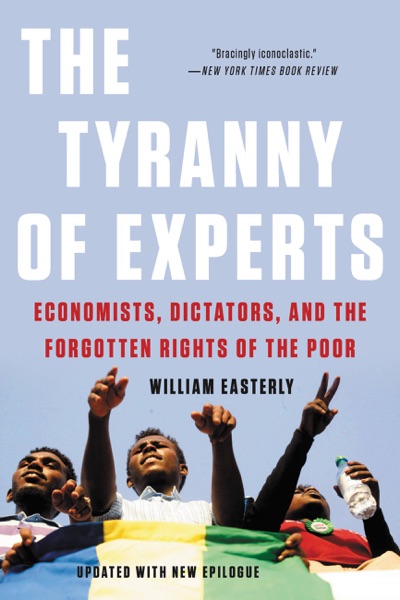
Talk to The Tyranny of Experts like its author wrote you back.
Get the ideas that fit your life — not generic summaries.
- Chat with the book
- Audiobook-style main ideas
- Adapts to your life and goals
- Helps you take action
What it argues
William Easterly spent years at the World Bank before concluding that international development as practiced by the major institutions is not only ineffective but actively harmful — harmful not primarily because it fails to deliver growth, though it frequently does, but because it suppresses the rights and agency of the people it claims to help. The Tyranny of Experts is a sweeping intellectual and historical argument for why that is, and why the moral framework underlying most development practice is wrong at its roots.
The core argument is a distinction between two visions of development. The Blank Slate Vision, which Easterly attributes to the dominant tradition from Woodrow Wilson through post-war American aid policy, treats poor countries as problems to be solved by expert technical intervention: find the right policies, implement them from the top down, and prosperity will follow. This vision is politically comfortable because it allows development institutions to work with autocratic governments who promise stability and implementation capacity. The rights-based alternative, which Easterly argues was the road not taken, holds that development is a process that free people undertake themselves when given protection of their rights and when local knowledge is allowed to generate locally appropriate solutions.
What it gets right
- 1.
The dominant tradition in development economics treats poor countries as technical problems to be solved by expert intervention, deprioritizing civil and political rights in the process.
- 2.
Development institutions have consistently partnered with authoritarian governments, rationalizing this as pragmatic, at the cost of the rights of the people they claimed to help.
- 3.
The Blank Slate Vision assumes that technical experts can identify and implement the correct policies for development, ignoring the role of local knowledge, institutions, and agency.
What it covers
Who wrote it
William Easterly is an economist and professor at New York University who spent sixteen years at the World Bank before leaving in 2001, partly over disagreements about aid effectiveness. He is the author of The Elusive Quest for Growth (2001), an earlier critique of development economics that gained wide attention, and The Tyranny of Experts (2014), which represents the fullest statement of his rights-based critique of technocratic development. He co-directs NYU's Development Research Institute. Easterly is a polarizing figure in development economics — critics regard him as too hostile to aid and too credulous about markets; supporters see him as willing to follow the evidence.
