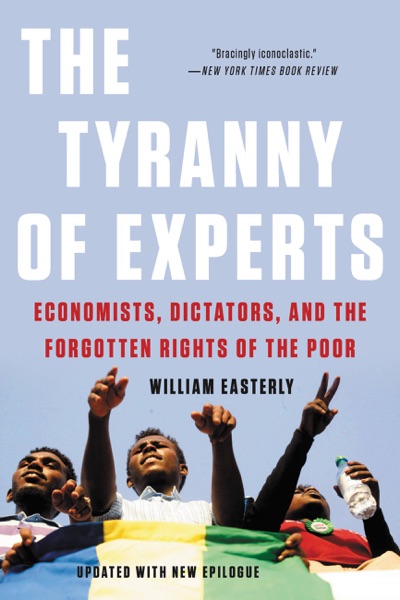
The Tyranny of Experts by William Easterly is a 2014 economics book about development economics, poverty, freedom. The dominant tradition in development economics treats poor countries as technical problems to be solved by expert intervention, deprioritizing civil and political rights in the process.
Summary
William Easterly spent years at the World Bank before concluding that international development as practiced by the major institutions is not only ineffective but actively harmful — harmful not primarily because it fails to deliver growth, though it frequently does, but because it suppresses the rights and agency of the people it claims to help. The Tyranny of Experts is a sweeping intellectual and historical argument for why that is, and why the moral framework underlying most development practice is wrong at its roots.
The core argument is a distinction between two visions of development. The Blank Slate Vision, which Easterly attributes to the dominant tradition from Woodrow Wilson through post-war American aid policy, treats poor countries as problems to be solved by expert technical intervention: find the right policies, implement them from the top down, and prosperity will follow. This vision is politically comfortable because it allows development institutions to work with autocratic governments who promise stability and implementation capacity. The rights-based alternative, which Easterly argues was the road not taken, holds that development is a process that free people undertake themselves when given protection of their rights and when local knowledge is allowed to generate locally appropriate solutions.
The historical case is the most gripping part of the book. Easterly traces how American development thinking consistently deprioritized civil and political rights in favor of economic technocracy, enabling decades of authoritarian partnerships in Africa, Asia, and Latin America in the name of effective development — partnerships that frequently produced neither development nor rights. The chapter on the World Bank's response to a forced eviction of a farming community in Uganda, where the institution's initial response was to defend the government rather than the evicted farmers, is a devastating case study in how institutions can lose sight of basic human decency.
Easterly's positive argument — that free markets, free people, and local knowledge generate development better than expert-managed top-down interventions — is not new. It is a recognizably Hayekian framework applied to the development context, and it has well-known limitations. He is strongest when demolishing the intellectual and moral case for technocratic development and weakest when specifying what the rights-based alternative actually looks like in practice. The book is an important corrective to comfortable assumptions, even where it overreaches.
Talk to The Tyranny of Experts like its author wrote you back.
Get the ideas that fit your life — not generic summaries.
- Chat with the book
- Audiobook-style main ideas
- Adapts to your life and goals
- Helps you take action
Key takeaways
- 1.
The dominant tradition in development economics treats poor countries as technical problems to be solved by expert intervention, deprioritizing civil and political rights in the process.
- 2.
Development institutions have consistently partnered with authoritarian governments, rationalizing this as pragmatic, at the cost of the rights of the people they claimed to help.
- 3.
The Blank Slate Vision assumes that technical experts can identify and implement the correct policies for development, ignoring the role of local knowledge, institutions, and agency.
- 4.
Voluntary exchange and the price system aggregate dispersed local knowledge in ways that top-down expert planning cannot. This is Hayek's argument and Easterly applies it to development.
- 5.
When development institutions treat states as their partners rather than poor individuals, they systematically end up protecting state power at the expense of the people within it.
- 6.
The record of large-scale development interventions is poor. Conditional on political freedom, growth tends to happen; unconditional on freedom, growth is unreliable and often reversed.
- 7.
The history of development economics in the twentieth century was shaped by the Cold War and geopolitical interests in ways that distorted both the theory and the practice of aid.
- 8.
Individual rights — property rights, freedom of speech, freedom from arbitrary state violence — are not luxuries that poor countries can't afford yet; they are preconditions for sustainable development.
Discussion questions
Use these on your own, with a book club, or as chat starters in Superbook. Book club version, ready to copy or print →
- 1.
Easterly argues that development institutions prioritize working with governments over protecting individuals. Have you seen similar institutional dynamics — where the institution's relationship with a powerful party comes before the welfare of the people it serves?
- 2.
His central claim is that individual rights are preconditions for development, not luxuries to be added after prosperity arrives. Is that argument persuasive to you, and what evidence would change your mind?
- 3.
The Blank Slate Vision assumes experts can identify correct development policies. What other domains do you see this assumption operating in, and what does the track record look like?
- 4.
Easterly's framework is broadly Hayekian — he trusts local knowledge and markets over central planning. What are the cases where that framework seems least adequate to the problem?
- 5.
He documents how Cold War geopolitics distorted development policy in damaging ways. What geopolitical interests shape development and foreign aid policy today?
- 6.
The Uganda case study shows an institution defending a government's eviction of farmers. Where do the organizations you work with or rely on similarly defend institutional relationships over the people those institutions nominally serve?
- 7.
Easterly has critics who argue that he's too hostile to any form of technical assistance and too credulous about markets solving poverty. Where do you find his argument most overstated?
- 8.
He distinguishes between aid that supports voluntary exchange and rights versus aid that props up autocrats who promise stability. Is that distinction always operationally clear?
- 9.
If development is best done by free people with rights using local knowledge, what role — if any — remains for international institutions like the World Bank?
- 10.
The book argues that the biggest obstacle to development is not poverty traps or missing capital but the suppression of human agency by authoritarian governments. Do you find that argument more or less compelling than technocratic diagnoses?
- 11.
Easterly left the World Bank partly over disagreements about aid effectiveness. What does that kind of institutional departure tell you about the capacity of large institutions to hear internal criticism?
- 12.
He ends the book arguing for accountability of aid institutions to the poor, not just to donor governments. What mechanisms could actually produce that accountability?
Themes
Frequently asked questions
-
Is Easterly against foreign aid entirely?
No, but he's against most of how it's done. His objection is to top-down technocratic aid that bypasses individual rights and works through authoritarian governments. He's more sympathetic to aid that directly supports individual rights, access to markets, and accountability of governments to their own citizens.
-
How does this compare to Dead Aid by Dambisa Moyo?
Moyo's book is shorter, more polemical, and focused on the economic argument that aid creates dependency. Easterly's book is longer, more historical, and focused on the moral argument that development practice violates individual rights. They are complementary rather than redundant.
-
Is Easterly just defending free-market ideology?
The framework is broadly market-liberal, but the argument is grounded in historical case studies and institutional analysis rather than ideology. His strongest points are about what specific institutions actually did; his weakest points are when he relies on theoretical arguments about market efficiency.
-
Who are Easterly's main targets?
The World Bank, USAID, and the academic development economics establishment that provided the intellectual justification for top-down development interventions. He's also critical of Jeffrey Sachs's 'Big Push' approach and related high-modernist development thinking.
-
What would Easterly actually do about global poverty?
He's clearer about what he'd stop doing than what he'd do instead. His positive program involves protecting property rights, allowing free markets to operate, and holding development institutions accountable to the poor rather than to donor governments. Critics find this underspecified.
Similar books
Why Nations Fail: The Origins of Power, Prosperity, and Poverty
Daron Acemoglu and James A. Robinson
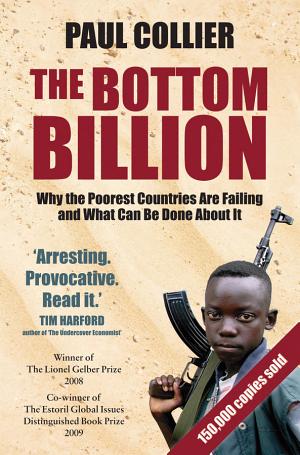
The Bottom Billion: Why the Poorest Countries Are Failing and What Can Be Done About It
Paul Collier
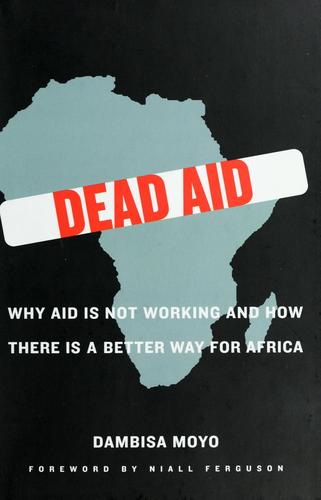
Dead Aid: Why Aid Is Not Working and How There Is a Better Way for Africa
Dambisa Moyo
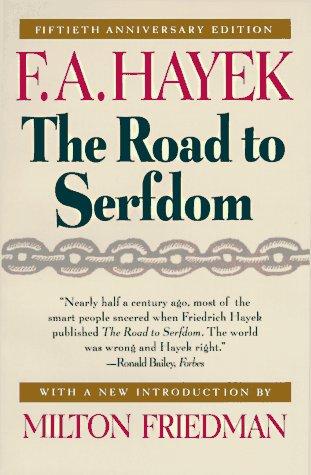
The Road to Serfdom
F. A. Hayek
