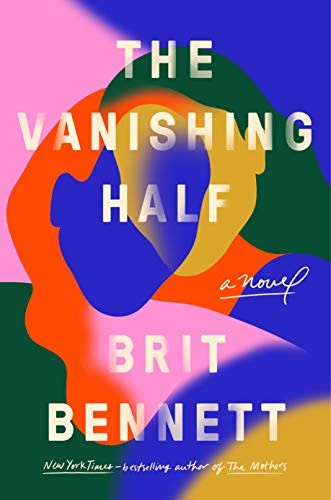
Talk to The Vanishing Half like its author wrote you back.
Get the ideas that fit your life — not generic summaries.
- Chat with the book
- Audiobook-style main ideas
- Adapts to your life and goals
- Helps you take action
The Vanishing Half, in detail
The Vanishing Half begins with identical twin sisters from Mallard, Louisiana — a fictional town of light-skinned Black people who have spent generations trying to whiten their bloodline. When Stella and Desiree Vignes run away from Mallard at sixteen, they separate: Desiree eventually returns, while Stella crosses into whiteness — marrying a white man, raising a white daughter, erasing her past entirely. The novel spans several decades and follows both sisters' lives and the lives of their daughters, Jude and Kennedy, who are the same age but live in completely different worlds until they find each other.
The novel is fundamentally about the radical contingency of identity. Stella's choice to pass as white is not portrayed as betrayal or as liberation but as one possible resolution to an impossible situation. Bennett is interested in what is lost and gained in each version of a life, and in how the self that gets inherited by children may have nothing to do with the self their parents actually were. Jude is Black in ways that Mallard has always punished; Kennedy has no idea she is Black at all. Their collision is where the novel's ideas get tested.
Bennett writes in an accessible, propulsive style that draws on the Southern Gothic tradition without its fog and decay. The prose is clean and the plot moves; this is literary fiction that reads like a page-turner. That accessibility works both ways — the novel reaches a very wide readership, but it also occasionally simplifies where a harder book would leave things complicated. The characters' interiorities are vivid but not opaque.
The Vanishing Half was an enormous bestseller and will satisfy readers interested in race, family, and American history who want a novel rather than a history or a polemic. Readers who prefer their fiction without resolution and with higher tolerance for ambiguity may find it a little too shapely. But as a vehicle for exploring what racial identity actually costs and what happens when you build a life on a chosen one, it is sharply conceived and genuinely affecting.
The big ideas
- 1.
Passing in this novel is neither heroic nor villainous — it is a survival strategy with costs, and the novel insists on showing both what Stella gains and what she has to destroy to get it.
- 2.
Mallard itself — a town dedicated to lightening its own bloodline — is a devastating portrait of how internalized racism can operate within a Black community.
- 3.
The second-generation plot, following Jude and Kennedy, shows how the choices parents make ripple forward into children's identities in ways they could never have anticipated.
