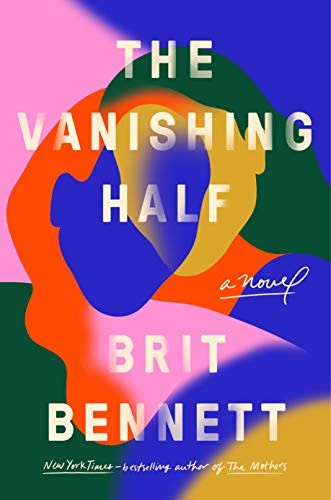
The Vanishing Half by Brit Bennett is a 2020 literary fiction book about race and identity, passing and self-invention, twin sisters. Passing in this novel is neither heroic nor villainous — it is a survival strategy with costs, and the novel insists on showing both what Stella gains and what she has to destroy to get it.
Summary
The Vanishing Half begins with identical twin sisters from Mallard, Louisiana — a fictional town of light-skinned Black people who have spent generations trying to whiten their bloodline. When Stella and Desiree Vignes run away from Mallard at sixteen, they separate: Desiree eventually returns, while Stella crosses into whiteness — marrying a white man, raising a white daughter, erasing her past entirely. The novel spans several decades and follows both sisters' lives and the lives of their daughters, Jude and Kennedy, who are the same age but live in completely different worlds until they find each other.
The novel is fundamentally about the radical contingency of identity. Stella's choice to pass as white is not portrayed as betrayal or as liberation but as one possible resolution to an impossible situation. Bennett is interested in what is lost and gained in each version of a life, and in how the self that gets inherited by children may have nothing to do with the self their parents actually were. Jude is Black in ways that Mallard has always punished; Kennedy has no idea she is Black at all. Their collision is where the novel's ideas get tested.
Bennett writes in an accessible, propulsive style that draws on the Southern Gothic tradition without its fog and decay. The prose is clean and the plot moves; this is literary fiction that reads like a page-turner. That accessibility works both ways — the novel reaches a very wide readership, but it also occasionally simplifies where a harder book would leave things complicated. The characters' interiorities are vivid but not opaque.
The Vanishing Half was an enormous bestseller and will satisfy readers interested in race, family, and American history who want a novel rather than a history or a polemic. Readers who prefer their fiction without resolution and with higher tolerance for ambiguity may find it a little too shapely. But as a vehicle for exploring what racial identity actually costs and what happens when you build a life on a chosen one, it is sharply conceived and genuinely affecting.
Talk to The Vanishing Half like its author wrote you back.
Get the ideas that fit your life — not generic summaries.
- Chat with the book
- Audiobook-style main ideas
- Adapts to your life and goals
- Helps you take action
Key takeaways
- 1.
Passing in this novel is neither heroic nor villainous — it is a survival strategy with costs, and the novel insists on showing both what Stella gains and what she has to destroy to get it.
- 2.
Mallard itself — a town dedicated to lightening its own bloodline — is a devastating portrait of how internalized racism can operate within a Black community.
- 3.
The second-generation plot, following Jude and Kennedy, shows how the choices parents make ripple forward into children's identities in ways they could never have anticipated.
- 4.
Identity in the novel is performative in the fullest sense: Stella performs whiteness so completely that it eventually becomes her. The novel asks whether that means she was lying, or just that she changed.
- 5.
Race and gender intersect throughout in ways the novel handles carefully: Reese's trans identity is given comparable weight to Stella's racial passing, suggesting Bennett sees both as forms of self-determination under social constraint.
- 6.
The novel's thriller-adjacent momentum — will Stella be found out? — is a structural device that also illustrates how anxiety and vigilance shape a life built on concealment.
- 7.
The Southern setting grounds the novel's ideas in a specific history: Jim Crow, segregation, the particular mathematics of colorism in communities shaped by slavery.
- 8.
The ending offers resolution without sentimentality — which is harder to achieve than either pure tragedy or pure reconciliation.
Discussion questions
Use these on your own, with a book club, or as chat starters in Superbook. Book club version, ready to copy or print →
- 1.
Stella chooses to pass as white and never looks back. Is her choice understandable? Forgivable? Do those even feel like the right categories?
- 2.
Mallard is a town that tries to breed itself whiter generation by generation. How does the novel use that setting to reframe the story of Stella's passing?
- 3.
The novel compares Stella's racial passing to Reese's trans identity. Does that parallel illuminate both, or does it risk flattening the difference between them?
- 4.
Desiree returns to Mallard after being abused. The town she ran from becomes her refuge. What does the novel say about why people return to the places that hurt them?
- 5.
Kennedy discovers her mother's secret. What does she do with that knowledge, and do you think that was the right choice?
- 6.
Jude and Kennedy are the same age and related, but they've lived entirely different lives. What does their relationship suggest about identity and luck?
- 7.
The novel is set across several decades but feels contemporary. Which aspects of its central concerns felt most alive to you — the historical material or the present-day material?
- 8.
Bennett has said she was interested in the roads not taken rather than in a single protagonist's journey. Does the structure work? Does following two sisters instead of one cost the novel emotional depth?
- 9.
The prose is clean and the plot moves quickly for literary fiction. Did that accessibility feel like a virtue, or did it occasionally feel like a compromise?
- 10.
Stella's husband never finds out. What does the novel gain by withholding that confrontation from us?
- 11.
What does Mallard represent? Is it a critique of colorism within the Black community, or something more complicated?
- 12.
How does the novel end? Do you find that ending earned by what came before?
Themes
Frequently asked questions
-
Is The Vanishing Half worth reading?
Yes, especially if you're interested in race and identity in America and want a novel that takes those subjects seriously without becoming a lecture. The plot is genuinely propulsive for literary fiction, and the twin structure is used intelligently rather than as a gimmick.
-
What is The Vanishing Half about, without spoilers?
Twin Black sisters from a Louisiana town known for its light-skinned community grow up to live completely different lives: one stays Black, one passes as white. The novel follows both sisters and their daughters over several decades, examining what identity costs and what can be inherited or escaped.
-
Is The Vanishing Half based on a true story?
No, though the phenomenon of racial passing it depicts is well documented in American history, and the town of Mallard draws on real communities with similar histories. The characters and plot are invented.
-
Is there a TV adaptation?
Yes. HBO is developing an adaptation as of 2025, though it has not yet aired. Lena Waithe is among the producers attached to the project.
-
Who shouldn't read The Vanishing Half?
Readers who prefer their fiction less plot-driven and more formally experimental. The novel is ambitious but also very readable, which occasionally means it takes the cleaner path rather than the harder one. Readers who want moral ambiguity to stay ambiguous may find the ending tidier than they'd like.
-
How does it compare to The Mothers, Bennett's debut?
The Vanishing Half is more structurally ambitious — it spans more time and more characters — and more explicitly concerned with race and history. The Mothers is a tighter, more intimate book. Most readers find The Vanishing Half the stronger achievement.
Similar books
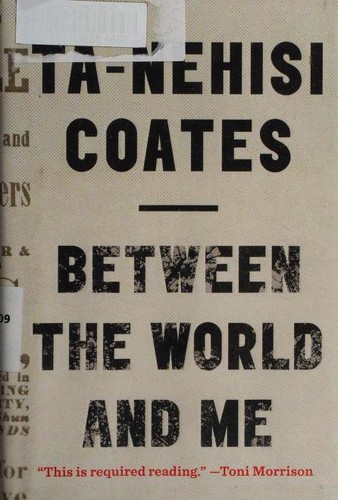
Between the World and Me
Ta-Nehisi Coates
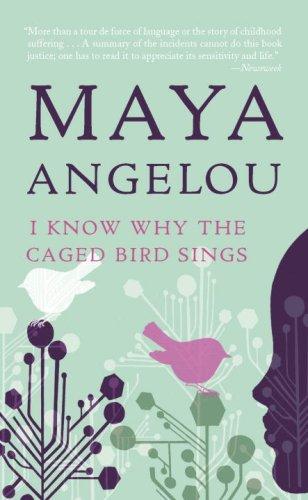
I Know Why the Caged Bird Sings
Maya Angelou
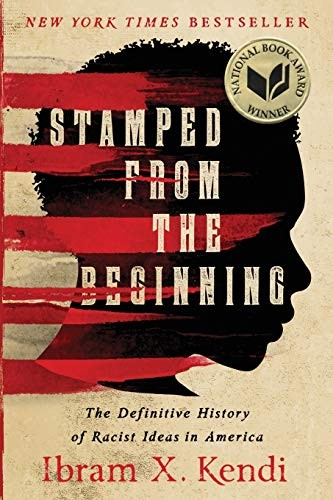
Stamped from the Beginning: The Definitive History of Racist Ideas in America
Ibram X. Kendi
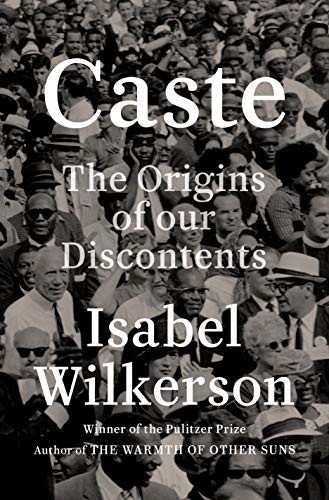
Caste: The Origins of Our Discontents
Isabel Wilkerson
