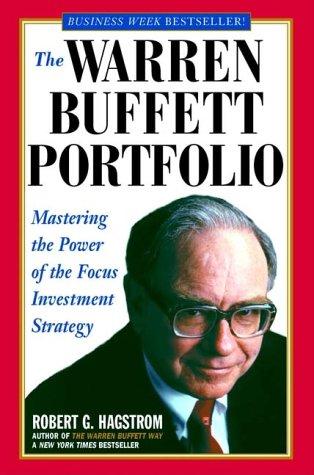
Talk to The Warren Buffett Portfolio like its author wrote you back.
Get the ideas that fit your life — not generic summaries.
- Chat with the book
- Audiobook-style main ideas
- Adapts to your life and goals
- Helps you take action
What it argues
The Warren Buffett Portfolio is Robert Hagstrom's attempt to articulate not just what Buffett buys, but how he thinks about portfolio construction — specifically his case for concentration over diversification. Most investment theory, from modern portfolio theory to index fund orthodoxy, argues for spreading risk across many holdings. Buffett's approach is the opposite: owning a small number of businesses he understands deeply and holding them for very long periods. Hagstrom calls this "focus investing."
The book's central argument is that diversification is often a hedge against ignorance rather than a rational strategy. If you genuinely understand a business — its competitive advantages, its management quality, its economics — then spreading that conviction across fifty holdings dilutes rather than improves your expected outcome. Hagstrom traces the intellectual lineage of this view from Philip Fisher and John Maynard Keynes to Charlie Munger and Buffett himself, showing that focused, high-conviction portfolios have a long and respectable history.
What it gets right
- 1.
Concentration in businesses you understand deeply can produce better long-term results than diversification, which often hedges ignorance rather than managing genuine risk.
- 2.
Buffett evaluates a business on four categories: business quality, management quality, financial performance, and price relative to intrinsic value.
- 3.
Owner earnings — net income plus depreciation minus capital expenditures required to maintain competitive position — is a better measure of true profitability than reported earnings.
What it covers
Who wrote it
Robert G. Hagstrom is a portfolio manager and author who has spent his career studying Warren Buffett's investment philosophy. He is best known for The Warren Buffett Way, published in 1994, which became one of the best-selling investment books of its era. Hagstrom holds a degree from Villanova University and has managed equity funds applying the principles he describes in his writing. The Warren Buffett Portfolio, published in 1999, extends the earlier book's analysis from stock selection to portfolio construction.
