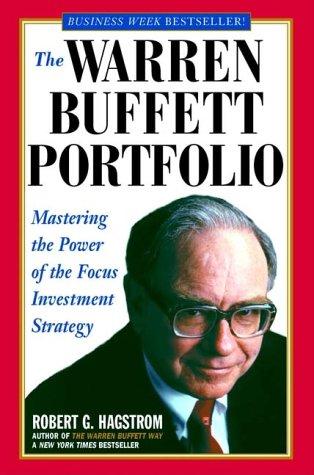
Talk to The Warren Buffett Portfolio like its author wrote you back.
Get the ideas that fit your life — not generic summaries.
- Chat with the book
- Audiobook-style main ideas
- Adapts to your life and goals
- Helps you take action
The Warren Buffett Portfolio, in detail
The Warren Buffett Portfolio is Robert Hagstrom's attempt to articulate not just what Buffett buys, but how he thinks about portfolio construction — specifically his case for concentration over diversification. Most investment theory, from modern portfolio theory to index fund orthodoxy, argues for spreading risk across many holdings. Buffett's approach is the opposite: owning a small number of businesses he understands deeply and holding them for very long periods. Hagstrom calls this "focus investing."
The book's central argument is that diversification is often a hedge against ignorance rather than a rational strategy. If you genuinely understand a business — its competitive advantages, its management quality, its economics — then spreading that conviction across fifty holdings dilutes rather than improves your expected outcome. Hagstrom traces the intellectual lineage of this view from Philip Fisher and John Maynard Keynes to Charlie Munger and Buffett himself, showing that focused, high-conviction portfolios have a long and respectable history.
The practical content covers how to evaluate a business as a long-term investment. Hagstrom distills Buffett's criteria into categories: business tenets (simple, consistent, good long-term prospects), management tenets (rational, candid, independent), financial tenets (strong return on equity, high profit margins, owner earnings), and market tenets (determining value, buying at a discount to that value). Each category is illustrated with case studies from Buffett's actual holdings, including Coca-Cola, Gillette, and The Washington Post.
The book also takes seriously the psychological difficulty of the approach. Concentrated portfolios are volatile in the short term, which requires an investor who can tolerate temporary paper losses without acting on them. Hagstrom addresses this honestly: focus investing produces better long-term results in most simulations, but almost no one can sit through the volatility without either selling or second-guessing the method. The psychological discipline required is, he argues, the real barrier to entry — not the analytical work.
The big ideas
- 1.
Concentration in businesses you understand deeply can produce better long-term results than diversification, which often hedges ignorance rather than managing genuine risk.
- 2.
Buffett evaluates a business on four categories: business quality, management quality, financial performance, and price relative to intrinsic value.
- 3.
Owner earnings — net income plus depreciation minus capital expenditures required to maintain competitive position — is a better measure of true profitability than reported earnings.
