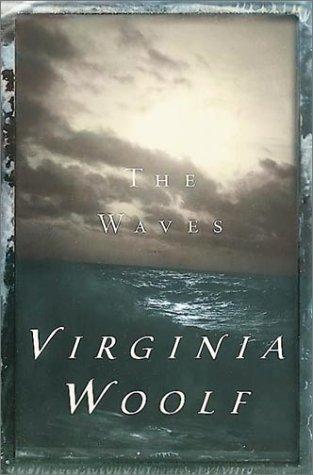
Talk to The Waves like its author wrote you back.
Get the ideas that fit your life — not generic summaries.
- Chat with the book
- Audiobook-style main ideas
- Adapts to your life and goals
- Helps you take action
The Waves, in detail
The Waves is not quite a novel in any conventional sense. Six characters — Bernard, Susan, Rhoda, Neville, Jinny, and Louis — speak in alternating interior monologues from childhood to old age, their voices tracking their diverging fates across the span of a life. There is no action, no scene-setting, no dialogue in the usual sense. The monologues are broken by interlude passages describing the movement of the sea from dawn to dusk, a structural conceit that figures the rhythm of consciousness and time.
The book is about the relationship between individual identity and the common life — how six people who shared a childhood gradually become strangers to one another, how each constructs a self out of language and memory, and how that self dissolves under the pressure of time. Percival, a seventh figure who never speaks, functions as the group's absent center: beloved by all, killed young in India, his death is the pivotal loss around which the other six orient. Woolf uses him as a test of how each character handles the fact of death and absence.
The difficulty of The Waves is fundamental and should not be understated. There is no plot and no conventional characterization. The six voices are stylistically similar — all elevated, all Woolfian — which makes them hard to distinguish in early readings. The interlude passages are beautiful but abstract. What the novel offers instead of story is an extended meditation on the nature of consciousness itself, and on the question of what, if anything, connects individual minds to each other and to something larger.
Woolf called it the most experimental thing she had attempted, and she was right. It is the farthest limit of what the novel form can be — lyric poetry that happens to use prose syntax. Readers who meet it halfway tend to find it unforgettable. Readers who need a story will find almost nothing to hold onto.
The big ideas
- 1.
The six-voice structure is the novel's central argument: that identity is not singular but multiple, constructed differently from the inside and the outside, shifting over time.
- 2.
Percival — silent, beloved, dead — is the organizing absence of the novel. How each character grieves him, or fails to, is the closest thing The Waves has to a plot.
- 3.
Rhoda is the most psychologically harrowing of the six voices: unable to form a stable self, terrified of other people, aware of her own dissolution in a way the other characters are not.
