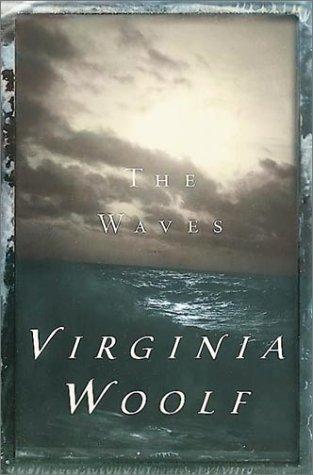
The Waves by Virginia Woolf is a 1931 literary fiction book about identity and self, time and mortality, consciousness. The six-voice structure is the novel's central argument: that identity is not singular but multiple, constructed differently from the inside and the outside, shifting over time.
Summary
The Waves is not quite a novel in any conventional sense. Six characters — Bernard, Susan, Rhoda, Neville, Jinny, and Louis — speak in alternating interior monologues from childhood to old age, their voices tracking their diverging fates across the span of a life. There is no action, no scene-setting, no dialogue in the usual sense. The monologues are broken by interlude passages describing the movement of the sea from dawn to dusk, a structural conceit that figures the rhythm of consciousness and time.
The book is about the relationship between individual identity and the common life — how six people who shared a childhood gradually become strangers to one another, how each constructs a self out of language and memory, and how that self dissolves under the pressure of time. Percival, a seventh figure who never speaks, functions as the group's absent center: beloved by all, killed young in India, his death is the pivotal loss around which the other six orient. Woolf uses him as a test of how each character handles the fact of death and absence.
The difficulty of The Waves is fundamental and should not be understated. There is no plot and no conventional characterization. The six voices are stylistically similar — all elevated, all Woolfian — which makes them hard to distinguish in early readings. The interlude passages are beautiful but abstract. What the novel offers instead of story is an extended meditation on the nature of consciousness itself, and on the question of what, if anything, connects individual minds to each other and to something larger.
Woolf called it the most experimental thing she had attempted, and she was right. It is the farthest limit of what the novel form can be — lyric poetry that happens to use prose syntax. Readers who meet it halfway tend to find it unforgettable. Readers who need a story will find almost nothing to hold onto.
Talk to The Waves like its author wrote you back.
Get the ideas that fit your life — not generic summaries.
- Chat with the book
- Audiobook-style main ideas
- Adapts to your life and goals
- Helps you take action
Key takeaways
- 1.
The six-voice structure is the novel's central argument: that identity is not singular but multiple, constructed differently from the inside and the outside, shifting over time.
- 2.
Percival — silent, beloved, dead — is the organizing absence of the novel. How each character grieves him, or fails to, is the closest thing The Waves has to a plot.
- 3.
Rhoda is the most psychologically harrowing of the six voices: unable to form a stable self, terrified of other people, aware of her own dissolution in a way the other characters are not.
- 4.
Bernard's final monologue — a long summation of all six lives, delivered in old age — is one of the most ambitious things Woolf attempted. Whether it succeeds is one of the book's genuine open questions.
- 5.
The interlude passages, describing the sea's movement from dawn through nightfall, are not decoration — they are the novel's structural spine, insisting that human consciousness has a natural rhythm as inevitable as tide.
- 6.
The novel refuses to privilege any single voice. The question of which character to center keeps shifting, and that instability is the point.
- 7.
Language, in The Waves, is not a transparent medium for conveying thought — it is itself a problem. Characters are conscious of how inadequate their words are to the experiences they are trying to describe.
- 8.
The decision to leave Percival voiceless is Woolf's most pointed formal choice. He exists only through the distorting glass of others' adoration, and his death is thus both real and entirely constructed.
Discussion questions
Use these on your own, with a book club, or as chat starters in Superbook. Book club version, ready to copy or print →
- 1.
The six voices are stylistically similar — Woolfian prose, elevated register. Did you find them distinguishable as personalities, or did they blur together?
- 2.
Percival never speaks. What do you think Woolf gains by keeping him silent? What would the novel be if he had a section of his own?
- 3.
Rhoda's sections are among the most disturbing in the novel — her fragmented sense of self, her terror. Did you find her arc the most moving, or the most difficult to engage with?
- 4.
Bernard's final monologue tries to sum up everything — all six lives, all the novel's ideas. Does it feel like an earned conclusion, or does it overstay its welcome?
- 5.
The interlude passages about the sea initially seem ornamental. Did your reading of them change as the novel progressed?
- 6.
The Waves is often described as Woolf's most experimental novel. Is that a recommendation or a warning? What does 'experimental' actually mean here?
- 7.
Each of the six characters seems to represent a different relationship to other people and to selfhood. Which voice felt closest to how you experience your own consciousness?
- 8.
The novel covers the span of six lives from childhood to old age. Does the brevity of that span — the feeling that everything has rushed past — hit harder or softer than you expected?
- 9.
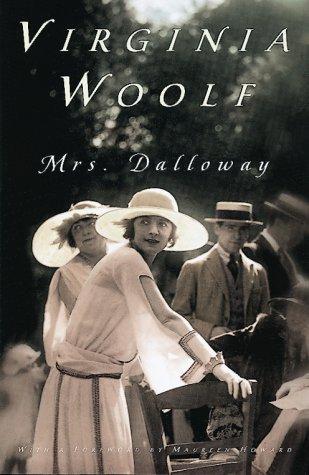
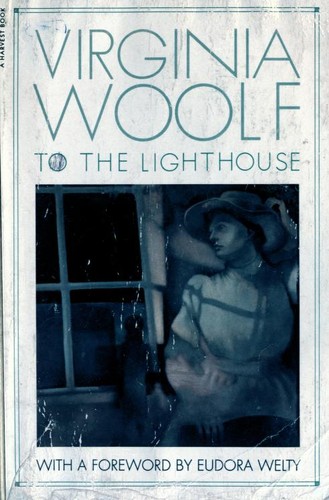
How does The Waves compare to Mrs Dalloway or To the Lighthouse in terms of difficulty and reward? If you've read all three, where does each one fall?
- 10.
Woolf structures the novel around the movement from dawn to dusk. By the final interlude, when the waves crash in the dark, what does that image carry?
- 11.
Bernard says near the end, 'Against you I will fling myself, unvanquished and unyielding, O Death.' Does that declaration feel triumphant, ironic, or both?
- 12.
Who is the novel's 'main character,' if it has one? Does the question even apply?
Themes
Frequently asked questions
-
Is The Waves worth reading?
For readers already drawn to Woolf, yes — it's her most sustained formal achievement. For readers new to her, start with Mrs Dalloway or To the Lighthouse first. The Waves demands more and offers a different kind of return: not story or character but an extended meditation on what it means to be conscious.
-
Is The Waves hard to read?
It is the hardest of Woolf's major novels. There is no plot, no conventional dialogue, and the six voices can be difficult to distinguish. The prose is lyrical and dense throughout. Many readers find the first fifty pages the hardest, after which the voices start to individuate.
-
What is The Waves about?
Six people, followed from childhood to old age through interior monologue. At its core it's about the relationship between individual consciousness and time — how selves form, dissolve, and grieve the lives they share and lose.
-
Should I read Mrs Dalloway before The Waves?
Yes. Mrs Dalloway and To the Lighthouse are both better entry points to Woolf's mature fiction. The Waves is best appreciated after you've developed a feel for her technique and are looking for its absolute outer limit.
-
Who shouldn't read The Waves?
Anyone who needs plot, external action, or clearly individuated characters. Anyone who found Mrs Dalloway too slow or too abstract. The Waves doubles down on everything that makes Woolf's fiction demanding and removes most of the accessible handholds.