Economics · Book club
The White Man's Burden: Why the West's Efforts to Aid the Rest Have Done So Much Ill and So Little Good book club questions
Here are 12 book club questions for The White Man's Burden: Why the West's Efforts to Aid the Rest Have Done So Much Ill and So Little Good by William Easterly, ordered to open easily and end somewhere worth arguing about. Copy them, print them, or bring them up one at a time.
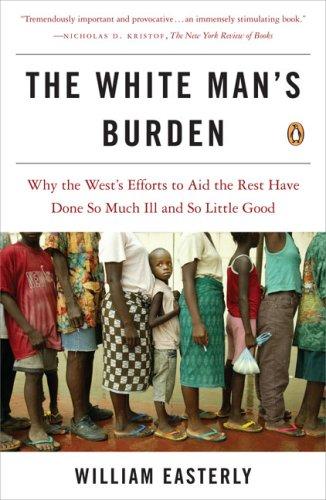
William Easterly spent two decades as a research economist at the World Bank before writing The White Man's Burden, and that institutional experience gives his critique of the development industry a quality that most outside critiques lack: he knows exactly how the machine works and why it produces what it does.
William Easterly · 2006 · 6h 15m
Full summary and key takeaways →The 12 questions
- 1.
Easterly's Planner-Searcher distinction is analytical, but it implies a moral claim: that accountability to beneficiaries matters more than good intentions. Do you find that argument convincing?
- 2.
The debt-conditionality cycle has repeated so many times that Easterly treats it as structural. What would have to change institutionally to break it?
- 3.
Easterly praises targeted, measurable interventions but acknowledges they can't address the deepest causes of poverty. Is that an acceptable tradeoff, or does it concede too much?
- 4.
The book argues that East Asia's growth came from internal development rather than foreign aid. How does that comparison complicate the aid debate?
- 5.
Celebrity advocacy for global poverty is a major target of Easterly's critique. What does the history of such advocacy suggest about whether visibility and impact are connected?
- 6.
Easterly worked at the World Bank for two decades before writing this book. How does that institutional experience shape the argument, and does it make you more or less inclined to trust it?
- 7.
If good institutions matter more than aid programs, and institutions can't be installed from outside, what can outsiders usefully do to support development?
- 8.
Easterly is critical of the 'big push' theory, but major economists like Sachs defend it. How do you think about the evidentiary debate between them?
- 9.
The accountability gap Easterly describes exists in other domains as well — foreign policy, public health, disaster relief. Where else do you see the same organizational logic?
- 10.
Easterly argues for more evaluation and feedback in aid programs. What organizational or political obstacles make that difficult in practice?
- 11.
Does reading this book change how you think about donating to international development charities? What questions would you ask that you hadn't asked before?
- 12.
Easterly's title is deliberately provocative. How does the framing of aid as a continuation of a colonial mindset affect the argument's reception and persuasiveness?
How to run the discussion
- Pick six to eight, not all of them. An hour of real discussion covers fewer questions than anyone expects, and racing the list is what makes a book club feel like homework.
- Open with what people noticed, not what they concluded. Asking for a verdict first hardens opinions before anyone has heard each other.
- Let the disagreement run. The questions below that split a room are the ones worth the time; the ones everyone answers the same way can be skipped.
- Ask the quiet person a specific question. A direct, narrow question is far easier to answer than an open invitation to contribute.
Themes worth steering toward
If the conversation stalls, these are the threads that usually restart it.
Common questions
What are good book club questions for The White Man's Burden: Why the West's Efforts to Aid the Rest Have Done So Much Ill and So Little Good?
Here are 12 book club questions for The White Man's Burden: Why the West's Efforts to Aid the Rest Have Done So Much Ill and So Little Good by William Easterly, ordered to open easily and end somewhere worth arguing about. The strongest openers ask what each reader noticed rather than what they concluded, and the discussion usually turns on foreign aid, development economics, poverty.
How long should a book club discussion of The White Man's Burden: Why the West's Efforts to Aid the Rest Have Done So Much Ill and So Little Good last?
Most groups run 60 to 90 minutes of actual discussion. That is roughly six to eight questions, not all of them, so pick the ones that suit your group rather than working down the list in order.
What are the main themes in The White Man's Burden: Why the West's Efforts to Aid the Rest Have Done So Much Ill and So Little Good?
Foreign aid, Development economics, Poverty, Institutions, Accountability. Those are the threads most likely to divide a room, which makes them the useful places to steer a discussion that has gone quiet.
Picking the next one? See books like The White Man's Burden: Why the West's Efforts to Aid the Rest Have Done So Much Ill and So Little Good or questions for other book club picks.
