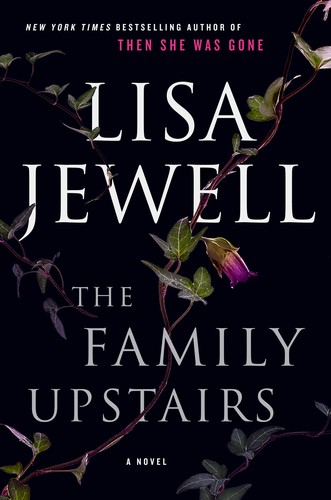
Talk to The Family Upstairs like its author wrote you back.
Get the ideas that fit your life — not generic summaries.
- Chat with the book
- Audiobook-style main ideas
- Adapts to your life and goals
- Helps you take action
The Family Upstairs, in detail
Libby Jones turns twenty-five and inherits a large Chelsea townhouse — left to her by parents she never knew, because she was raised in the foster system after being found as a baby amid three adult corpses. The novel alternates between Libby's present-tense investigation of who her family was, and two retrospective narratives: Henry, who grew up in that house during the 1980s and 1990s when it was occupied by an increasingly controlling commune-like household, and Lucy, who is currently homeless in the South of France with two children and is slowly making her way back toward London.
The book is really about what happens to children raised inside coercive systems — how the damage manifests, how it travels across decades, and how identity formed in such conditions becomes both fragile and surprisingly resilient. Jewell is interested in the specific mechanics of how a charismatic manipulator dismantles a household from within: the incremental surrenders, the way economic dependency becomes psychological dependency, the particular vulnerability of children who only know what they're taught.
Jewell is a clean, propulsive writer who trusts her readers to handle structural complexity. The three-timeline construction — Libby in the present, Henry looking back, Lucy converging from France — is managed with precision. Each thread reveals just enough to keep pulling the reader forward without making the full picture available until late. The domesticity of the settings (London houses, French campsites, school runs) gives the horror more grip than an exotic backdrop would.
This works best for readers who find domestic suspense more unsettling than procedural crime — the violence here is mostly slow, quiet, and psychological rather than spectacular. Readers who want a single unreliable narrator and a single twist may find the three-thread structure diffuse. But those willing to let the picture assemble gradually will find the final reveal genuinely chilling, partly because the pieces have been in plain sight all along.
The big ideas
- 1.
Coercive control operates through slow normalization — Henry's retrospective narration is devastating precisely because he can identify the manipulation in retrospect but couldn't at the time.
- 2.
Children raised in controlled environments inherit the damaged relational patterns of their parents without having any framework to identify them as damage.
- 3.
The house in Chelsea functions as a character: grand enough to attract, large enough to hide in, and ultimately a container for everything the adults refused to name.
