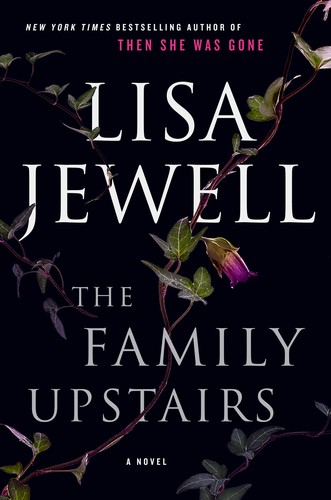
The Family Upstairs by Lisa Jewell is a 2019 thriller book about cults and coercive control, inherited trauma, identity and origins. Coercive control operates through slow normalization — Henry's retrospective narration is devastating precisely because he can identify the manipulation in retrospect but couldn't at the time.
Summary
Libby Jones turns twenty-five and inherits a large Chelsea townhouse — left to her by parents she never knew, because she was raised in the foster system after being found as a baby amid three adult corpses. The novel alternates between Libby's present-tense investigation of who her family was, and two retrospective narratives: Henry, who grew up in that house during the 1980s and 1990s when it was occupied by an increasingly controlling commune-like household, and Lucy, who is currently homeless in the South of France with two children and is slowly making her way back toward London.
The book is really about what happens to children raised inside coercive systems — how the damage manifests, how it travels across decades, and how identity formed in such conditions becomes both fragile and surprisingly resilient. Jewell is interested in the specific mechanics of how a charismatic manipulator dismantles a household from within: the incremental surrenders, the way economic dependency becomes psychological dependency, the particular vulnerability of children who only know what they're taught.
Jewell is a clean, propulsive writer who trusts her readers to handle structural complexity. The three-timeline construction — Libby in the present, Henry looking back, Lucy converging from France — is managed with precision. Each thread reveals just enough to keep pulling the reader forward without making the full picture available until late. The domesticity of the settings (London houses, French campsites, school runs) gives the horror more grip than an exotic backdrop would.
This works best for readers who find domestic suspense more unsettling than procedural crime — the violence here is mostly slow, quiet, and psychological rather than spectacular. Readers who want a single unreliable narrator and a single twist may find the three-thread structure diffuse. But those willing to let the picture assemble gradually will find the final reveal genuinely chilling, partly because the pieces have been in plain sight all along.
Talk to The Family Upstairs like its author wrote you back.
Get the ideas that fit your life — not generic summaries.
- Chat with the book
- Audiobook-style main ideas
- Adapts to your life and goals
- Helps you take action
Key takeaways
- 1.
Coercive control operates through slow normalization — Henry's retrospective narration is devastating precisely because he can identify the manipulation in retrospect but couldn't at the time.
- 2.
Children raised in controlled environments inherit the damaged relational patterns of their parents without having any framework to identify them as damage.
- 3.
The house in Chelsea functions as a character: grand enough to attract, large enough to hide in, and ultimately a container for everything the adults refused to name.
- 4.
Jewell's handling of the 'found family turned controlling commune' dynamic avoids the genre's usual cult leader archetype — the manipulation here is more horizontal and therefore harder to escape.
- 5.
Identity built on withheld origins is always provisional: Libby's entire adult self is an edifice on a foundation she never had access to, and the novel tracks what happens when that foundation finally surfaces.
- 6.
The three-timeline structure isn't just a structural device — each narrator's limited perspective is precisely what makes the full truth impossible to see until all three converge.
- 7.
The novel suggests that the damage done by controlling adults to children in their care is not just personal but transmissible: Lucy's children are already living in its shadow.
- 8.
Resolution in the novel is partial and complicated — the legal and emotional aftermath of what happened in the house can't be fully unwound, only acknowledged.
Discussion questions
Use these on your own, with a book club, or as chat starters in Superbook.
- 1.
Henry can identify every stage of the manipulation in retrospect but couldn't resist it at the time. Does the novel offer any explanation for why retrospective clarity is so difficult to achieve prospectively?
- 2.
The charismatic figure who takes over the household never becomes a cliché. What specifically makes him frightening rather than simply villainous?
- 3.
Lucy's decision-making throughout is frequently questionable. Does the novel ask you to judge her, or does it contextualize her choices as products of what she survived?
- 4.
The house is inherited, not earned — it was never really the family's to inhabit. Does the novel frame the inheritance system itself as implicated in what happened?
- 5.
How do the three narrative voices feel different in register? Did you trust one narrator more than the others, and if so, why?
- 6.
Libby's adoptive upbringing was stable and loving. The novel contrasts it with what she came from. Is it suggesting something about the relationship between material security and psychological safety?
- 7.
The ending involves several revelations arriving in quick succession. Did they feel earned by what came before, or compressed for effect?
- 8.
Children appear throughout the novel as both victims and as future risks. What responsibility does the novel place on survivors to break cycles they didn't choose?
- 9.
Compare the experience of reading Henry's thread versus Lucy's. Which felt more urgent to you, and what does that tell you about how Jewell manages sympathy?
- 10.
Is this primarily a thriller about secrets, or a literary novel about family and trauma that uses thriller mechanics? Does the distinction matter?
- 11.
The Chelsea setting — wealth, privilege, a certain English social register — shapes the story's plausibility. Would the same events read differently in a different class context?
Themes
Frequently asked questions
-
Is The Family Upstairs worth reading?
Yes, particularly if you find domestic settings make horror more effective than exotic ones. The coercive control material is handled with real psychological seriousness, and the three-timeline structure is executed cleanly. It's a cut above standard domestic noir.
-
Do I need to read Then She Was Gone first?
No. The books are set in the same universe but are completely standalone. You can read either first without missing anything essential.
-
Is the book upsetting?
It deals with child neglect, coercive control, and the long aftermath of household abuse — so yes, in places. The violence is mostly psychological and retrospective rather than graphic, but the material is genuinely dark.
-
Who might not enjoy this?
Readers who want a single protagonist and a single twist will find the three-timeline structure diffuse. The book asks you to hold three separate narratives in suspension for most of its length, which requires patience.
-
Is there a sequel?
The Family Upstairs: Part Two was published in 2023, continuing with several of the same characters.
Similar books
The Silent Patient
Alex Michaelides
The Woman in the Window
A.J. Finn
In Cold Blood
Truman Capote

The Gift of Fear: Survival Signals That Protect Us from Violence
Gavin de Becker
