The World as Will and Representation by Arthur Schopenhauer is a 1818 philosophy book about will, representation, pessimism. The world as will: the fundamental reality is blind, purposeless, insatiable striving; individual organisms are temporary vehicles for this force, doomed to suffer its demands.
Summary
The World as Will and Representation is Arthur Schopenhauer's masterwork, published in 1818 and substantially expanded in 1844. It begins with Kant's distinction between phenomena and noumena and departs from it in a decisive way: Schopenhauer claims that we have direct access to the thing-in-itself through our own embodied experience. When I experience striving, willing, straining against resistance, I am experiencing the fundamental reality directly — and that reality is will: blind, purposeless, insatiable, and wholly indifferent to individual welfare. The title captures the structure: the world as we know it (representation, Vorstellung) is organized by the subject's perception; the world as it fundamentally is (will, Wille) is the same blind force operating at every level from gravity to desire.
The consequences of this metaphysics are worked out in four books. The world of representation is structured by space, time, and causality — Schopenhauer largely follows Kant here. The book on the will argues that everything from crystallization to sexual desire to political ambition is the same fundamental force individuated and dressed in different clothing. There is no purpose, no design, no progress — only the will's perpetual, aimless striving and the suffering that inevitably accompanies creatures who are instruments of that striving.
The third book on aesthetics is where the argument opens unexpectedly. Art — particularly music — offers temporary liberation from the will by lifting consciousness to a mode of pure perception, detached from desire and individual interest. The musical genius does not express personal emotion but gives form to the will itself; music is thus a direct representation of the world's inner nature. This is one of the most original aesthetic theories in the philosophical tradition.
The fourth book turns to ethics and asceticism. Compassion — recognizing that the suffering of others is one's own, because the will that suffers in them is the same will that suffers in oneself — is the foundation of genuine ethics. Beyond compassion, asceticism — the voluntary denial of the will-to-live — offers the most complete liberation available to the individual. The saint who has denied the will represents the highest form of human existence, achieving in life what death achieves involuntarily.

Talk to The World as Will and Representation like its author wrote you back.
Get the ideas that fit your life — not generic summaries.
- Chat with the book
- Audiobook-style main ideas
- Adapts to your life and goals
- Helps you take action
Key takeaways
- 1.
The world as will: the fundamental reality is blind, purposeless, insatiable striving; individual organisms are temporary vehicles for this force, doomed to suffer its demands.
- 2.
The will is one: all the striving in nature — physical forces, biological drives, human desires — is the same single force individuated through space and time.
- 3.
Aesthetic experience — particularly music — offers temporary liberation from the will by elevating consciousness to pure, desireless perception.
- 4.
Music is the highest art because it directly represents the will itself rather than its particular manifestations, making it the most universal and most metaphysically profound of the arts.
- 5.
Compassion is the only genuine ethical motive: recognizing that the will suffering in others is the same will suffering in oneself dissolves the illusion of separateness.
- 6.
Asceticism — voluntary denial of the will-to-live — is the most complete form of liberation available to the individual within life.
- 7.
Schopenhauer finds philosophical confirmation for his pessimism in Hindu and Buddhist thought, particularly the doctrines of maya (illusion) and dukkha (suffering).
- 8.
Knowledge does not liberate from the will but can turn the will against itself, generating the quietism of the saint who withdraws from willing.
Discussion questions
Use these on your own, with a book club, or as chat starters in Superbook. Book club version, ready to copy or print →
- 1.
Schopenhauer argues that the thing-in-itself — the fundamental reality — is accessible through the direct experience of willing. Is that a plausible way to escape the Kantian barrier between phenomena and noumena?
- 2.
The will is described as purposeless and indifferent to individual welfare. Does that description match what you experience as motivation, desire, and striving?
- 3.
He argues that art temporarily liberates from the will by enabling pure, desireless perception. Have you had experiences of art that felt like that — where self-interest and desire temporarily fell away?
- 4.
Music, for Schopenhauer, directly represents the will itself — the most fundamental reality. Does that account of music's power resonate with your experience of it?
- 5.
Compassion is grounded in the metaphysical unity of the will: we suffer with others because the will suffering in them is the same will in us. Is that a convincing basis for ethics?
- 6.
The ascetic denies the will-to-live and is described as achieving the highest liberation. Is voluntary asceticism an admirable path, or is it a form of life-denial?
- 7.
Schopenhauer draws extensively on Hindu and Buddhist thought as parallel to his own conclusions. Is that convergence evidence for both, or does it reflect selective reading of sources?
- 8.
The book argues that there is no moral progress, no historical purpose, no divine design — just the will's perpetual striving. Is that the most honest account of history, or does it leave something out?
- 9.
Schopenhauer was ignored for most of his career and famous only at the end of his life. Does that biography suggest anything about the reception of genuinely original ideas?
- 10.
Nietzsche began as a Schopenhauerian and then turned against him. What do you think he was reacting against when he developed the will to power as an alternative?
- 11.
The World as Will and Representation has been called one of the greatest philosophical works in the Western tradition. Is its pessimism a strength or a limitation of the system?
Themes
Frequently asked questions
-
Is The World as Will and Representation too long to read?
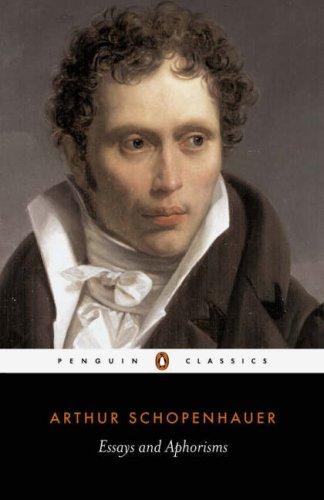
It is very long and demands patience. Many readers find Schopenhauer's style rewarding — he is more accessible than Kant and writes with unusual clarity for a systematic philosopher. Starting with the Parerga (Essays and Aphorisms) and then reading the first volume of the World is a reasonable approach.
-
What is the will in Schopenhauer's philosophy?
The fundamental reality underlying all phenomena — not a human faculty but a metaphysical force that manifests at every level of nature, from gravity to desire. It is blind, purposeless, and insatiable. Individual organisms are temporary vehicles for it, doomed to suffer its demands.
-
How does Schopenhauer's system relate to Kant's?
He begins with Kant's distinction between phenomena (things as they appear) and noumena (things as they are). But where Kant says the noumenon is permanently unknowable, Schopenhauer claims we access it directly through the experience of willing in our own bodies.
-
Why is music the highest art for Schopenhauer?
Because it directly represents the will itself, not its particular manifestations. Other arts represent specific Ideas (Platonic forms); music represents the will's movement directly, making it the most universal and most profound. This account influenced Wagner, who corresponded with Schopenhauer extensively.
-
What is Schopenhauer's ethics?
Grounded in compassion: recognizing that the will suffering in others is the same will that suffers in oneself dissolves the illusion of individual separateness. Beyond compassion, asceticism — voluntary denial of the will-to-live — is the highest ethical achievement, reversing the will's blind striving at its root.