Memoir · Book club
This Boy's Life book club questions
Here are 11 book club questions for This Boy's Life by Tobias Wolff, ordered to open easily and end somewhere worth arguing about. Copy them, print them, or bring them up one at a time.
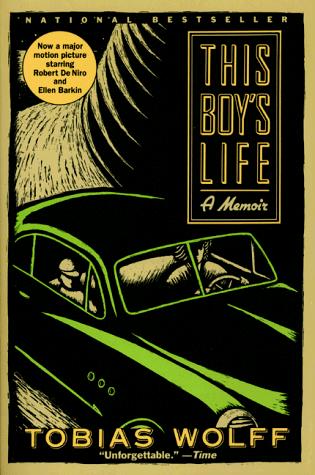
Tobias Wolff's memoir of his childhood in the 1950s, moving with his peripatetic mother from Florida to Utah to Seattle to the logging town of Concrete, Washington, is one of the finest examples of what might be called the stepfather memoir — a genre that emerged in the 1980s and 1990s as writers processed childhoods marked by violence, instability, and the particular powerlessness of being a child under an adult's authority.
Tobias Wolff · 1989 · 5h 0m
Full summary and key takeaways →The 11 questions
- 1.
Wolff presents himself as both victim and perpetrator of deceptions. How does holding both of those roles change the memoir's moral texture?
- 2.
Dwight's abuse is sustained and low-grade rather than dramatic and episodic. Does that make it harder or easier to understand? Does it affect how you judge Rosemary for staying?
- 3.
Rosemary is portrayed with a lot of affection despite her role in placing Toby under Dwight's authority. Is that affection earned by the text?
- 4.
The memoir is written in spare, clean prose that distances the narration from its emotional content. Is that distance a limitation or an achievement?
- 5.
Wolff forges letters and constructs false identities throughout the book. Is there a point where he crosses from survival behavior into something more troubling?
- 6.
What does the memoir suggest about the relationship between self-invention and identity? Is the Tobias Wolff who became a writer a genuine person or another constructed version?
- 7.
The title's double meaning — a boy's life, a boy's lie — is not stated explicitly. At what point did you notice it, and how does it organize the book?
- 8.
Concrete, Washington, as a setting seems almost allegorical — a town that traps people. Does that feel like Wolff imposing meaning in retrospect, or like an authentic childhood geography?
- 9.
The memoir was adapted into a film starring Robert De Niro and Leonardo DiCaprio. Does thinking about the casting change how you imagine Dwight or Toby?
- 10.
How does this memoir compare to other childhood abuse narratives you have read? What does Wolff do differently?
- 11.
Wolff's brother Geoffrey also became a writer and published a memoir (The Duke of Deception) about their father. What would it mean to read both books together?
How to run the discussion
- Pick six to eight, not all of them. An hour of real discussion covers fewer questions than anyone expects, and racing the list is what makes a book club feel like homework.
- Open with what people noticed, not what they concluded. Asking for a verdict first hardens opinions before anyone has heard each other.
- Let the disagreement run. The questions below that split a room are the ones worth the time; the ones everyone answers the same way can be skipped.
- Ask the quiet person a specific question. A direct, narrow question is far easier to answer than an open invitation to contribute.
Themes worth steering toward
If the conversation stalls, these are the threads that usually restart it.
Common questions
What are good book club questions for This Boy's Life?
Here are 11 book club questions for This Boy's Life by Tobias Wolff, ordered to open easily and end somewhere worth arguing about. The strongest openers ask what each reader noticed rather than what they concluded, and the discussion usually turns on identity, violence, escape.
How long should a book club discussion of This Boy's Life last?
Most groups run 60 to 90 minutes of actual discussion. That is roughly six to eight questions, not all of them, so pick the ones that suit your group rather than working down the list in order.
What are the main themes in This Boy's Life?
Identity, Violence, Escape, Coming of age, Self-invention. Those are the threads most likely to divide a room, which makes them the useful places to steer a discussion that has gone quiet.
Picking the next one? See books like This Boy's Life or questions for other book club picks.
