History · Book club
This Bridge Called My Back: Writings by Radical Women of Color book club questions
Here are 12 book club questions for This Bridge Called My Back: Writings by Radical Women of Color by Cherríe Moraga and Gloria Anzaldúa, ordered to open easily and end somewhere worth arguing about. Copy them, print them, or bring them up one at a time.
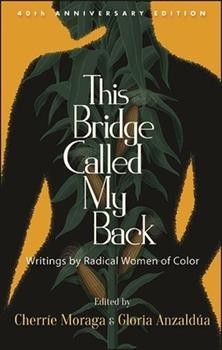
This Bridge Called My Back, first published in 1981 and edited by Cherríe Moraga and Gloria Anzaldúa, is a landmark anthology of writing by women of color in the United States.
Cherríe Moraga and Gloria Anzaldúa · 1981 · 6h 0m
Full summary and key takeaways →The 12 questions
- 1.
Moraga and Anzaldúa describe women of color as bridges between movements. What does that metaphor capture about their position, and what does it miss?
- 2.
The anthology predates the word 'intersectionality.' How useful is that term now, and what does it flatten that the original writers were more precise about?
- 3.
Several contributors direct their sharpest criticism at white feminists rather than at men. What is the political logic of that choice?
- 4.
Anzaldúa's concept of borderlands is both geographic and psychic. In what ways is it specific to her Chicana experience, and in what ways does it travel to other contexts?
- 5.
The book uses first-person essays, poems, and letters rather than academic argument. What does that formal choice allow, and what does it foreclose?
- 6.
Which piece in the anthology felt most unfamiliar to your experience, and what did that unfamiliarity tell you about your own subject position?
- 7.
The editors describe feeling the need to 'write ourselves into being.' What conditions produce that feeling, and what is lost when a group's experience has no canon to draw on?
- 8.
Bridge was first published in 1981. Which of its critiques feel resolved now, and which feel more urgent?
- 9.
How do the contributors handle internal disagreements among women of color — around class, sexuality, religion? Is the collection internally consistent?
- 10.
Several pieces are explicitly addressed to other women of color, not to a general reader. How does that affect the reading experience if you are not in the implied audience?
- 11.
The book argues that the revolution must include everyone or it will replicate the hierarchies it replaced. How does that argument hold up against movements that achieve partial gains?
- 12.
What would it mean to take the book's argument seriously in a contemporary social movement you care about?
How to run the discussion
- Pick six to eight, not all of them. An hour of real discussion covers fewer questions than anyone expects, and racing the list is what makes a book club feel like homework.
- Open with what people noticed, not what they concluded. Asking for a verdict first hardens opinions before anyone has heard each other.
- Let the disagreement run. The questions below that split a room are the ones worth the time; the ones everyone answers the same way can be skipped.
- Ask the quiet person a specific question. A direct, narrow question is far easier to answer than an open invitation to contribute.
Themes worth steering toward
If the conversation stalls, these are the threads that usually restart it.
Common questions
What are good book club questions for This Bridge Called My Back: Writings by Radical Women of Color?
Here are 12 book club questions for This Bridge Called My Back: Writings by Radical Women of Color by Cherríe Moraga and Gloria Anzaldúa, ordered to open easily and end somewhere worth arguing about. The strongest openers ask what each reader noticed rather than what they concluded, and the discussion usually turns on intersectionality, feminism, race and identity.
How long should a book club discussion of This Bridge Called My Back: Writings by Radical Women of Color last?
Most groups run 60 to 90 minutes of actual discussion. That is roughly six to eight questions, not all of them, so pick the ones that suit your group rather than working down the list in order.
What are the main themes in This Bridge Called My Back: Writings by Radical Women of Color?
Intersectionality, Feminism, Race and identity, Colonialism, Solidarity. Those are the threads most likely to divide a room, which makes them the useful places to steer a discussion that has gone quiet.
Picking the next one? See books like This Bridge Called My Back: Writings by Radical Women of Color or questions for other book club picks.
