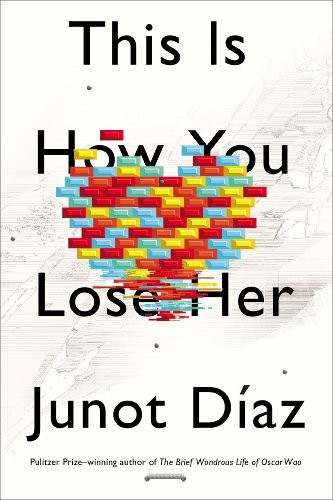
Talk to This Is How You Lose Her like its author wrote you back.
Get the ideas that fit your life — not generic summaries.
- Chat with the book
- Audiobook-style main ideas
- Adapts to your life and goals
- Helps you take action
What it argues
This Is How You Lose Her is a linked story collection mostly narrated by Yunior — the same character who narrates The Brief Wondrous Life of Oscar Wao — as a young man who cannot stop cheating on the women he loves. The stories track him from the Dominican Republic to New Jersey to Boston, from adolescence to early middle age, and the through-line is always the same: Yunior finds a woman worth keeping, betrays her, and then spends years failing to understand why he keeps doing it.
The book is not exactly about cheating. It is about a particular kind of masculinity — Dominican, working-class, shaped by fathers and brothers who modeled exactly this behavior — and what it costs. Díaz is interested in the way men inherit emotional patterns they cannot name and do not examine until too late. Yunior is intelligent and self-aware enough to see what he is doing in retrospect but not in the moment, and that gap is where the book lives.
What it gets right
- 1.
Yunior's infidelity is not random weakness — it is a pattern inherited from the men around him, and the book refuses to separate his behavior from its cultural context.
- 2.
The second-person narration in several stories puts the reader inside Yunior's choices in a way that is deliberately uncomfortable and difficult to shake off.
- 3.
The book is as much about the women Yunior loses as it is about him — they are rendered with enough specificity that their departures register as actual losses.
What it covers
Who wrote it
Junot Díaz was born in the Dominican Republic and emigrated to the United States as a child, growing up in New Jersey. He is the author of the story collection Drown (1996), the Pulitzer Prize-winning novel The Brief Wondrous Life of Oscar Wao (2007), and This Is How You Lose Her (2012), which was a finalist for the National Book Award. He teaches creative writing at MIT. His work is known for its Spanglish prose, its engagement with Dominican history and masculinity, and its refusal to let narrators off easily for the damage they cause.
