This Is How You Lose Her by Junot Díaz is a 2012 short stories book about infidelity and consequence, masculinity and shame, diaspora identity. Yunior's infidelity is not random weakness — it is a pattern inherited from the men around him, and the book refuses to separate his behavior from its cultural context.
Summary
This Is How You Lose Her is a linked story collection mostly narrated by Yunior — the same character who narrates The Brief Wondrous Life of Oscar Wao — as a young man who cannot stop cheating on the women he loves. The stories track him from the Dominican Republic to New Jersey to Boston, from adolescence to early middle age, and the through-line is always the same: Yunior finds a woman worth keeping, betrays her, and then spends years failing to understand why he keeps doing it.
The book is not exactly about cheating. It is about a particular kind of masculinity — Dominican, working-class, shaped by fathers and brothers who modeled exactly this behavior — and what it costs. Díaz is interested in the way men inherit emotional patterns they cannot name and do not examine until too late. Yunior is intelligent and self-aware enough to see what he is doing in retrospect but not in the moment, and that gap is where the book lives.
The prose is as electric as Oscar Wao's, running the same Spanglish frequencies, but the stories are shorter and more concentrated. Several of them are told in second person, an uncomfortable "you" that implicates the reader in Yunior's behavior. The collection's structure mirrors the emotional pattern it describes: the same story loops and loops, slightly different each time, without resolution — until the final story, which arrives at something that functions like reckoning, if not redemption.
This works best for readers who can sustain interest in a character who is not likeable but is searingly honest. If you want characters to learn their lessons or relationships to heal, this is the wrong collection. But if you want to understand how damage is inherited and how smart people stay stuck in it, Díaz has almost no equal.
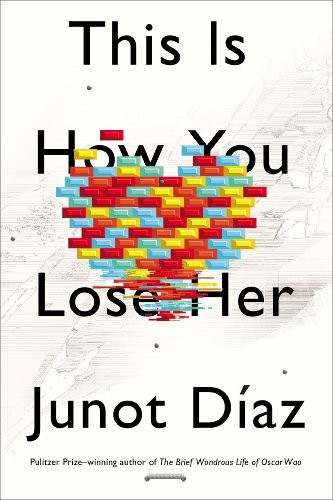
Talk to This Is How You Lose Her like its author wrote you back.
Get the ideas that fit your life — not generic summaries.
- Chat with the book
- Audiobook-style main ideas
- Adapts to your life and goals
- Helps you take action
Key takeaways
- 1.
Yunior's infidelity is not random weakness — it is a pattern inherited from the men around him, and the book refuses to separate his behavior from its cultural context.
- 2.
The second-person narration in several stories puts the reader inside Yunior's choices in a way that is deliberately uncomfortable and difficult to shake off.
- 3.
The book is as much about the women Yunior loses as it is about him — they are rendered with enough specificity that their departures register as actual losses.
- 4.
Shame and self-knowledge are not the same thing: Yunior knows what he is doing wrong long before he is capable of stopping.
- 5.
The diaspora stories trace how cultural inheritance functions — what sons absorb from fathers, what brothers teach each other, what survival in one context costs in another.
- 6.
The linked-story structure enacts the emotional pattern it describes: repetition without growth, variation without change, until the last story breaks the loop.
- 7.
Díaz treats heartbreak as a consequence of specific choices, not fate — the title tells you exactly whose failure this is and refuses the excuse of bad luck.
- 8.
Language itself is part of the argument: the Spanglish, the profanity, the code-switching mark the exact territories where identity and inheritance overlap.
Discussion questions
Use these on your own, with a book club, or as chat starters in Superbook. Book club version, ready to copy or print →
- 1.
Yunior is self-aware enough to narrate his failures in vivid detail but not to stop them. Is self-awareness overrated as a path to change, according to this book?
- 2.
The second-person 'you' in several stories — does that choice work for you as a reader, or does it feel like a manipulation?
- 3.
Which of the women in the collection do you remember most clearly, and what does that tell you about how Díaz wrote them?
- 4.
The title is both the name of the collection and a direct statement. Who is 'you,' and who is 'her,' in the final story?
- 5.
Yunior's brother Rafa appears in several stories. What is the relationship between Rafa's life and Yunior's behavior?
- 6.
The stories span from childhood in the Dominican Republic to adulthood in the United States. Does the setting shift change what the book is arguing about the men in it?
- 7.
Is this a book about personal failure, cultural failure, or both? Does the distinction matter?
- 8.
Díaz seems to admire the women in this book more than the men, though the men do most of the narrating. Do you agree, and how does that affect your reading?
- 9.
The final story ends on a different note than the others — what do you think Yunior understands at the end that he did not understand before?
- 10.
If you read Oscar Wao before this: does knowing Yunior is the narrator of that novel change how you read him here?
- 11.
Where does the book's sympathy lie — with Yunior or with the women he loses? Or does it refuse to choose?
- 12.
Which story in the collection hit hardest for you and why?
Themes
Frequently asked questions
-
Do I need to read Oscar Wao first?
No. This Is How You Lose Her stands alone. Yunior appears in both books, but the stories here are self-contained and do not require knowledge of the novel. Readers who know Oscar Wao will pick up additional resonances, but first-timers lose nothing essential.
-
Is This Is How You Lose Her a novel or a short story collection?
It is a linked short story collection. The stories share characters and a setting across time, and they build cumulatively, but each can be read separately. The Yunior who ends the book has clearly traveled through the earlier stories, which gives the collection some of a novel's weight.
-
Is the book hard to read emotionally?
Yes, for some readers. The narrator is often infuriating, and watching him repeat his failures across nine stories without changing is deliberately frustrating. The book is also sexually explicit and at points depicts relationship violence. It is not easy company.
-
Who shouldn't read this collection?
Readers who find second-person narration alienating, or who need protagonists to grow and earn redemption, will find Yunior exhausting. If you want a satisfying character arc, this is the wrong book.
-
Why is this considered a significant book?
It made the National Book Award shortlist for fiction and was praised for what it does to the short story form: the linked structure, the unreliable male narrator, and the unsentimental treatment of infidelity were seen as formally inventive and emotionally honest in a way that straight domestic fiction rarely manages.
Similar books
The Brief Wondrous Life of Oscar Wao
Junot Díaz
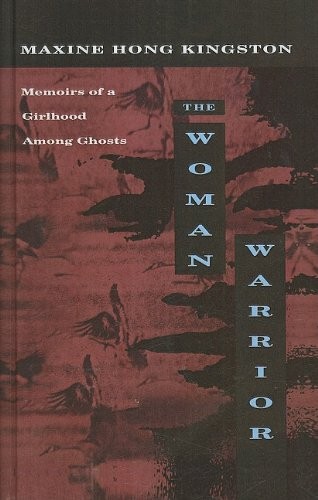
The Woman Warrior: Memoirs of a Girlhood Among Ghosts
Maxine Hong Kingston
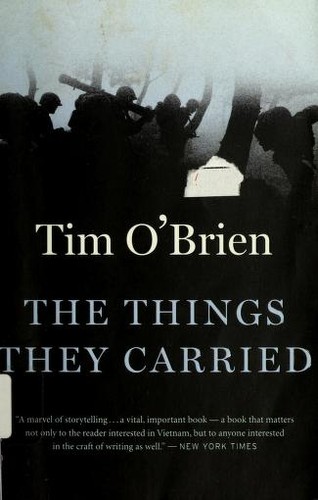
The Things They Carried
Tim O'Brien
Reading Lolita in Tehran: A Memoir in Books
Azar Nafisi
