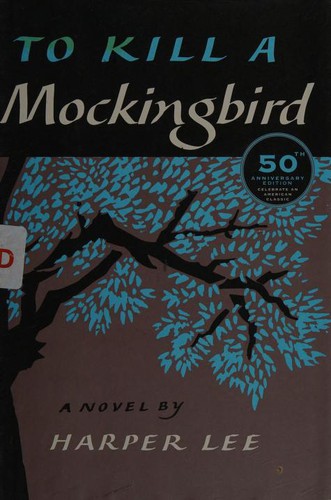
Talk to To Kill a Mockingbird like its author wrote you back.
Get the ideas that fit your life — not generic summaries.
- Chat with the book
- Audiobook-style main ideas
- Adapts to your life and goals
- Helps you take action
What it argues
Jean Louise "Scout" Finch is six years old at the start of the novel and nine by the end. She lives with her brother Jem and widowed father Atticus in Maycomb, Alabama, during the mid-1930s Depression. The events she narrates include summers spent with neighbor Dill, obsessions with the reclusive Boo Radley next door, and the trial of Tom Robinson, a Black man falsely accused of raping a white woman, which Atticus defends to the best of his ability and loses. Published in 1960, To Kill a Mockingbird won the Pulitzer Prize the following year and has been a fixture in American classrooms since.
The novel operates on two parallel tracks. One is a coming-of-age story about Scout and Jem learning to see Maycomb's social structures as adults see them — which is to say, to see what they always contained. The other is a courtroom drama about structural racism in the American South, presented with enough clarity that readers who might otherwise refuse the lesson accept it through Scout's child's-eye view. Lee understood what she was doing: narrating through a child made the novel's moral positions feel discovered rather than preached, which is why it became one of the most effective works of moral persuasion in American popular literature.
What it gets right
- 1.
Atticus's defense of Tom Robinson is presented as moral courage, but the novel is honest that it is also futile: the verdict is never in doubt in a racist system, and defending Tom doesn't change that system.
- 2.
Scout's child's-eye narration allows Lee to make moral arguments that would feel didactic coming from an adult. The innocence is a narrative strategy, and an effective one.
- 3.
Tom Robinson's character — decent, kind, falsely accused — is described almost entirely through white eyes. The novel's central limitation is that its Black characters lack interior lives comparable to its white ones.
What it covers
Who wrote it
Harper Lee (1926–2016) grew up in Monroeville, Alabama, and based much of To Kill a Mockingbird on her childhood there, including a neighbor who became the model for Dill. She was a close friend of Truman Capote and assisted him with his research for In Cold Blood. To Kill a Mockingbird won the Pulitzer Prize in 1961 and has sold more than 45 million copies. Lee published almost nothing for decades afterward; Go Set a Watchman, her earlier draft of the Mockingbird story, was published in 2015, a year before her death, under contested circumstances.
