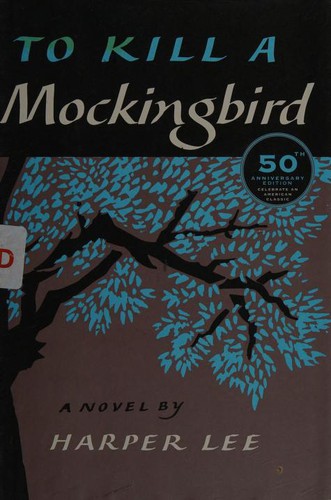
To Kill a Mockingbird by Harper Lee is a 1960 literary fiction book about racial injustice, moral courage, childhood and innocence. Atticus's defense of Tom Robinson is presented as moral courage, but the novel is honest that it is also futile: the verdict is never in doubt in a racist system, and defending Tom doesn't change that system.
Summary
Jean Louise "Scout" Finch is six years old at the start of the novel and nine by the end. She lives with her brother Jem and widowed father Atticus in Maycomb, Alabama, during the mid-1930s Depression. The events she narrates include summers spent with neighbor Dill, obsessions with the reclusive Boo Radley next door, and the trial of Tom Robinson, a Black man falsely accused of raping a white woman, which Atticus defends to the best of his ability and loses. Published in 1960, To Kill a Mockingbird won the Pulitzer Prize the following year and has been a fixture in American classrooms since.
The novel operates on two parallel tracks. One is a coming-of-age story about Scout and Jem learning to see Maycomb's social structures as adults see them — which is to say, to see what they always contained. The other is a courtroom drama about structural racism in the American South, presented with enough clarity that readers who might otherwise refuse the lesson accept it through Scout's child's-eye view. Lee understood what she was doing: narrating through a child made the novel's moral positions feel discovered rather than preached, which is why it became one of the most effective works of moral persuasion in American popular literature.
Atticus Finch is one of the most famous characters in American fiction, and one of the most debated. He defends Tom Robinson not out of radical conviction but out of professional integrity and basic decency, while accepting the social order that made the trial possible. Later criticism — accelerated by Go Set a Watchman, Lee's 2015 draft — has complicated the original portrait considerably. The Atticus of Mockingbird is admirable within the novel's frame; outside it, he's also a man who belongs to a segregated town and doesn't challenge that fact.
The novel is warm, specific, and written in a voice that has become one of the most imitated in American literature. Some readers find the child narrator limiting — Scout doesn't always understand what she's seeing, and the racial injustice is sometimes filtered through white comfort. These are legitimate criticisms that have gained more traction over the decades. But as a portrait of a community in moral crisis, a father trying to teach his children right from wrong under enormous social pressure, and a child beginning to understand that the world is more complicated than she thought — the book remains powerful and earned its place in the canon.
Talk to To Kill a Mockingbird like its author wrote you back.
Get the ideas that fit your life — not generic summaries.
- Chat with the book
- Audiobook-style main ideas
- Adapts to your life and goals
- Helps you take action
Key takeaways
- 1.
Atticus's defense of Tom Robinson is presented as moral courage, but the novel is honest that it is also futile: the verdict is never in doubt in a racist system, and defending Tom doesn't change that system.
- 2.
Scout's child's-eye narration allows Lee to make moral arguments that would feel didactic coming from an adult. The innocence is a narrative strategy, and an effective one.
- 3.
Tom Robinson's character — decent, kind, falsely accused — is described almost entirely through white eyes. The novel's central limitation is that its Black characters lack interior lives comparable to its white ones.
- 4.
Boo Radley, the novel's gothic mystery, resolves into an act of protection at the end. Lee's point: the things communities fear and exile are often what protect them.
- 5.
Calpurnia occupies an uncomfortable position the novel doesn't fully acknowledge — Black, trusted, constrained by her role, moving between two worlds that the novel treats as more separate than her daily life makes them.
- 6.
The trial is lost not because the case is weak but because the jury is white. Atticus knows this. The novel asks readers to sit with the gap between what justice should be and what it actually is.
- 7.
Maycomb's class structure — the Finches, the Cunninghams, the Ewells — operates almost independently of race. Scout and Jem absorb it without recognizing it. The novel is also a portrait of class.
- 8.
Jem's loss of innocence is tracked more explicitly than Scout's. His rage at the verdict is more adult than Scout's confusion, and it's the more honest response.
Discussion questions
Use these on your own, with a book club, or as chat starters in Superbook. Book club version, ready to copy or print →
- 1.
Atticus says you can't really understand someone until you climb inside their skin and walk around in it. Does the novel actually do that for Tom Robinson, or does it stop short?
- 2.
The verdict is unjust and Atticus knows it will be before the trial begins. Why does he take the case? Is his moral position heroic, or is it the minimum decency the situation required?
- 3.
Go Set a Watchman shows an older Atticus with segregationist views. Does that novel change how you read Mockingbird's Atticus, or should they be read as separate characters?
- 4.
Scout gets in trouble at school for already knowing how to read. What does the novel think about institutional education versus what children learn at home?
- 5.
The Ewells are the novel's villains, but they're also poor white Southerners trapped in their own degraded status. Does Lee ask you to have any sympathy for Bob Ewell? Should she?
- 6.
Maycomb is depicted as a community with good people who nevertheless convict an innocent man. Is the novel's overall view of the town too gentle, or appropriately complex?
- 7.
Boo Radley has been imprisoned by his father and brother, but the town calls him a ghost and invents stories about him. What does the novel think the community's treatment of Boo says about it?
- 8.
The novel is assigned in schools constantly and often taught as a lesson in not being racist. Does being taught that way reduce it? What does teaching it from a child narrator do to the lesson?
- 9.
Calpurnia takes the children to her church and navigates both worlds — the Finch household and the Black community. What does the novel do, and not do, with her character?
- 10.
Tom Robinson dies trying to escape from prison, which the novel calls 'typical' of Black men who give up hope. How do you read that framing? Is it Lee's view or something the novel is examining?
- 11.
At the end, Scout realizes that Boo never left his house because he was watching them — that they were his connection to the world. How does that change the Boo storyline retroactively?
- 12.
The novel was published in 1960, in the middle of the civil rights movement. How much of its impact was historical timing, and how much is the book itself?
Themes
Frequently asked questions
-
Why is To Kill a Mockingbird considered a classic?
Because it made the injustice of American racism legible to a white mass audience at the right historical moment, through an approach — a child narrator, a small-town setting, a heroic white defender — that made the moral lesson feel personal rather than political. Its classroom ubiquity has cemented it as the most widely read American novel about race.
-
Is To Kill a Mockingbird problematic?
Contemporary criticism points to genuine limitations: Tom Robinson has little interiority, the novel centers white perspectives on Black suffering, and Atticus's heroism doesn't challenge the system that condemned Tom. These criticisms are valid. The novel is also a serious work that has done real good and remains worth reading critically.
-
Who is Boo Radley?
A reclusive neighbor whom the children fear and invent stories about throughout the novel. He turns out to have been watching over them and saves them at the end. Lee uses him to make a point about how fear and rumor dehumanize people the community doesn't understand.
-
Do I need to read Go Set a Watchman?
Not to understand Mockingbird. Watchman was a rough draft written before Mockingbird, not a sequel. It was published under disputed circumstances and presents Atticus with views that contradict the original. Many readers treat it as a separate artifact; if you love Atticus's character in Mockingbird, proceed with caution.
-
Who shouldn't read To Kill a Mockingbird?
Readers who find the white-savior framework of the trial narrative frustrating, or who need Black characters with full interior lives at the center of a story about racism, may find the novel insufficient. These are legitimate reasons to approach it differently or to read it alongside more recent work on the same history.
Similar books
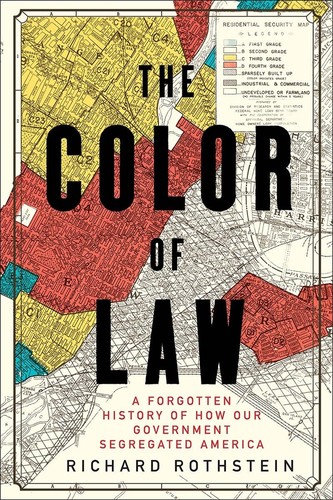
The Color of Law: A Forgotten History of How Our Government Segregated America
Richard Rothstein
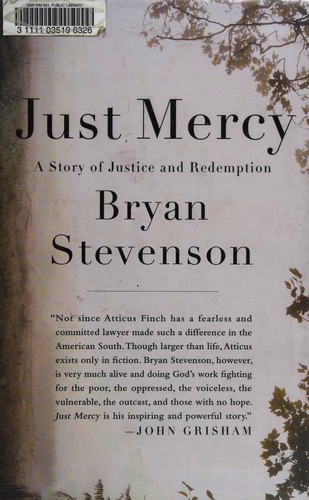
Just Mercy: A Story of Justice and Redemption
Bryan Stevenson
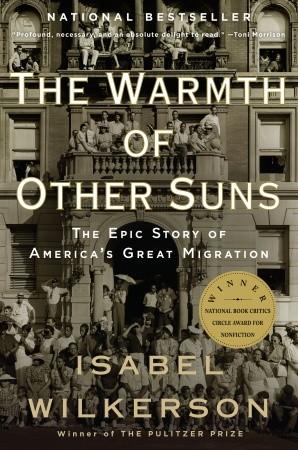
The Warmth of Other Suns
Isabel Wilkerson
Caste: The Origins of Our Discontents
Isabel Wilkerson
