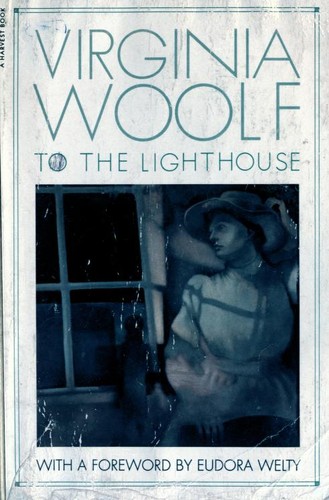
Talk to To the Lighthouse like its author wrote you back.
Get the ideas that fit your life — not generic summaries.
- Chat with the book
- Audiobook-style main ideas
- Adapts to your life and goals
- Helps you take action
To the Lighthouse, in detail
To the Lighthouse is divided into three parts. The first, The Window, spans one long afternoon and evening at the Ramsay family's summer house in the Scottish Hebrides, sometime before the First World War. The central suspended action is a planned trip to the lighthouse, promised to the youngest Ramsay child and postponed by weather and the father's impatience. The second part, Time Passes, covers ten years in just a few pages, during which the house stands empty, characters die in parenthetical asides, and time does its work. The third part, The Lighthouse, returns to the house and finally completes the trip.
The structure is a formal argument about time and loss. The long first section gives us a world in dense, careful detail — Mrs. Ramsay's consciousness, her marriage, the dinner party, Lily Briscoe's painting, Mr. Ramsay's philosophical vanity — and then Time Passes dissolves it in a few lean pages. Death in Woolf is not dramatic; it arrives in brackets. What the third section asks is whether anything can be recovered after such losses, and the answer it proposes is art: Lily finishes her painting on the last page, having finally understood what she was trying to do with it.
Woolf's prose in To the Lighthouse is more sustained and more ambitious than Mrs Dalloway. The interior monologue is less rapid, and the novel lingers inside Mrs. Ramsay's consciousness long enough that the reader comes to know her better than almost any character in fiction — and then loses her in a sentence. The Mr. Ramsay-Mrs. Ramsay marriage is one of the most psychologically accurate portraits of a difficult but real marriage in the English novel.
The book is semi-autobiographical: the Ramsay family is modeled on Woolf's own parents, and writing it was, she said, a way of laying her mother's ghost. That grief gives the second section its strange, cold power. What you're left with after To the Lighthouse is less a story than a feeling — the feeling of having understood something about time that you can't quite hold onto once you put the book down.
The big ideas
- 1.
Time Passes — the central section in which years elapse across a few pages and characters die in parentheses — is one of the most audacious formal gestures in twentieth-century fiction. It shows rather than tells what grief and loss feel like from the outside.
- 2.
Mrs. Ramsay is one of literature's great characters: generous, manipulative, sustaining, and eventually revealed to have been holding up more than anyone knew. Her absence in the second half is felt as a structural void.
- 3.
Lily Briscoe's painting, and her inability to finish it across the novel's span, is Woolf's exploration of what it means to be a woman artist — caught between the domestic demands that consume Mrs. Ramsay and the masculine authority that dismisses female work.
