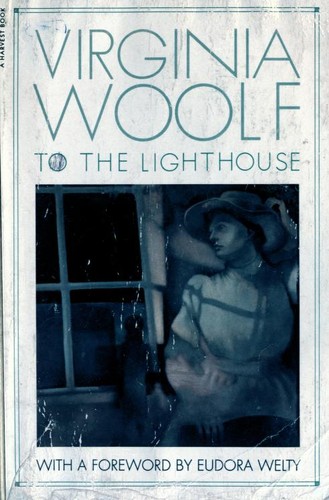
To the Lighthouse by Virginia Woolf is a 1927 literary fiction book about time and impermanence, art and creation, marriage and parenthood. Time Passes — the central section in which years elapse across a few pages and characters die in parentheses — is one of the most audacious formal gestures in twentieth-century fiction. It shows rather than tells what grief and loss feel like from the outside.
Summary
To the Lighthouse is divided into three parts. The first, The Window, spans one long afternoon and evening at the Ramsay family's summer house in the Scottish Hebrides, sometime before the First World War. The central suspended action is a planned trip to the lighthouse, promised to the youngest Ramsay child and postponed by weather and the father's impatience. The second part, Time Passes, covers ten years in just a few pages, during which the house stands empty, characters die in parenthetical asides, and time does its work. The third part, The Lighthouse, returns to the house and finally completes the trip.
The structure is a formal argument about time and loss. The long first section gives us a world in dense, careful detail — Mrs. Ramsay's consciousness, her marriage, the dinner party, Lily Briscoe's painting, Mr. Ramsay's philosophical vanity — and then Time Passes dissolves it in a few lean pages. Death in Woolf is not dramatic; it arrives in brackets. What the third section asks is whether anything can be recovered after such losses, and the answer it proposes is art: Lily finishes her painting on the last page, having finally understood what she was trying to do with it.
Woolf's prose in To the Lighthouse is more sustained and more ambitious than Mrs Dalloway. The interior monologue is less rapid, and the novel lingers inside Mrs. Ramsay's consciousness long enough that the reader comes to know her better than almost any character in fiction — and then loses her in a sentence. The Mr. Ramsay-Mrs. Ramsay marriage is one of the most psychologically accurate portraits of a difficult but real marriage in the English novel.
The book is semi-autobiographical: the Ramsay family is modeled on Woolf's own parents, and writing it was, she said, a way of laying her mother's ghost. That grief gives the second section its strange, cold power. What you're left with after To the Lighthouse is less a story than a feeling — the feeling of having understood something about time that you can't quite hold onto once you put the book down.
Talk to To the Lighthouse like its author wrote you back.
Get the ideas that fit your life — not generic summaries.
- Chat with the book
- Audiobook-style main ideas
- Adapts to your life and goals
- Helps you take action
Key takeaways
- 1.
Time Passes — the central section in which years elapse across a few pages and characters die in parentheses — is one of the most audacious formal gestures in twentieth-century fiction. It shows rather than tells what grief and loss feel like from the outside.
- 2.
Mrs. Ramsay is one of literature's great characters: generous, manipulative, sustaining, and eventually revealed to have been holding up more than anyone knew. Her absence in the second half is felt as a structural void.
- 3.
Lily Briscoe's painting, and her inability to finish it across the novel's span, is Woolf's exploration of what it means to be a woman artist — caught between the domestic demands that consume Mrs. Ramsay and the masculine authority that dismisses female work.
- 4.
Mr. Ramsay's philosophical career — his attempt to advance from Q to R in some imagined alphabet of truth — is both comic and genuinely sympathetic. He is vain, demanding, and also aware of his own limitations in ways he can't express.
- 5.
The promised trip to the lighthouse functions differently in each section: as desire, as absence, as finally achieved goal whose meaning has shifted entirely.
- 6.
Woolf's treatment of the marriage is unusually honest — Mrs. Ramsay gives her husband the emotional sustenance he demands while feeling the cost, and the novel doesn't romanticize this arrangement.
- 7.
The novel is deeply interested in what women's work actually is — the kind of labor that organizes other people's lives and goes unacknowledged. This thread runs from the dinner party scene through to the very end.
- 8.
Lily's final brushstroke — 'I have had my vision' — closes the novel by claiming for art the same status as life, not as its replacement but as its crystallized form.
Discussion questions
Use these on your own, with a book club, or as chat starters in Superbook. Book club version, ready to copy or print →
- 1.
The trip to the lighthouse is promised, delayed, and finally taken years later under entirely different circumstances. What does reaching the lighthouse mean by the third section, given everything that has happened?
- 2.
Mrs. Ramsay dies in a parenthetical aside in the second section. How did you experience that choice — as the right formal decision, as shocking, or as cold?
- 3.
Mr. Ramsay is a difficult figure — demanding, self-absorbed, genuinely grief-stricken. Did your reading of him change across the novel?
- 4.
The dinner party scene in Part One is very long and very precise. What do you think Woolf is trying to capture in it, beyond the social surface?
- 5.
Lily Briscoe's struggle with her painting spans the whole novel. Is her resolution at the end — the final vision — earned, or does it feel like an easy closure?
- 6.
The Time Passes section is extremely short given how much it covers. What would the novel have been if Woolf had dramatized those ten years instead of compressing them?
- 7.
To the Lighthouse is semi-autobiographical — the Ramsay family is modeled on Woolf's parents. Does knowing that change how you read the book?
- 8.
The novel seems to argue that art can preserve what time destroys. Do you believe that? Does Lily's painting actually preserve Mrs. Ramsay in any meaningful sense?
- 9.
How does Woolf render the different ways men and women exist in the domestic world of this novel? Is that portrait specific to the period or does it still ring true?
- 10.
James Ramsay, the child denied the lighthouse trip, carries his resentment of his father across the whole novel. What happens to it in the final section?
- 11.
Woolf said writing this book allowed her to stop being haunted by her mother. Do you think novels can function that way — as a form of grief work?
- 12.
Between Mrs Dalloway and To the Lighthouse, which is the better novel, and which is the more moving experience to read?
Themes
Frequently asked questions
-
Is To the Lighthouse worth reading?
Yes — it's Woolf at her most fully realized and is probably her single best novel. The emotional range is wider than Mrs Dalloway, the formal ambition is greater, and the grief at its center is handled with unusual honesty. Many readers find it the more lasting experience of the two.
-
Is To the Lighthouse hard to read?
The prose is dense and the interiority is sustained for long stretches — particularly in the first section. The Time Passes section is brief and stark, and the third section is more dramatic. It rewards patience and is generally considered more accessible than The Waves.
-
What is the lighthouse a symbol of?
Many things and no single fixed thing — this is part of Woolf's point. It functions differently for different characters: as promise and disappointment for young James, as something approaching philosophical certainty for Mr. Ramsay, as a point in the distance that organizes Lily's painting. Woolf resisted fixed symbolic readings.
-
Should I read Mrs Dalloway before To the Lighthouse?
Either order works. Mrs Dalloway is slightly shorter and may be a gentler introduction to Woolf's technique. To the Lighthouse is more emotionally substantial. If you can only read one, To the Lighthouse is the deeper experience.
-
Who shouldn't read To the Lighthouse?
Readers who want a conventional plot arc, clear causality, or external action will struggle. The novel is organized by consciousness and time rather than by event. If you bounced off Mrs Dalloway, To the Lighthouse is not likely to win you over — it's more of the same, at greater depth.