Classics · Book club
Tom Jones book club questions
Here are 12 book club questions for Tom Jones by Henry Fielding, ordered to open easily and end somewhere worth arguing about. Copy them, print them, or bring them up one at a time.
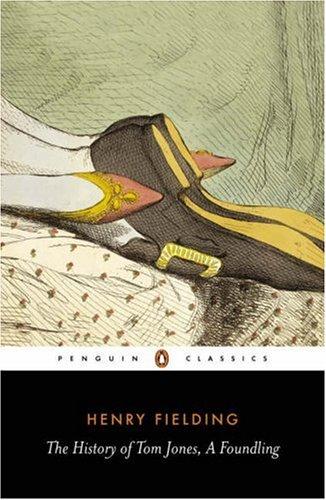
Tom Jones is the life story of a foundling — discovered as an infant in the bed of the generous Squire Allworthy — who grows up handsome, warm-hearted, impulsive, and perpetually in trouble.
Henry Fielding · 1749 · 23h 0m
Full summary and key takeaways →The 12 questions
- 1.
Fielding argues that goodness of heart matters more than prudence. Do you think that argument holds? Or does it romanticize impulsiveness and let Tom off the hook for real harm he causes?
- 2.
The narrator constantly addresses 'the reader' directly, comments on the craft of writing, and defends his own choices. Does this metafictional layer enrich the novel or interrupt it?
- 3.
Blifil is the novel's clearest villain, but he's mostly passive — he simply reports Tom's misdemeanors accurately and lets the world's hypocrisy do the work. Is that a more interesting kind of villain than an active schemer?
- 4.
Sophia chooses Tom despite his sexual history. Is this a progressive portrayal of female agency, or does it normalize a sexual double standard?
- 5.
At nine hundred pages, Tom Jones requires a significant investment. How do you weigh length against depth? Is there a version of this novel that could be half as long without losing what matters?
- 6.
The novel's ending is entirely providential — Tom's birth is revealed at exactly the right moment. Does this feel like a satisfying resolution, or like Fielding rescuing his hero arbitrarily?
- 7.
Thwackum (the clergyman) and Square (the philosopher) both claim to represent virtue. How does Fielding's portrait of them compare to your own experience of people who claim to represent principles?
- 8.
Tom Jones was published six years after Richardson's Pamela, which Fielding found insufferable. Knowing that, does Tom Jones read as a corrective argument to Pamela's model of virtue-as-chastity?
- 9.
The novel assumes a fairly stable English rural class system. How much does that assumption date it, and how much of Fielding's moral argument survives the removal of that context?
- 10.
Fielding's narrator is often sarcastic about critics, preachy readers, and bad authors. Does this self-defense feel necessary, defensive, or part of the novel's comedy?
- 11.
Which secondary character did you find most memorable — Mrs. Partridge, Lady Bellaston, Squire Western, someone else? What does their presence add?
- 12.
Does Sophia Western feel like a real character to you, or primarily a prize for Tom to win?
How to run the discussion
- Pick six to eight, not all of them. An hour of real discussion covers fewer questions than anyone expects, and racing the list is what makes a book club feel like homework.
- Open with what people noticed, not what they concluded. Asking for a verdict first hardens opinions before anyone has heard each other.
- Let the disagreement run. The questions below that split a room are the ones worth the time; the ones everyone answers the same way can be skipped.
- Ask the quiet person a specific question. A direct, narrow question is far easier to answer than an open invitation to contribute.
Themes worth steering toward
If the conversation stalls, these are the threads that usually restart it.
Common questions
What are good book club questions for Tom Jones?
Here are 12 book club questions for Tom Jones by Henry Fielding, ordered to open easily and end somewhere worth arguing about. The strongest openers ask what each reader noticed rather than what they concluded, and the discussion usually turns on prudence versus goodness, class and hypocrisy, fortune and providence.
How long should a book club discussion of Tom Jones last?
Most groups run 60 to 90 minutes of actual discussion. That is roughly six to eight questions, not all of them, so pick the ones that suit your group rather than working down the list in order.
What are the main themes in Tom Jones?
Prudence versus goodness, Class and hypocrisy, Fortune and Providence, Sexuality and morality, Narrative authority. Those are the threads most likely to divide a room, which makes them the useful places to steer a discussion that has gone quiet.
Picking the next one? See books like Tom Jones or questions for other book club picks.
