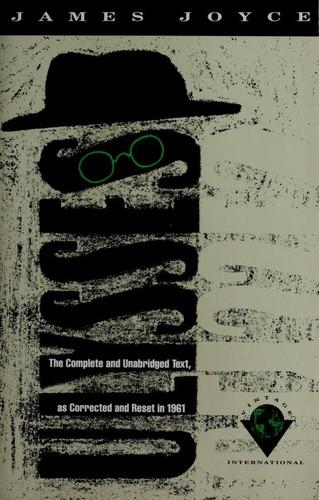
Talk to Ulysses like its author wrote you back.
Get the ideas that fit your life — not generic summaries.
- Chat with the book
- Audiobook-style main ideas
- Adapts to your life and goals
- Helps you take action
Ulysses, in detail
Ulysses takes place on a single day — June 16, 1904 — in Dublin, following three characters: Leopold Bloom, an advertising canvasser; his wife Molly; and Stephen Dedalus, the young writer from A Portrait of the Artist as a Young Man. The novel maps their paths through the city as they loop around each other, correspond loosely to the structure of Homer's Odyssey, and eventually converge late at night. Almost nothing happens in conventional narrative terms. The richness is entirely in the telling.
Joyce uses a different style and technique for each of the eighteen episodes — interior monologue, parody, catechism, hallucination, stream of consciousness, newspaper headlines, musical structure. This formal variety is the point: the novel argues that no single mode of perception or narration can capture reality, and that the novel form had gotten too comfortable with its own conventions. Bloom's interiority is rendered with more warmth and candor than almost any character in earlier fiction — his appetite, anxiety, grief over his dead son Rudy, and stifled affection for Molly form the emotional center of a book that can seem deliberately opaque.
The difficulty is real and should be named honestly. Ulysses is not a puzzle to be solved but it is a book that rewards — and arguably requires — some preparation. The Homeric correspondences are invisible without a guide. The Nighttown episode (Circe) is written as an expressionist play full of hallucinations that require sustained attention to place. Molly's closing soliloquy — forty-some pages with almost no punctuation — is either the most intimate long passage in the English language or an endurance test, depending on the day. Most readers who love it read it at least twice.
It is the central fact of the twentieth-century novel. The question is not whether it is great — it is — but whether the experience of reading it is worth the investment for you. If you are interested in what the novel form can do at its outermost edge, Ulysses is essential. If you want a good story about interesting people, there are easier options, including Joyce's own Dubliners.
The big ideas
- 1.
The stream-of-consciousness technique, particularly in Bloom's sections, renders the texture of ordinary thought — the random associations, the interrupted sentences, the physical intrusions — with a precision that changed what fiction was allowed to do.
- 2.
Leopold Bloom is one of literature's great anti-heroes: middle-aged, Jewish in a Catholic city, cuckolded, grieving, and yet fully alive in the way he engages with the world. His warmth makes the difficult book worth finishing.
- 3.
The novel's structure — eighteen episodes, each with its own style — is an argument that reality is too complex for any single narrative mode. The medium is part of the message.
