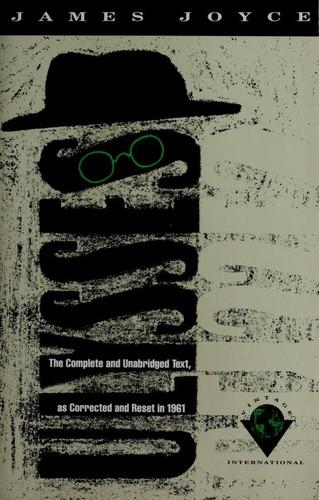
Ulysses by James Joyce is a 1922 literary fiction book about identity, consciousness, modern dublin. The stream-of-consciousness technique, particularly in Bloom's sections, renders the texture of ordinary thought — the random associations, the interrupted sentences, the physical intrusions — with a precision that changed what fiction was allowed to do.
Summary
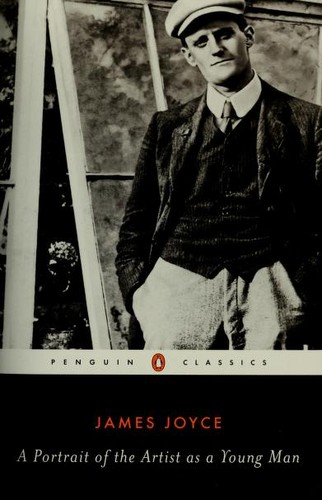
Ulysses takes place on a single day — June 16, 1904 — in Dublin, following three characters: Leopold Bloom, an advertising canvasser; his wife Molly; and Stephen Dedalus, the young writer from A Portrait of the Artist as a Young Man. The novel maps their paths through the city as they loop around each other, correspond loosely to the structure of Homer's Odyssey, and eventually converge late at night. Almost nothing happens in conventional narrative terms. The richness is entirely in the telling.
Joyce uses a different style and technique for each of the eighteen episodes — interior monologue, parody, catechism, hallucination, stream of consciousness, newspaper headlines, musical structure. This formal variety is the point: the novel argues that no single mode of perception or narration can capture reality, and that the novel form had gotten too comfortable with its own conventions. Bloom's interiority is rendered with more warmth and candor than almost any character in earlier fiction — his appetite, anxiety, grief over his dead son Rudy, and stifled affection for Molly form the emotional center of a book that can seem deliberately opaque.
The difficulty is real and should be named honestly. Ulysses is not a puzzle to be solved but it is a book that rewards — and arguably requires — some preparation. The Homeric correspondences are invisible without a guide. The Nighttown episode (Circe) is written as an expressionist play full of hallucinations that require sustained attention to place. Molly's closing soliloquy — forty-some pages with almost no punctuation — is either the most intimate long passage in the English language or an endurance test, depending on the day. Most readers who love it read it at least twice.
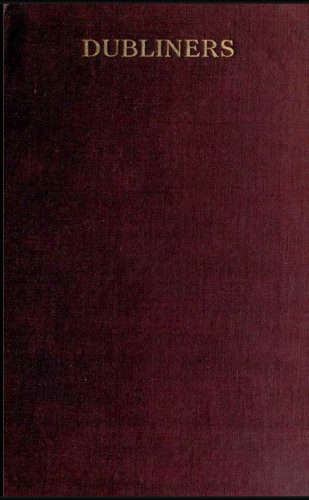
It is the central fact of the twentieth-century novel. The question is not whether it is great — it is — but whether the experience of reading it is worth the investment for you. If you are interested in what the novel form can do at its outermost edge, Ulysses is essential. If you want a good story about interesting people, there are easier options, including Joyce's own Dubliners.
Talk to Ulysses like its author wrote you back.
Get the ideas that fit your life — not generic summaries.
- Chat with the book
- Audiobook-style main ideas
- Adapts to your life and goals
- Helps you take action
Key takeaways
- 1.
The stream-of-consciousness technique, particularly in Bloom's sections, renders the texture of ordinary thought — the random associations, the interrupted sentences, the physical intrusions — with a precision that changed what fiction was allowed to do.
- 2.
Leopold Bloom is one of literature's great anti-heroes: middle-aged, Jewish in a Catholic city, cuckolded, grieving, and yet fully alive in the way he engages with the world. His warmth makes the difficult book worth finishing.
- 3.
The novel's structure — eighteen episodes, each with its own style — is an argument that reality is too complex for any single narrative mode. The medium is part of the message.
- 4.
Ulysses maps modern experience onto myth, not to glorify the modern but to show that the same forces — homecoming, wandering, fidelity, betrayal — run beneath the surface of the most ordinary days.
- 5.
Molly Bloom's closing soliloquy is one of the most famous passages in literature: intimate, unpunctuated, ending on 'yes.' It gives the book its emotional resolution after hundreds of pages of ironic distance.
- 6.
The novel is saturated with Dublin in 1904 — the streets, the pubs, the politics, the smells. This specificity, which initially feels like an obstacle, eventually makes the universality land harder.
- 7.
Joyce uses parody throughout to deflate literary conventions — sentimental journalism, overwrought romanticism, catechistic pedagogy. The comedy is often funnier than Ulysses's reputation as a difficult masterpiece suggests.
- 8.
The Bloom-Stephen relationship, never quite consummated as friendship, mirrors the Odyssey's Telemachus-Odysseus structure and suggests a father-son need that neither character can articulate or fulfill.
Discussion questions
Use these on your own, with a book club, or as chat starters in Superbook. Book club version, ready to copy or print →
- 1.
Most readers find Bloom more accessible than Stephen. Which character did you find yourself more interested in, and why?
- 2.
The Nighttown episode reads like a fever dream — hallucinatory, expressionistic, hard to follow. How did you experience it? Did you feel it was worth the difficulty it imposes?
- 3.
Molly's final soliloquy is often read as affirmative — the 'yes' at the end. But is it? What is she actually thinking and feeling in those forty pages?
- 4.
Joyce never lets you forget the day has a specific historical and geographic setting. Does the Dublin-in-1904 specificity feel like richness or like being kept outside a private joke?
- 5.
The novel is built on the Odyssey but most readers can't see the correspondences without a guide. Does knowing the structure change your reading, or does it feel like a scholar's game?
- 6.
Leopold Bloom is Jewish, and the novel is interested in his outsider status in a city of Catholic nationalism. How does that thread develop across the day?
- 7.
The Oxen of the Sun episode is a parody of the history of English prose style. Is that the kind of difficulty you find interesting, or does it feel like a stunt?
- 8.
Ulysses is often called the greatest novel in English. Do you think it's the greatest, or just the most technically ambitious? Are those different things?
- 9.
Did you use a guide (Gifford, Gilbert, or similar) while reading? If so, did it help or did it make the experience feel like homework?
- 10.
The book's central relationship — Bloom and Molly's marriage, defined by his passivity and her affair with Blazes Boylan — is never directly dramatized. We only know it through interiority. Does that feel like a limitation?
- 11.
Compared to other ambitious modernist novels you've read — The Waves, Mrs Dalloway, The Sound and the Fury — where does Ulysses fall in terms of difficulty-to-reward ratio?
- 12.
The final word is 'yes.' What do you think Joyce means by ending there, and does it feel earned?
Themes
Frequently asked questions
-
Is Ulysses worth reading?
Yes, but the investment is real. It rewards preparation — reading Dubliners first, having a companion guide handy for the structural apparatus — and at least two readings. The first is often just getting your bearings; the second is when the comedy and warmth start to show through.
-
Is Ulysses hard to read?
Genuinely, yes. The difficulty varies by episode: the Bloom sections are more accessible than the Cyclops, Oxen, or Circe episodes. Some readers find the opening fifty pages the hardest and get significantly more fluid after that. A reliable guide (the Gifford annotations are standard) helps enormously.
-
What is the best translation or edition of Ulysses?
Ulysses is in English, so the edition question is about text integrity. The corrected text by Hans Walter Gabler (1986) is the standard scholarly edition. The Penguin Classics and Vintage International editions both use reliable text and are fine for general readers.
-
Do I need to read the Odyssey first?
Not required, but useful. Knowing the broad strokes of Homer — Odysseus wandering home, Penelope weaving, Telemachus looking for his father — gives the Homeric correspondences some grip. A full reading of the Odyssey first is overkill for a first read of Ulysses.
-
Who shouldn't read Ulysses?
Readers who need linear plot and conventionally sympathetic characters will not enjoy it. Readers who are intimidated by difficulty but willing to prepare and persist often find more than they expected. It is genuinely not for everyone, and starting with Dubliners is a more reliable gateway to Joyce's greatness.