Philosophy · Book club
Utilitarianism book club questions
Here are 11 book club questions for Utilitarianism by John Stuart Mill, ordered to open easily and end somewhere worth arguing about. Copy them, print them, or bring them up one at a time.
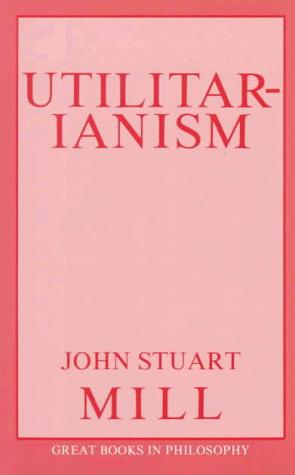
Utilitarianism, first published in 1863 after appearing in Fraser's Magazine the previous year, is Mill's defense and refinement of the utilitarian moral theory he inherited from Jeremy Bentham.
John Stuart Mill · 1863 · 1h 30m
Full summary and key takeaways →The 11 questions
- 1.
Mill says pleasures differ in quality, not just quantity, and that competent judges prefer higher pleasures. Does that criterion actually work, or is it circular?
- 2.
The greatest happiness principle asks us to count everyone equally. Does that demand feel like a moral improvement over common sense, or does it require ignoring things that matter?
- 3.
Mill's 'proof' — that happiness is desirable because it is desired — is often cited as a fallacy. Do you find the argument unconvincing? Does its failure damage the rest of the essay?
- 4.
Is there a version of justice that cannot be captured by utilitarian considerations? Think of a case where just treatment and maximum welfare point in different directions.
- 5.
Mill argues that secondary moral rules — honesty, promise-keeping — derive their authority from utility. Does deriving those rules from consequences make them more or less binding in your view?
- 6.
Bentham's version of utilitarianism counts pleasure quantitatively; Mill's adds quality. What is gained by the distinction, and what new problems does it introduce?
- 7.
If you accept that the goal of morality is to maximize welfare, what follows for how individuals should live, give, and vote? Does acting on that implication feel achievable?
- 8.
Mill says moral feelings can be cultivated. Is that a reassuring claim about the flexibility of moral psychology, or a troubling one about its malleability?
- 9.
Where does utilitarianism seem most compelling to you, and where does it seem to demand something morally intolerable?
- 10.
Mill wrote this essay partly to make utilitarianism respectable to people with strong intuitions about virtue and justice. Does he succeed in making the two compatible?
- 11.
Utilitarianism is the most influential framework in applied ethics today — used in policy analysis, medical ethics, and effective altruism. Does reading the original change how you evaluate those applications?
How to run the discussion
- Pick six to eight, not all of them. An hour of real discussion covers fewer questions than anyone expects, and racing the list is what makes a book club feel like homework.
- Open with what people noticed, not what they concluded. Asking for a verdict first hardens opinions before anyone has heard each other.
- Let the disagreement run. The questions below that split a room are the ones worth the time; the ones everyone answers the same way can be skipped.
- Ask the quiet person a specific question. A direct, narrow question is far easier to answer than an open invitation to contribute.
Themes worth steering toward
If the conversation stalls, these are the threads that usually restart it.
Common questions
What are good book club questions for Utilitarianism?
Here are 11 book club questions for Utilitarianism by John Stuart Mill, ordered to open easily and end somewhere worth arguing about. The strongest openers ask what each reader noticed rather than what they concluded, and the discussion usually turns on moral philosophy, happiness, justice.
How long should a book club discussion of Utilitarianism last?
Most groups run 60 to 90 minutes of actual discussion. That is roughly six to eight questions, not all of them, so pick the ones that suit your group rather than working down the list in order.
What are the main themes in Utilitarianism?
Moral philosophy, Happiness, Justice, Consequentialism, Rights. Those are the threads most likely to divide a room, which makes them the useful places to steer a discussion that has gone quiet.
Picking the next one? See books like Utilitarianism or questions for other book club picks.
