Literary fiction · Book club
Villette book club questions
Here are 12 book club questions for Villette by Charlotte Brontë, ordered to open easily and end somewhere worth arguing about. Copy them, print them, or bring them up one at a time.
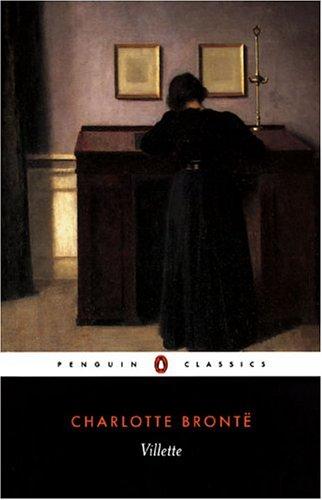
Villette is Charlotte Brontë's final and most autobiographical novel, narrated by Lucy Snowe, an Englishwoman who travels alone to the fictional Belgian city of Villette after an unspecified catastrophe has stripped her of family, home, and prospects.
Charlotte Brontë · 1853 · 13h 0m
Full summary and key takeaways →The 12 questions
- 1.
Lucy withholds the identity of Dr. John from the reader for several chapters after it's clear she knows. What does that choice tell us about her psychology rather than just Brontë's plotting?
- 2.
Is Paul Emanuel a satisfying romantic hero, or does he represent the same dynamic as Rochester — a difficult man who has to be tamed before the heroine can love him?
- 3.
The Gothic episodes — the nun, the drugged night-walk — feel tonally different from the rest of the novel. Are they failures of realism, or are they doing something the realistic sections can't?
- 4.
How does Villette treat Catholicism? Is Brontë's view fair, or does her Protestant bias undercut what she's trying to say about Lucy's position as a foreigner?
- 5.
Lucy describes herself as plain, repressed, and not deserving of love. Is this accurate self-knowledge or a survival strategy? Does the novel agree with her self-assessment?
- 6.
Madame Beck is presented as an antagonist but also as someone who has solved the problem of female independence in ways Lucy hasn't. Do you find her admirable, sinister, or both?
- 7.
Compare Lucy Snowe to Jane Eyre. Why does Jane Eyre get the marriage and the happy ending, while Lucy probably doesn't? What does Brontë think is the difference between them?
- 8.
The ending is famously ambiguous. Do you read it as tragedy or as Brontë refusing to give the reader a consolation the novel hasn't earned? What do you think happened?
- 9.
Lucy's breakdown and visit to the confessional is one of the novel's most intense passages. What does it reveal about the cost of the self-containment she has maintained throughout?
- 10.
Villette is set in Belgium, barely disguised as 'Villette.' How does Lucy's foreignness — her position as an outsider who cannot read the social codes around her — shape what the novel can say?
- 11.
The novel is very long and some readers find the middle sections slow. Does the length feel necessary to the portrait of a woman whose life has very little action in it?
- 12.
Is Villette a feminist novel? What kind of female future does it imagine, and does it seem possible in the world Brontë depicts?
How to run the discussion
- Pick six to eight, not all of them. An hour of real discussion covers fewer questions than anyone expects, and racing the list is what makes a book club feel like homework.
- Open with what people noticed, not what they concluded. Asking for a verdict first hardens opinions before anyone has heard each other.
- Let the disagreement run. The questions below that split a room are the ones worth the time; the ones everyone answers the same way can be skipped.
- Ask the quiet person a specific question. A direct, narrow question is far easier to answer than an open invitation to contribute.
Themes worth steering toward
If the conversation stalls, these are the threads that usually restart it.
Common questions
What are good book club questions for Villette?
Here are 12 book club questions for Villette by Charlotte Brontë, ordered to open easily and end somewhere worth arguing about. The strongest openers ask what each reader noticed rather than what they concluded, and the discussion usually turns on repression and interiority, female independence, grief and displacement.
How long should a book club discussion of Villette last?
Most groups run 60 to 90 minutes of actual discussion. That is roughly six to eight questions, not all of them, so pick the ones that suit your group rather than working down the list in order.
What are the main themes in Villette?
Repression and interiority, Female independence, Grief and displacement, Religion and doubt, Surveillance and power. Those are the threads most likely to divide a room, which makes them the useful places to steer a discussion that has gone quiet.
Picking the next one? See books like Villette or questions for other book club picks.
