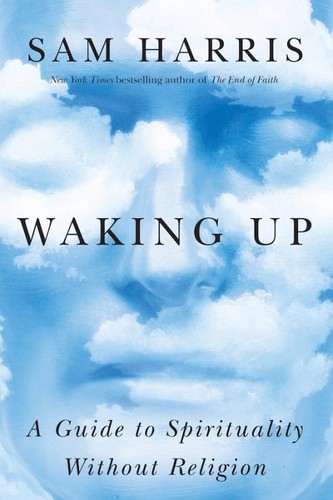
Talk to Waking Up: A Guide to Spirituality Without Religion like its author wrote you back.
Get the ideas that fit your life — not generic summaries.
- Chat with the book
- Audiobook-style main ideas
- Adapts to your life and goals
- Helps you take action
What it argues
Waking Up is Sam Harris' argument that the insights of contemplative traditions — particularly Buddhism's claim that the sense of self is an illusion — can be separated from religious metaphysics and investigated directly through meditation and introspection. Harris is a neuroscientist and one of the "New Atheist" thinkers, and his distinctive contribution is the claim that spiritual experience is real and important but does not require supernatural explanation. The word "spirituality" in the subtitle is deliberate and provocative for Harris' audience.
The book's first half makes the philosophical and empirical case that the conventional sense of a unified, continuous self is a construction rather than a discovery. Drawing on split-brain research, studies of meditation, and Harris' own practice under teachers in both Theravada and Dzogchen traditions, he argues that the experience of being a self is generated by specific neural processes and can be disrupted — both pathologically (in certain neurological conditions) and through meditation. The insight that there is no substantial self behind experience is not mere philosophy; it is, Harris argues, available as direct experience to anyone who practices carefully.
What it gets right
- 1.
The sense of being a unified, continuous self is a construction of neural processes, not a discovery of a real entity — and this can be directly experienced, not merely believed.
- 2.
Spirituality — the investigation of consciousness, the dissolution of the self-sense, the cultivation of equanimity — is real and valuable independent of religious metaphysics.
- 3.
Meditation is not relaxation or stress reduction but a direct investigation of the nature of experience; its deepest insights concern the absence of a stable self.
What it covers
Who wrote it
Sam Harris (born 1967) is an American neuroscientist, philosopher, and author who holds a Ph.D. in cognitive neuroscience from UCLA. His books include The End of Faith (2004), Letter to a Christian Nation (2006), The Moral Landscape (2010), and Lying (2011). Waking Up (2014) represents a significant departure from his earlier polemical work on religion, turning inward to argue for a secular approach to spirituality grounded in neuroscience and meditation. He founded the app and podcast Waking Up in 2018, which provides guided meditation and philosophical talks to a secular audience.
