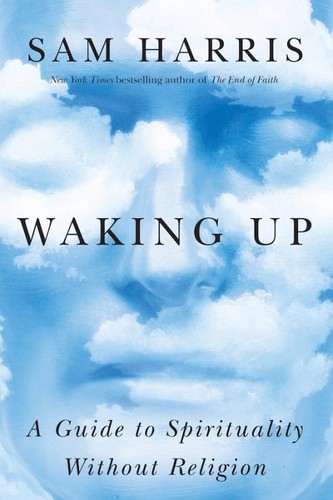
Waking Up: A Guide to Spirituality Without Religion by Sam Harris is a 2014 religion & spirituality book about consciousness, meditation, spirituality. The sense of being a unified, continuous self is a construction of neural processes, not a discovery of a real entity — and this can be directly experienced, not merely believed.
Summary
Waking Up is Sam Harris' argument that the insights of contemplative traditions — particularly Buddhism's claim that the sense of self is an illusion — can be separated from religious metaphysics and investigated directly through meditation and introspection. Harris is a neuroscientist and one of the "New Atheist" thinkers, and his distinctive contribution is the claim that spiritual experience is real and important but does not require supernatural explanation. The word "spirituality" in the subtitle is deliberate and provocative for Harris' audience.
The book's first half makes the philosophical and empirical case that the conventional sense of a unified, continuous self is a construction rather than a discovery. Drawing on split-brain research, studies of meditation, and Harris' own practice under teachers in both Theravada and Dzogchen traditions, he argues that the experience of being a self is generated by specific neural processes and can be disrupted — both pathologically (in certain neurological conditions) and through meditation. The insight that there is no substantial self behind experience is not mere philosophy; it is, Harris argues, available as direct experience to anyone who practices carefully.
The second half evaluates various spiritual teachers and traditions with unusual candor. Harris is appreciative of genuine contemplative insight while being openly critical of the cultism, lack of critical thinking, and abuse of authority that pervade many spiritual communities. His account of studying with Tenzin Palmo, Sayadaw U Pandita, and H.W.L. Poonja is both respectful and clear-eyed. He is particularly interested in the Dzogchen tradition's claim that the nature of consciousness can be recognized directly, without the years of practice that other Buddhist traditions require.
The final section discusses psychedelics as possible shortcuts to the kinds of states meditation produces. Harris is cautious but not dismissive — he argues that psychedelics can provide genuine insights but cannot substitute for the stable transformation that sustained practice produces. The book is unusual in its combination of neuroscientific rigor, honest personal testimony, and sustained philosophical argument.
Talk to Waking Up: A Guide to Spirituality Without Religion like its author wrote you back.
Get the ideas that fit your life — not generic summaries.
- Chat with the book
- Audiobook-style main ideas
- Adapts to your life and goals
- Helps you take action
Key takeaways
- 1.
The sense of being a unified, continuous self is a construction of neural processes, not a discovery of a real entity — and this can be directly experienced, not merely believed.
- 2.
Spirituality — the investigation of consciousness, the dissolution of the self-sense, the cultivation of equanimity — is real and valuable independent of religious metaphysics.
- 3.
Meditation is not relaxation or stress reduction but a direct investigation of the nature of experience; its deepest insights concern the absence of a stable self.
- 4.
The Dzogchen tradition claims the nature of consciousness can be recognized directly in a single moment of instruction — a claim Harris takes seriously and describes from personal experience.
- 5.
Many spiritual teachers exploit their followers; critical thinking and healthy skepticism are not obstacles to genuine practice but its necessary protection.
- 6.
Psychedelics can produce states resembling meditation insight but cannot substitute for the stable transformation that sustained practice produces.
- 7.
Consciousness itself — the mere fact of being aware — is more fundamental than its contents; meditation is a way of shifting identity from content to awareness.
- 8.
Most of the suffering associated with the human condition arises from the delusion of a separate self and can be addressed through the investigation and dissolution of that delusion.
Discussion questions
Use these on your own, with a book club, or as chat starters in Superbook. Book club version, ready to copy or print →
- 1.
Harris argues that the sense of a unified self is a construction, not a discovery. Does that claim seem like an insight or an empty philosophical move to you?
- 2.
He separates spirituality from religion, claiming the insights can stand alone. Is that separation sustainable? What does it leave behind?
- 3.
The Dzogchen tradition claims the nature of mind can be recognized directly in an instant. Harris says he has had that experience. How do you evaluate first-person testimony about states of consciousness?
- 4.
Harris is unusually critical of specific spiritual teachers and communities. Does that critical stance make him a more or less trustworthy guide to meditation?
- 5.
He argues that meditation's deepest insights concern the absence of a self. Is that consistent with living a fully engaged life with commitments, relationships, and responsibilities?
- 6.
How does Harris' account of spiritual experience differ from traditional Buddhist or Vedantic accounts? What has he kept and what has he left behind?
- 7.
Split-brain research shows that the brain has no single executive and can produce two simultaneous self-narratives. What does that tell you about the nature of self-experience?
- 8.
Harris argues that psychedelics can produce genuine spiritual insights but can't substitute for practice. Is that a defensible position or an attempt to have it both ways?
- 9.
The book is aimed partly at atheists who are skeptical of 'spirituality.' Does Harris succeed in making the case that spiritual experience is worth taking seriously for that audience?
- 10.
Harris studied with multiple teachers across traditions. What does the comparative experience suggest about the universality of contemplative insight?
- 11.
What would change about your daily life if the sense of self you ordinarily experience were genuinely recognized as a construction?
Themes
Frequently asked questions
-
What is Waking Up about?
The argument that the insights of contemplative traditions — especially the claim that the self is an illusion — can be investigated directly without religious commitment, and that meditation is a legitimate empirical practice for exploring the nature of consciousness.
-
Is this a book for atheists only?
No. Harris is writing for atheists skeptical of spirituality, but the content is of interest to anyone curious about consciousness, meditation, and the intersection of neuroscience and contemplative practice. Religious readers may find the framing uncongenial but the content substantive.
-
What is Dzogchen?
A Tibetan Buddhist tradition that claims the nature of mind can be recognized directly — awareness of awareness itself — without the gradual stages of other paths. Harris describes learning a pointing-out instruction from a teacher that gave him a direct experience of what Dzogchen points at.
-
Does Harris recommend meditation?
Yes, strongly. He argues it is the most reliable method for investigating consciousness and for producing genuine insight into the nature of the self. He is more cautious about psychedelics, which he considers potentially useful but not a substitute for sustained practice.
-
How does this compare to his earlier books on religion?
The End of Faith and Letter to a Christian Nation are polemics against religion's harms. Waking Up turns the same critical attention inward, arguing for a form of spirituality that survives the demolition of religious metaphysics. It is a more personal and more philosophically careful book.
Similar books
Why Buddhism Is True
Robert Wright
The Untethered Soul
Michael A. Singer
What the Buddha Taught
Walpola Rahula
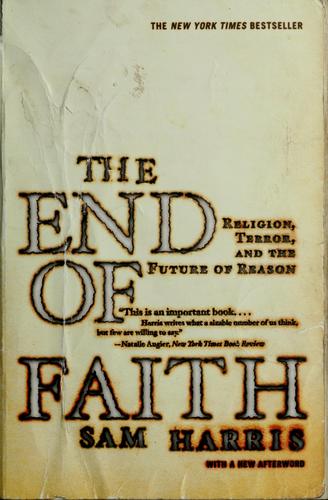
The End of Faith: Religion, Terror, and the Future of Reason
Sam Harris
