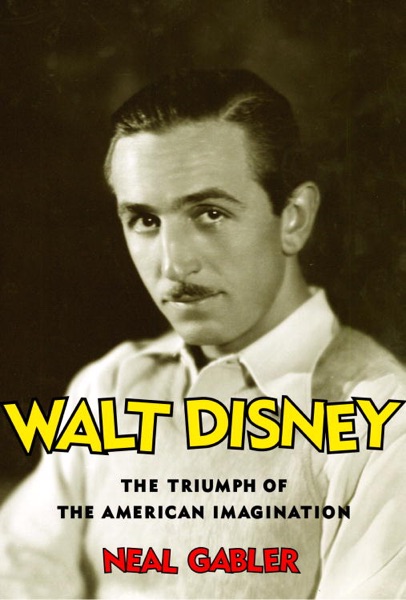
Talk to Walt Disney: The Triumph of the American Imagination like its author wrote you back.
Get the ideas that fit your life — not generic summaries.
- Chat with the book
- Audiobook-style main ideas
- Adapts to your life and goals
- Helps you take action
What it argues
Walt Disney: The Triumph of the American Imagination is Neal Gabler's authorized biography, drawing on Disney's personal papers and company archives that had been closed to researchers for decades. Published in 2006, it is the most thoroughly researched account of Disney's life and the most honest about both his extraordinary creativity and his considerable personal failures. Gabler frames Disney as a distinctly American figure: a man from the rural Midwest who built one of the most recognizable cultural brands in history through restless imagination and compulsive control.
Gabler traces Disney from a childhood in Marceline, Missouri — which he spent his entire adult life trying to reconstruct — through the animated short films that made him famous, the gambles on Snow White and Fantasia that nearly destroyed the company, and the long transition from animation to live action, television, and finally Disneyland. The early chapters on the development of Mickey Mouse, the multiplane camera, and the story meetings that produced the first animated features reveal a man who understood instinctively how to create emotional experience and who built an organizational culture that could sustain it.
What it gets right
- 1.
Disney's drive to control every aspect of his productions came from an acute sensitivity to emotional effect, not mere perfectionism. He wanted the audience to feel something specific, and control was the only way to guarantee it.
- 2.
Snow White (1937) was a genuine bet-the-company gamble; the entire studio nearly went bankrupt producing it. Risk-taking at that scale was central to Disney's creative method.
- 3.
The 1941 studio strike broke Disney's trust in his own employees and marked a turning point: after it, the studio became more corporate and Disney's creative engagement declined.
What it covers
Who wrote it
Neal Gabler is an American cultural historian and biographer whose books include Winchell: Gossip, Power and the Culture of Celebrity (1994), Life the Movie: How Entertainment Conquered Reality (1998), and An Empire of Their Own: How the Jews Invented Hollywood (1988). Walt Disney was the product of a decade of research with access to the Disney Company's private archives. Gabler has written for numerous major publications and taught at several universities. He is known for biographies that combine rigorous research with attention to the broader cultural forces shaping their subjects.
