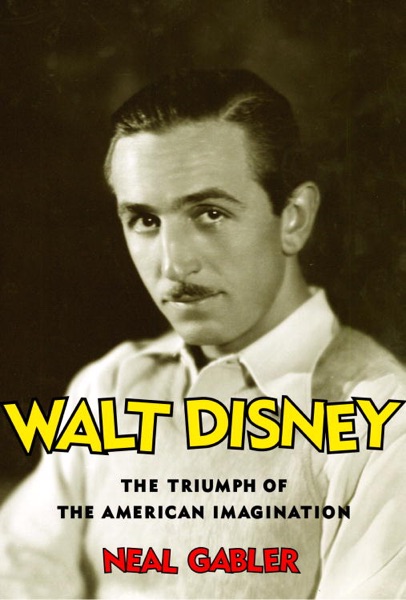
Walt Disney: The Triumph of the American Imagination by Neal Gabler is a 2006 biography book about creativity, american ambition, innovation. Disney's drive to control every aspect of his productions came from an acute sensitivity to emotional effect, not mere perfectionism. He wanted the audience to feel something specific, and control was the only way to guarantee it.
Summary
Walt Disney: The Triumph of the American Imagination is Neal Gabler's authorized biography, drawing on Disney's personal papers and company archives that had been closed to researchers for decades. Published in 2006, it is the most thoroughly researched account of Disney's life and the most honest about both his extraordinary creativity and his considerable personal failures. Gabler frames Disney as a distinctly American figure: a man from the rural Midwest who built one of the most recognizable cultural brands in history through restless imagination and compulsive control.
Gabler traces Disney from a childhood in Marceline, Missouri — which he spent his entire adult life trying to reconstruct — through the animated short films that made him famous, the gambles on Snow White and Fantasia that nearly destroyed the company, and the long transition from animation to live action, television, and finally Disneyland. The early chapters on the development of Mickey Mouse, the multiplane camera, and the story meetings that produced the first animated features reveal a man who understood instinctively how to create emotional experience and who built an organizational culture that could sustain it.
The darker threads of the biography are handled directly. Disney was a difficult employer — the 1941 studio strike, which divided his staff and which Disney experienced as a profound personal betrayal, left permanent damage to his relationships and his public image. He was a cooperative witness before HUAC during the Hollywood blacklist era. He was cold and often absent as a father. He became increasingly detached from the creative work after the strike and poured his obsessive energy into Disneyland and, in his final years, the Florida project that became Disney World.
Gabler's portrait is of a man who used creative control as a form of will-to-power, and who found in his art a means of ordering a world that felt chaotic and threatening. Disney was less interested in money than in the ability to make things exactly as he wanted them. That obsession produced lasting culture. It also produced a closed, insular company culture that struggled to survive his death. Gabler's biography is long — nearly 900 pages — and rewards readers willing to follow the full arc.
Talk to Walt Disney: The Triumph of the American Imagination like its author wrote you back.
Get the ideas that fit your life — not generic summaries.
- Chat with the book
- Audiobook-style main ideas
- Adapts to your life and goals
- Helps you take action
Key takeaways
- 1.
Disney's drive to control every aspect of his productions came from an acute sensitivity to emotional effect, not mere perfectionism. He wanted the audience to feel something specific, and control was the only way to guarantee it.
- 2.
Snow White (1937) was a genuine bet-the-company gamble; the entire studio nearly went bankrupt producing it. Risk-taking at that scale was central to Disney's creative method.
- 3.
The 1941 studio strike broke Disney's trust in his own employees and marked a turning point: after it, the studio became more corporate and Disney's creative engagement declined.
- 4.
Disneyland was not a business decision but an extension of Disney's obsessive desire to create a controlled, emotionally coherent environment — the same impulse that drove his animation.
- 5.
Disney's model for his studio — story meetings, critique sessions, collective development — anticipated later ideas about creative organizations, though his version was authoritarian rather than collaborative.
- 6.
He was shaped profoundly by a rural, small-town Midwest childhood that he spent his career mythologizing. Main Street U.S.A. at Disneyland is a faithful reproduction of an idealized Marceline, Missouri.
- 7.
Disney's political conservatism and his testimony before HUAC were consistent with his broader worldview: he feared disorder, believed in authority, and distrusted anything that challenged the orderly world he was constructing.
- 8.
The organizational culture Disney built was dependent on his personal authority. After his death in 1966, the company nearly collapsed — it took until Michael Eisner's tenure in the 1980s to stabilize.
Discussion questions
Use these on your own, with a book club, or as chat starters in Superbook. Book club version, ready to copy or print →
- 1.
Gabler argues that Disney's desire to control his art was rooted in a desire to order his experience of the world. Do you find that psychological framing convincing, or does it over-explain?
- 2.
Disney spent his career mythologizing his Midwest childhood. To what extent do you think the most powerful creative work is always autobiographical in some deep sense?
- 3.
The 1941 strike seems to have genuinely wounded Disney as much as a business conflict would have wounded another person. What does that suggest about how he understood his relationship to his employees?
- 4.
Disney cooperated with HUAC and named colleagues. How do you hold that alongside the rest of his legacy? Does the personal context Gabler provides change your assessment?
- 5.
The company nearly collapsed after Disney died, despite the enormous institutional infrastructure he built. What does that say about the relationship between personal vision and organizational sustainability?
- 6.
Disneyland was conceived not as an entertainment business but as a form of environmental art — a place that felt the way Disney thought good places should feel. Is that a meaningful distinction?
- 7.
Disney was not a particularly skilled animator himself. What does his career say about the relationship between creative leadership and personal technical ability?
- 8.
Gabler had access to archives that had been closed for decades. How does reading an authorized biography change your approach to it compared to an independent one?
- 9.
Disney's films sentimentalized nature, childhood, and the rural past. Given what Gabler shows about the psychological sources of those themes, does it change how you experience the films?
- 10.
The book is nearly 900 pages. Does length signal respect for a subject, or is it a failure of editing? What would you cut if you could?
- 11.
Which part of Disney's story do you think Gabler handles most fairly, and which feels most partial?
- 12.
Disney died before he could build Walt Disney World. The Florida project was eventually built by others. Is what was built consistent with what the biography suggests he intended?
Themes
Frequently asked questions
-
Is Walt Disney by Neal Gabler the best Disney biography?
It is widely considered the most authoritative. The access to company archives was unprecedented. Bob Thomas wrote an earlier biography that is more accessible, but Gabler's is more complete and more honest about Disney's flaws. For serious readers, Gabler is the standard.
-
How long does it take to read Walt Disney by Gabler?
At nearly 900 pages, it takes 15-20 hours depending on reading pace. It is not a quick read. The sections on the early animation work and the studio culture are the densest; the Disneyland chapters have more narrative momentum.
-
Does the book cover Walt Disney World?
Only partially. Disney died in 1966 during the early planning stages. Gabler covers his vision for the Florida project but the book's subject dies before it opens. Disney World as it exists is largely post-Walt.
-
Is Gabler critical of Disney?
Yes, directly. The HUAC testimony, the treatment of employees, the strike, the emotional distance from his family — Gabler does not soften these. But the biography is not debunking; it takes Disney's achievements as seriously as his failures.
-
Who should read this book?
Readers interested in American creative history, the history of film and entertainment, or biographical studies of obsessive creative personalities. Casual Disney fans may find the depth excessive; those genuinely interested in how the company and its culture were built will find it rewarding.
Similar books
Steve Jobs
Walter Isaacson
Creativity, Inc.: Overcoming the Unseen Forces That Stand in the Way of True Inspiration
Ed Catmull and Amy Wallace
Elon Musk: Tesla, SpaceX, and the Quest for a Fantastic Future
Ashlee Vance
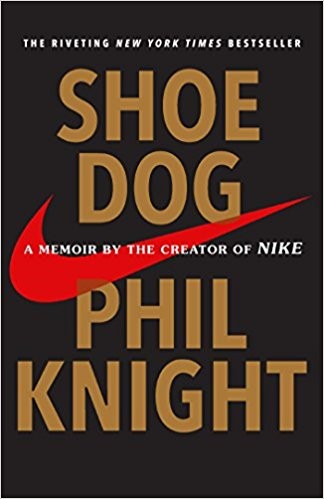
Shoe Dog: A Memoir by the Creator of Nike
Phil Knight
