Talk to Ways of Seeing like its author wrote you back.
Get the ideas that fit your life — not generic summaries.
- Chat with the book
- Audiobook-style main ideas
- Adapts to your life and goals
- Helps you take action
What it argues
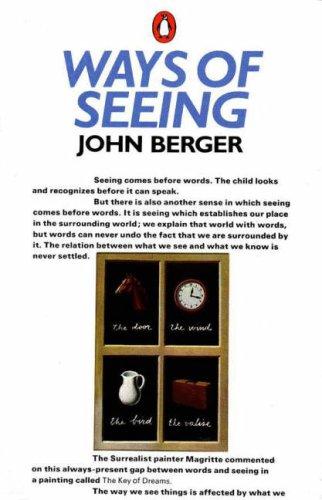
Ways of Seeing began as a BBC television series in 1972 and was published the same year as a slim, deliberately designed paperback. Berger's argument is that how we look at images is never neutral. Every act of seeing is shaped by what we know, what we believe, and by the social conditions we inhabit. The book's opening move — that seeing comes before words, and that cameras forever changed our relationship to painted images by stripping them from their original location — sets the terms for everything that follows.
The most influential section concerns oil painting in the European tradition. Berger argues that paintings in this tradition were primarily a way of showing the owner's ownership — of land, of objects, of women. The genre of the nude is his central case: the distinction between nakedness (being oneself, without clothes) and the nude (being displayed for the male spectator) collapses centuries of aesthetic justification into a structural argument about who looks and who is looked at. The gaze is not innocent; it encodes power.
What it gets right
- 1.
Seeing comes before words. The child looks before it can speak. Visual perception is always prior to, and shapes, language.
- 2.
The camera removed art from its original context. A painting can now be reproduced infinitely, which destroys its unique presence — what Berger calls its 'aura,' drawing on Walter Benjamin.
- 3.
In European oil painting, the primary subject is property. Landscapes show land owned; still lifes show objects owned; portraits show the owner, or what they wish to own.
What it covers
Who wrote it
John Berger (1926–2017) was a British art critic, novelist, painter, and political essayist whose work defied easy categorization for six decades. He won the Booker Prize in 1972 for his novel G., donating half the prize money to the Black Panthers. Ways of Seeing, produced for BBC Two in the same year, became one of the most widely assigned texts in art, media, and cultural studies. His other major works include About Looking, Another Way of Telling (with Jean Mohr), and the trilogy Into Their Labours. He spent much of his adult life in a peasant village in the French Alps, and his later writing drew heavily on those agrarian rhythms.
