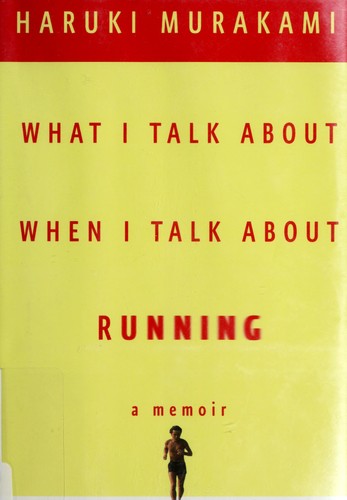
Talk to What I Talk About When I Talk About Running like its author wrote you back.
Get the ideas that fit your life — not generic summaries.
- Chat with the book
- Audiobook-style main ideas
- Adapts to your life and goals
- Helps you take action
What I Talk About When I Talk About Running, in detail
What I Talk About When I Talk About Running is Haruki Murakami's memoir of his life as a runner, written during training for the 2005 New York City Marathon. Murakami began running in 1982, the same year he started writing novels, and the book is his meditation on how the two disciplines have shaped and sustained each other over more than two decades. It is not a training manual or a dietary prescription — it is a quiet, reflective account of what daily physical discipline does to the mind of an artist.
Murakami's decision to run came with his decision to become a writer: he owned a jazz bar, worked late, smoked, and drank, and recognized that the writing life he wanted required a different body. He quit smoking, began running, and eventually ran marathons, ultramarathons, and triathlons — not competitively, but persistently, the same way he writes, through accumulation rather than brilliance. The parallel is not incidental to the book; Murakami explicitly develops the analogy between long-distance running and novel writing, both solitary, both requiring endurance rather than speed, both ultimately about what happens when you push past the comfortable and keep going.
The book unfolds in diary form across months of training, interspersed with memories of earlier races and reflections on aging. Murakami turned fifty during the writing and the book is partly a confrontation with the body's gradual limits: he notes his times slowing, his recovery taking longer, and the mental work required to maintain standards he held easily a decade earlier. He does not find this tragic — the acceptance of decline is one of the book's more affecting notes.
The writing is characteristically Murakami: understated, precise, and honest without being confessional. He is not trying to convince you to run, and he does not romanticize the experience. Pain is pain, boredom is boredom, and the rewards are mostly internal and difficult to communicate. What makes the book compelling is not the running itself but what Murakami discovers about his own nature through it — that he is not talented but persistent, that he is better off alone with a long goal than in company with a short one, that the body and the creative mind are less separate than most writers pretend.
The big ideas
- 1.
Running and writing share the same essential qualities: both require accumulation over time, solitude, endurance through discomfort, and a willingness to do the same thing day after day without immediate reward.
- 2.
Talent matters less than persistence: Murakami is explicit that he is not a gifted runner or a naturally gifted writer, and that consistency and will are the things he actually controls.
- 3.
The decision to run coincided with the decision to become a serious novelist — changing his body and his schedule was inseparable from changing what his art would require of him.
