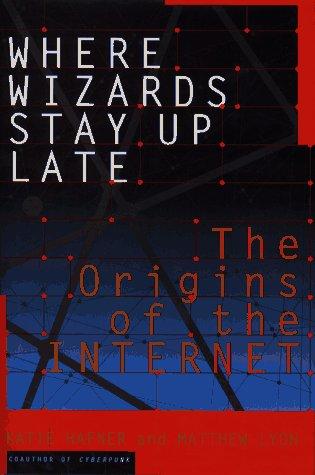
Talk to Where Wizards Stay Up Late like its author wrote you back.
Get the ideas that fit your life — not generic summaries.
- Chat with the book
- Audiobook-style main ideas
- Adapts to your life and goals
- Helps you take action
What it argues
Where Wizards Stay Up Late is the history of ARPANET, the government-funded network that became the technical foundation of the internet. Katie Hafner and Matthew Lyon trace the project from its origins in the Defense Department's Advanced Research Projects Agency in the early 1960s through the first live transmissions in 1969 and the gradual growth of the network through the 1970s. The book is built from interviews with the actual engineers — J.C.R. Licklider, Larry Roberts, Bob Kahn, Vint Cerf, and dozens of others — and from technical documents that had not been widely read outside the research community.
The story Hafner and Lyon tell is less heroic and more mundane than the mythology that surrounds the internet's creation. ARPANET was a military research program, but its founders were motivated more by scientific curiosity and practical convenience than by any grand vision of a global communications network. The early meetings were fractious; nobody agreed on how the system should work; the specifications were written by graduate students at a time when senior researchers couldn't be bothered. The first message sent over the network crashed it after two characters. Much of what made ARPANET work was improvised and accidental.
What it gets right
- 1.
ARPANET was funded by the Department of Defense but driven by academic researchers who were more interested in computer science problems than military applications.
- 2.
Packet switching — breaking data into discrete packets that travel independently and reassemble at the destination — was the foundational technical idea that made the internet possible. It was not obvious, and it had serious skeptics.
- 3.
The first message sent over ARPANET in October 1969 was meant to be 'login.' The network crashed after the first two characters. The internet's birth was not auspicious.
What it covers
Who wrote it
Katie Hafner is a journalist and author who covered technology for Newsweek, the New York Times, and other publications. Matthew Lyon was a writer and researcher focused on computing history. Hafner later wrote The Well: A Story of Love, Death, and Real Life in the Seminal Online Community and Mother Daughter Me. Where Wizards Stay Up Late, published in 1996, was based on extensive interviews with the engineers and administrators who built ARPANET, many of whom had never spoken publicly about the project in depth.
