Talk to Wherever You Go, There You Are like its author wrote you back.
Get the ideas that fit your life — not generic summaries.
- Chat with the book
- Audiobook-style main ideas
- Adapts to your life and goals
- Helps you take action
Wherever You Go, There You Are, in detail
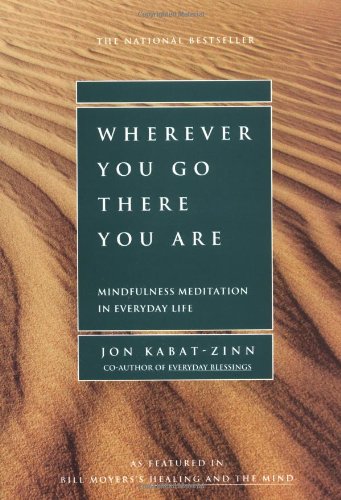
Wherever You Go, There You Are is Jon Kabat-Zinn's accessible introduction to mindfulness as a way of living rather than a formal therapeutic program. Published in 1994, four years after Full Catastrophe Living, the book distills the essence of mindfulness practice into short, readable chapters organized around specific aspects of awareness: stopping, sitting, breath, walking, lying down, being present in everyday activities, and relating to the thinking mind. It became one of the most widely read mindfulness books of its era and is still frequently the first book people encounter on the subject.
The premise is the book's title: wherever you go, there you are. No amount of travel, achievement, acquisition, or self-improvement will put you in a different relationship with your own mind. The content of life changes but the observer — the awareness that is present for all of it — remains. Mindfulness is the practice of meeting that awareness directly, rather than being perpetually swept along by the stream of thought, planning, and reaction that constitutes ordinary human consciousness.
Kabat-Zinn's voice here is warmer and more meditative than in Full Catastrophe Living. The chapters are short — most are two to five pages — and many are more poetic reflection than instruction. He covers the same core practices (breath awareness, body scanning, walking meditation) but with less clinical detail and more evocative description. The brevity and accessibility make the book a good companion to daily practice — chapters can be read in the moments before or after sitting, or as invitations to a particular quality of attention during daily activities.
What the book does not provide is a structured program or systematic evidence base. For readers who want to know whether mindfulness works and why, Full Catastrophe Living is more appropriate. Wherever You Go is better suited to someone already drawn to the practice who wants a gentle, ongoing source of encouragement and perspective. At its best, the book models the quality of attention it describes — unhurried, open, and willing to rest in uncertainty.
The big ideas
- 1.
Mindfulness is not about achieving a particular mental state but about relating differently to whatever mental state is present — observing without automatically reacting or identifying.
- 2.
The present moment is the only place life actually happens; ruminating on the past and planning the future are useful but they consume the majority of most people's conscious time at the cost of actual presence.
- 3.
Sitting still, even briefly, is itself a countercultural act in a world that values perpetual motion and productivity; learning to be comfortable with stillness is a foundational skill.
