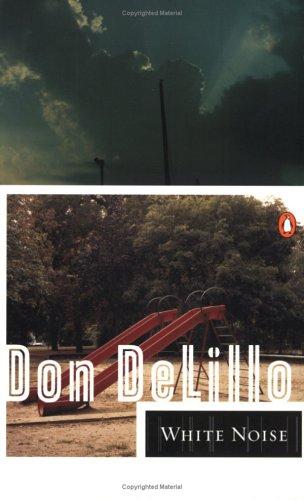
Talk to White Noise like its author wrote you back.
Get the ideas that fit your life — not generic summaries.
- Chat with the book
- Audiobook-style main ideas
- Adapts to your life and goals
- Helps you take action
White Noise, in detail
Don DeLillo's 1985 National Book Award winner follows Jack Gladney, professor of Hitler Studies at the fictional College-on-the-Hill, through domestic life with his fourth wife Babette and their assembled blended family of children. The novel's first half is comedic and deliberately surface-level: supermarket trips, television noise, academic absurdity, brand names in lists. Jack is likeable and anxious. His anxiety has a specific subject: he is afraid of death, and so is Babette, and their marriage is partly an alliance against that shared fear.
The novel's second half turns on an industrial accident — the "Airborne Toxic Event," a chemical cloud released by a train derailment — which forces the family to evacuate and exposes Jack to a dose of a toxic substance called Nyodene D. From there, the novel darkens: Jack discovers that Babette has been taking an experimental drug called Dylar, which is supposed to eliminate the fear of death, and that she obtained it through a transaction he finds devastating. The comedy doesn't disappear but it shifts register, and DeLillo's prose — always charged with a low hum of cultural static — becomes something stranger and more menacing.
DeLillo was one of the first American novelists to seriously engage with media saturation as a condition of consciousness rather than a background fact. The television in Jack's house runs constantly; brand names accumulate in the prose like cultural sediment; media coverage of the Airborne Toxic Event shapes the family's experience of it in real time. The "white noise" of the title is both the domestic hum of consumer life and the static that prevents any signal — any real confrontation with death — from coming through clearly.
White Noise is funny, which surprises readers who expect DeLillo to be difficult. The academic satire in the opening sections is sharp, and Jack's interior monologue has a paranoid vividness that makes the absurd feel precisely observed. The novel has dated in specific ways — the media landscape of 1985 is recognizable but not identical to now — and not at all in others. The death anxiety at its center is evergreen.
The big ideas
- 1.
Consumer culture, in DeLillo's reading, functions as a collective anesthetic against death anxiety — the supermarket is a cathedral, and its promises are essentially religious.
- 2.
Jack's Hitler Studies specialty is treated as a symptom: he chose the most concentrated example of death and mass fear in modern history as his professional subject, and the irony is that it doesn't help him manage his own fear.
- 3.
The Airborne Toxic Event shows how media coverage mediates experience — the family compares their experience to the news reports of their experience in real time, unsure which is more real.
