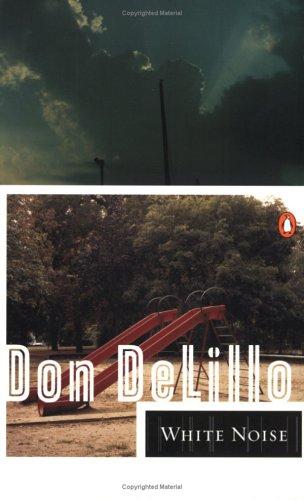
White Noise by Don DeLillo is a 1985 literary fiction book about death anxiety, consumer culture, media and reality. Consumer culture, in DeLillo's reading, functions as a collective anesthetic against death anxiety — the supermarket is a cathedral, and its promises are essentially religious.
Summary
Don DeLillo's 1985 National Book Award winner follows Jack Gladney, professor of Hitler Studies at the fictional College-on-the-Hill, through domestic life with his fourth wife Babette and their assembled blended family of children. The novel's first half is comedic and deliberately surface-level: supermarket trips, television noise, academic absurdity, brand names in lists. Jack is likeable and anxious. His anxiety has a specific subject: he is afraid of death, and so is Babette, and their marriage is partly an alliance against that shared fear.
The novel's second half turns on an industrial accident — the "Airborne Toxic Event," a chemical cloud released by a train derailment — which forces the family to evacuate and exposes Jack to a dose of a toxic substance called Nyodene D. From there, the novel darkens: Jack discovers that Babette has been taking an experimental drug called Dylar, which is supposed to eliminate the fear of death, and that she obtained it through a transaction he finds devastating. The comedy doesn't disappear but it shifts register, and DeLillo's prose — always charged with a low hum of cultural static — becomes something stranger and more menacing.
DeLillo was one of the first American novelists to seriously engage with media saturation as a condition of consciousness rather than a background fact. The television in Jack's house runs constantly; brand names accumulate in the prose like cultural sediment; media coverage of the Airborne Toxic Event shapes the family's experience of it in real time. The "white noise" of the title is both the domestic hum of consumer life and the static that prevents any signal — any real confrontation with death — from coming through clearly.
White Noise is funny, which surprises readers who expect DeLillo to be difficult. The academic satire in the opening sections is sharp, and Jack's interior monologue has a paranoid vividness that makes the absurd feel precisely observed. The novel has dated in specific ways — the media landscape of 1985 is recognizable but not identical to now — and not at all in others. The death anxiety at its center is evergreen.
Talk to White Noise like its author wrote you back.
Get the ideas that fit your life — not generic summaries.
- Chat with the book
- Audiobook-style main ideas
- Adapts to your life and goals
- Helps you take action
Key takeaways
- 1.
Consumer culture, in DeLillo's reading, functions as a collective anesthetic against death anxiety — the supermarket is a cathedral, and its promises are essentially religious.
- 2.
Jack's Hitler Studies specialty is treated as a symptom: he chose the most concentrated example of death and mass fear in modern history as his professional subject, and the irony is that it doesn't help him manage his own fear.
- 3.
The Airborne Toxic Event shows how media coverage mediates experience — the family compares their experience to the news reports of their experience in real time, unsure which is more real.
- 4.
Babette and Jack's shared death anxiety binds them together but also produces a competitive quality: each claims to fear death more than the other, as if the greater fear confers some status.
- 5.
Dylar — the experimental drug that supposedly eliminates the fear of death — is a savage joke about pharmaceutical culture and the American conviction that every problem has a chemical solution.
- 6.
The supermarket scenes are DeLillo's most formally accomplished: the prose saturates in brand names and product categories to produce a kind of ecstatic materialism.
- 7.
The novel's ending — back in the supermarket, with the sunset rearranged — is characteristically unresolved. DeLillo is not offering resolution, only a continued hum.
- 8.
White Noise anticipated the media-saturated, anxiety-managed quality of late-capitalist American life more precisely than almost any other novel of its era.
Discussion questions
Use these on your own, with a book club, or as chat starters in Superbook. Book club version, ready to copy or print →
- 1.
Jack is afraid of death but surrounds himself with an academic specialty in mass death. Does that make him a hypocrite, or is there a kind of logic to it?
- 2.
DeLillo lists brand names and product categories throughout the novel as prose texture. Did you find that technique illuminating or gimmicky? What is he claiming about American consciousness?
- 3.
The Airborne Toxic Event sections show the family watching news coverage of themselves. What is DeLillo saying about the relationship between media representation and lived experience?
- 4.
Babette takes Dylar in exchange for a transaction that devastates Jack. Is his response proportionate? Is the nature of what he feels jealousy, or something more specific?
- 5.
The novel was published in 1985. What has changed about the media landscape that makes it feel different now? What has stayed the same?
- 6.
DeLillo suggests that consumer culture functions as a substitute religion — that the supermarket provides a kind of transcendence. Is that reading convincing, or is it too clever?
- 7.
The academic satire — the department of Hitler Studies, the conference scenes, Murray's celebrity studies — is very funny. Does it earn its place in a novel about death anxiety, or is it a different book grafted on?
- 8.
Babette and Jack talk about their fear of death constantly but around each other. Is their marriage an honest partnership or a mutual conspiracy to avoid the truth?
- 9.
The ending returns to the supermarket with the shelves rearranged, and the tone is both elegiac and absurd. Did that ending satisfy you, frustrate you, or something more ambivalent?
- 10.
Murray is Jack's academic colleague and functions as a kind of philosophical chorus — he keeps reframing everything. Is he a reliable guide to the novel's meanings, or is he as lost as Jack?
- 11.
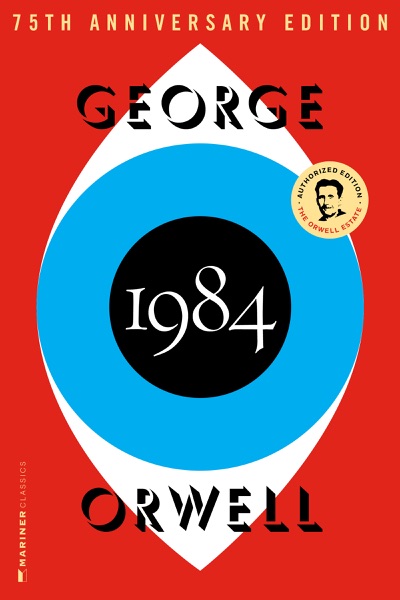
Compared to 1984 as a novel about media and control, White Noise is much warmer and funnier. What does DeLillo gain by domesticating his dystopia in that way?
Themes
Frequently asked questions
-
Is White Noise funny?
Yes, surprisingly so for a novel about death anxiety. The academic satire is sharp and the domestic scenes have a deadpan absurdity. The comedy and the dread operate simultaneously rather than alternating — DeLillo keeps both registers active throughout.
-
Do I need to know postmodern theory to read White Noise?
No. The novel is accessible to any general reader. Knowing Baudrillard's ideas about simulation and hyperreality enriches certain passages, but DeLillo dramatizes those ideas rather than requiring prior familiarity.
-
What is the Airborne Toxic Event?
A chemical cloud released by a train derailment near the town where Jack lives. It forces an evacuation and exposes Jack to a potentially lethal dose of a toxic compound. In the plot, it's a catalyst; thematically it's a way of forcing death from abstract anxiety to concrete threat.
-
Is there a film adaptation?
Yes. Noah Baumbach directed a 2022 Netflix adaptation starring Adam Driver and Greta Gerwig. It's an ambitious adaptation that captures the novel's tone reasonably well, though opinion on it is divided among fans of the book.
-
Who shouldn't read White Noise?
Readers who want a plot-driven narrative with clear resolution. The novel accumulates rather than builds — it's more a sustained atmosphere than a story. Also, if you're currently managing serious death anxiety, DeLillo doesn't offer a way out — only a very precise map of the territory.