Talk to Wonder like its author wrote you back.
Get the ideas that fit your life — not generic summaries.
- Chat with the book
- Audiobook-style main ideas
- Adapts to your life and goals
- Helps you take action
Wonder, in detail
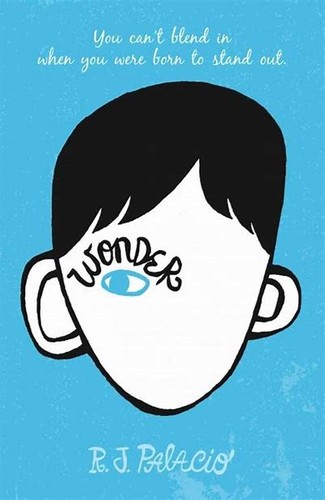
Auggie Pullman is ten years old and about to start fifth grade at a private school in New York City. He has a facial difference — the result of a rare genetic syndrome — and has been homeschooled his entire life. Wonder follows his first year at Beecher Prep: the cruelties and the kindnesses, the complicated politics of middle school friendships, and the gradual way the community shifts around him.
The novel is structured in multiple voices — Auggie, his sister Via, his friends Jack and Summer, and others — which allows Palacio to show how the same events look different from different vantage points. Each narrator reveals something the others miss or misread, and the cumulative portrait is of an ordinary school community changed by contact with someone who can't hide his difference. The central argument is that kindness is a choice, not a disposition, and that choosing it in the face of social pressure is harder than it sounds.
Wonder works on its audience in ways that are direct and unembarrassed. Palacio is not interested in irony or ambiguity — she wants you to root for Auggie and to think about whether you'd be the person who sat with him at lunch. That directness is both the book's greatest strength and its limitation: the emotional beats are reliable and earned, but the world the novel depicts is ultimately reassuring in ways that real middle schools are not. The characters who are cruel are given enough humanity to complicate the picture, but they are also punished with sufficient tidiness to feel like a moral fable rather than a documentary.
This is a book that is frequently read by children in schools and just as frequently read by adults who want something moving and affirmative. It works for both audiences, though it works differently. For children it's a mirror or a window; for adults it's a reminder that the social dynamics of middle school, the way hierarchies form and cruelties get performed, are not trivial. Anyone who was once twelve will recognize the landscape.
The big ideas
- 1.
Kindness is not instinctive in the face of social pressure; it requires a specific choice, and the novel takes that choice seriously rather than treating it as easy.
- 2.
The multiple-narrator structure makes the novel more honest about how differently the same events register — Via's experience of being Auggie's sister is as fully drawn as Auggie's own.
- 3.
Facial difference as a subject forces questions the novel doesn't fully answer: what are we actually looking at when we stare, and what does our discomfort reveal about us?
