Talk to Work Optional like its author wrote you back.
Get the ideas that fit your life — not generic summaries.
- Chat with the book
- Audiobook-style main ideas
- Adapts to your life and goals
- Helps you take action
What it argues
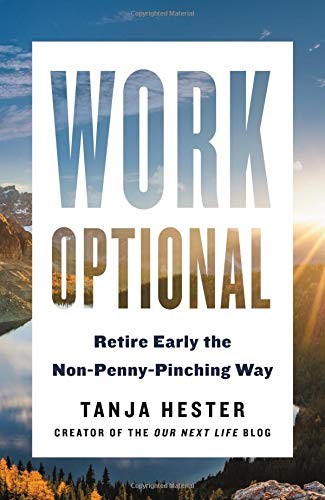
Work Optional is Tanja Hester's guide to retiring early or achieving a work-optional life — one where paid employment is a choice rather than a necessity. Hester and her husband left corporate careers in their late thirties, and the book is built from that experience alongside deep research into what actually makes early retirement sustainable. The central premise is that financial independence isn't a number you hit; it's a life you design first and fund second.
The book opens by pushing back on the default assumption that early retirement means doing nothing. Hester introduces a spectrum: full early retirement, semi-retirement, and career intermission. The right answer depends on what you actually want your days to look like, which requires honesty about purpose, identity, and social connection that most financial books skip entirely. She argues that people who retire early without this clarity often return to work not for money but because they didn't know what they were retiring to.
What it gets right
- 1.
Early retirement is not about doing nothing — it's about designing a life where work is optional. Defining that life before optimizing for it changes every financial decision downstream.
- 2.
Sequence-of-returns risk is the core danger in early retirement: a market downturn in the first few years can permanently damage a portfolio even if long-run returns are fine. Mitigation strategies include cash buffers and flexible spending.
- 3.
Healthcare costs are the largest underestimated expense for early retirees in the US. The gap between employer-sponsored coverage and market-rate individual coverage must be modeled explicitly.
What it covers
Who wrote it
Tanja Hester is a financial independence writer, activist, and the founder of the Our Next Life blog, which documented her and her husband's path to early retirement in their late thirties. She is also the author of Wallet Activism and hosts the Fairer Cents podcast focused on personal finance for women. Before retiring, she worked in political communications and consulting. Her writing on early retirement is notable for engaging with identity, purpose, and social justice alongside the standard financial mechanics.
