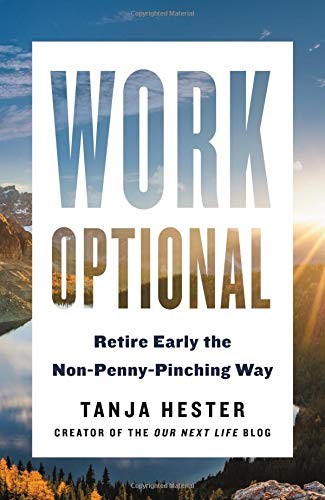
Work Optional by Tanja Hester is a 2019 economics book about early retirement, financial independence, life design. Early retirement is not about doing nothing — it's about designing a life where work is optional. Defining that life before optimizing for it changes every financial decision downstream.
Summary
Work Optional is Tanja Hester's guide to retiring early or achieving a work-optional life — one where paid employment is a choice rather than a necessity. Hester and her husband left corporate careers in their late thirties, and the book is built from that experience alongside deep research into what actually makes early retirement sustainable. The central premise is that financial independence isn't a number you hit; it's a life you design first and fund second.
The book opens by pushing back on the default assumption that early retirement means doing nothing. Hester introduces a spectrum: full early retirement, semi-retirement, and career intermission. The right answer depends on what you actually want your days to look like, which requires honesty about purpose, identity, and social connection that most financial books skip entirely. She argues that people who retire early without this clarity often return to work not for money but because they didn't know what they were retiring to.
The financial mechanics are thorough but accessible. Hester covers savings rates, safe withdrawal rates, the sequence-of-returns risk that makes early retirement more treacherous than conventional retirement, and how to handle healthcare — the cost most early retirees underestimate. She walks through account types, tax efficiency, and building a portfolio that can survive a forty- or fifty-year retirement without requiring constant active management. The math is honest: most people will need to save aggressively for a decade or more, and the book doesn't pretend otherwise.
What sets Work Optional apart from pure financial independence content is its sustained focus on the non-financial side. The final section addresses what retired life actually looks like: structuring days, maintaining relationships, contributing to community, and staying mentally engaged. Hester draws on interviews with dozens of people who have made the transition, and their accounts of unexpected challenges sit alongside their accounts of unexpected freedoms. The result is a book that treats early retirement as a design problem, not just a savings problem.
Talk to Work Optional like its author wrote you back.
Get the ideas that fit your life — not generic summaries.
- Chat with the book
- Audiobook-style main ideas
- Adapts to your life and goals
- Helps you take action
Key takeaways
- 1.
Early retirement is not about doing nothing — it's about designing a life where work is optional. Defining that life before optimizing for it changes every financial decision downstream.
- 2.
Sequence-of-returns risk is the core danger in early retirement: a market downturn in the first few years can permanently damage a portfolio even if long-run returns are fine. Mitigation strategies include cash buffers and flexible spending.
- 3.
Healthcare costs are the largest underestimated expense for early retirees in the US. The gap between employer-sponsored coverage and market-rate individual coverage must be modeled explicitly.
- 4.
A higher savings rate compresses the timeline dramatically. Going from a 15% to a 50% savings rate can cut years-to-retirement nearly in half because it simultaneously reduces spending and accelerates accumulation.
- 5.
Semi-retirement and career intermissions are legitimate intermediate options. Part-time or project work can reduce portfolio withdrawal rates enough to matter without requiring full-time employment.
- 6.
Identity and purpose require conscious attention before you leave work, not after. People who retire into a clear set of meaningful activities report far higher satisfaction than those who figure it out on the fly.
- 7.
Safe withdrawal rates around 3–3.5% are more appropriate for forty- to fifty-year retirements than the 4% rule designed for thirty-year conventional retirement horizons.
- 8.
Social infrastructure is as important as financial infrastructure. Early retirees who maintain strong community ties and peer relationships fare substantially better than those whose social lives were built around work.
Discussion questions
Use these on your own, with a book club, or as chat starters in Superbook. Book club version, ready to copy or print →
- 1.
Hester argues you should design the life you want before optimizing the finances to fund it. What does your ideal work-optional life actually look like on a Tuesday in February?
- 2.
She distinguishes full early retirement, semi-retirement, and career intermission. Which of these fits where you are right now — not where you wish you were?
- 3.
What would you be retiring to, not just from? If you stopped working tomorrow, what would fill the hours that currently have purpose?
- 4.
How would you describe your current relationship with work — is it identity, income, structure, social life, or some combination? Which of those would be hardest to replace?
- 5.
Hester is direct that most people need to save aggressively for a decade or more. What would you have to stop spending money on to get your savings rate above 40%?
- 6.
The book covers sequence-of-returns risk in detail. Had you accounted for this before reading, or were you planning for average returns?
- 7.
Healthcare costs are cited as the most underestimated expense. What is your actual plan for health insurance between early retirement and Medicare eligibility?
- 8.
What assumptions are you making about your spending in retirement that you've never tested by actually living on that amount?
- 9.
Hester interviewed many early retirees who struggled with unstructured time. What structures currently come from your work that you'd need to recreate deliberately?
- 10.
Which relationships in your life are primarily maintained through work proximity? What happens to those if you leave?
- 11.
If your savings rate is below 20%, what specific change would have the largest impact on it — income, housing, transportation, or something else?
- 12.
The book suggests a 3–3.5% withdrawal rate for long retirements. How does that change your target number compared to what you'd calculated using the 4% rule?
Themes
Frequently asked questions
-
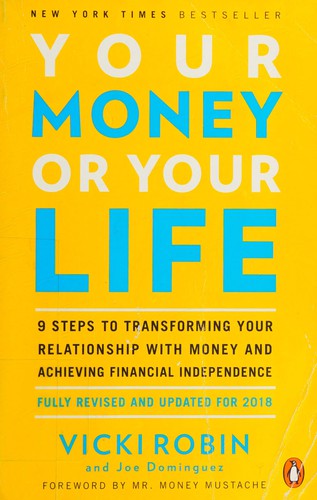
Is Work Optional worth reading if I've already read Your Money or Your Life?
Yes. Hester covers similar philosophical ground but goes further on the practical mechanics of early retirement, particularly sequence-of-returns risk, healthcare costs, and the non-financial transition. The two books complement each other well.
-
How long does it take to read Work Optional?
Around four to five hours at an average reading pace. The financial chapters reward slower reading and calculation; the life-design chapters move faster.
-
What is the main difference between Work Optional and standard FIRE content?
Hester spends significantly more time on the psychological and social dimensions of early retirement — what you're retiring to, how to handle identity loss, and how to structure a meaningful life without work — than most financial independence writing, which focuses primarily on the math.
-
Who should read Work Optional?
People in their thirties and forties who are saving aggressively but haven't thought carefully about what life after work actually looks like. It's also useful for anyone who has hit a number on paper but isn't sure they're emotionally ready to leave.
-
Does the book apply outside the United States?
The financial mechanics — savings rates, portfolio structure, withdrawal rates — are broadly applicable. The healthcare coverage discussion is US-specific and readers in countries with public health systems will need to translate that section to their context.