Talk to Work Optional like its author wrote you back.
Get the ideas that fit your life — not generic summaries.
- Chat with the book
- Audiobook-style main ideas
- Adapts to your life and goals
- Helps you take action
Work Optional, in detail
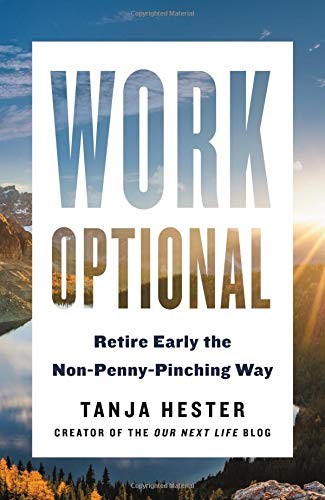
Work Optional is Tanja Hester's guide to retiring early or achieving a work-optional life — one where paid employment is a choice rather than a necessity. Hester and her husband left corporate careers in their late thirties, and the book is built from that experience alongside deep research into what actually makes early retirement sustainable. The central premise is that financial independence isn't a number you hit; it's a life you design first and fund second.
The book opens by pushing back on the default assumption that early retirement means doing nothing. Hester introduces a spectrum: full early retirement, semi-retirement, and career intermission. The right answer depends on what you actually want your days to look like, which requires honesty about purpose, identity, and social connection that most financial books skip entirely. She argues that people who retire early without this clarity often return to work not for money but because they didn't know what they were retiring to.
The financial mechanics are thorough but accessible. Hester covers savings rates, safe withdrawal rates, the sequence-of-returns risk that makes early retirement more treacherous than conventional retirement, and how to handle healthcare — the cost most early retirees underestimate. She walks through account types, tax efficiency, and building a portfolio that can survive a forty- or fifty-year retirement without requiring constant active management. The math is honest: most people will need to save aggressively for a decade or more, and the book doesn't pretend otherwise.
What sets Work Optional apart from pure financial independence content is its sustained focus on the non-financial side. The final section addresses what retired life actually looks like: structuring days, maintaining relationships, contributing to community, and staying mentally engaged. Hester draws on interviews with dozens of people who have made the transition, and their accounts of unexpected challenges sit alongside their accounts of unexpected freedoms. The result is a book that treats early retirement as a design problem, not just a savings problem.
The big ideas
- 1.
Early retirement is not about doing nothing — it's about designing a life where work is optional. Defining that life before optimizing for it changes every financial decision downstream.
- 2.
Sequence-of-returns risk is the core danger in early retirement: a market downturn in the first few years can permanently damage a portfolio even if long-run returns are fine. Mitigation strategies include cash buffers and flexible spending.
- 3.
Healthcare costs are the largest underestimated expense for early retirees in the US. The gap between employer-sponsored coverage and market-rate individual coverage must be modeled explicitly.
