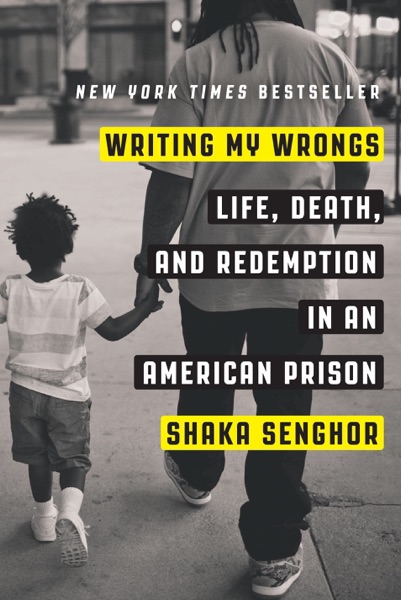
Talk to Writing My Wrongs like its author wrote you back.
Get the ideas that fit your life — not generic summaries.
- Chat with the book
- Audiobook-style main ideas
- Adapts to your life and goals
- Helps you take action
Writing My Wrongs, in detail
Writing My Wrongs is Shaka Senghor's account of his journey from a childhood marked by abuse and neglect in Detroit, through a murder conviction and nineteen years in Michigan prisons — seven of them in solitary confinement — to his emergence as a writer, activist, and advocate for criminal justice reform. It is a memoir of accountability as much as survival.
Senghor does not write from the position of innocence. He killed a man at nineteen during a drug deal gone wrong, and he holds that fact clearly throughout the book without hiding behind circumstance. What the memoir traces instead is the internal transformation that made it possible for him to move from that act toward responsibility, empathy, and purpose. Reading and writing are the engines of that transformation. In solitary, Senghor read voraciously — Malcolm X, James Baldwin, African history — and eventually started writing, producing journals that became the raw material for this book. The act of writing forced him to examine his choices with the kind of honest attention that passive reading alone cannot generate.
The prison system Senghor describes is designed, in his account, not to rehabilitate but to further damage. Solitary confinement strips away the conditions that make human development possible. The guards and administrators he portrays are not cartoon villains but human beings operating within a system that routinely produces dehumanizing outcomes. Senghor writes about violence, trauma, and institutional cruelty with directness but without gratuitous emphasis — the point is understanding, not sensationalism.
The book ends with Senghor's release and his navigation of a world that expects former prisoners to fail, and his work connecting with young people heading toward the choices he once made. Writing My Wrongs is not a policy argument, but it is evidence: evidence that transformation is possible under the worst conditions, and that the narrative society tells about who can or cannot change is wrong.
The big ideas
- 1.
Accountability and victimhood are not mutually exclusive. Senghor was shaped by trauma and still responsible for the harm he caused. The memoir holds both simultaneously.
- 2.
Solitary confinement inflicts psychological damage that makes rehabilitation harder, not easier. The conditions that are supposed to punish also prevent growth.
- 3.
Literacy — in the deepest sense, learning to read one's own life through books and writing — is a form of transformation that prisons often cannot completely suppress.
