Talk to Writings on Art like its author wrote you back.
Get the ideas that fit your life — not generic summaries.
- Chat with the book
- Audiobook-style main ideas
- Adapts to your life and goals
- Helps you take action
What it argues
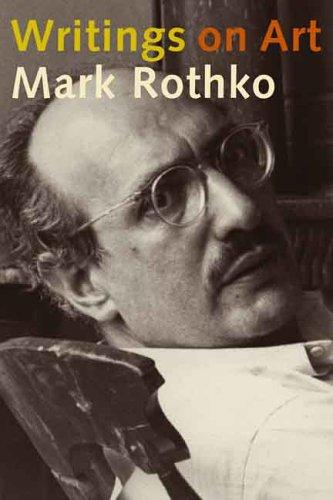
Mark Rothko spent decades writing about painting before most people knew his name. This volume, edited by Miguel López-Remiro and published posthumously, collects his essays, statements, and letters from roughly 1934 to 1969 — tracing his thinking from his figurative Social Realist period through the development of the transcendent color-field work that made him famous. The writing is dense and philosophical, far removed from any how-to manual about painting.
The core argument running through almost everything Rothko wrote is that painting should produce an emotional and even spiritual experience in the viewer — not illustration, not decoration, not formal exercise. He was deeply influenced by Nietzsche's analysis of tragedy and by Jungian ideas about myth, and he believed that art capable of moving people had to connect to something ancient and universal. His famous later canvases — those hovering rectangles of color — were his attempt to create conditions for that experience without representation getting in the way.
What it gets right
- 1.
Rothko believed painting should be capable of tragedy, not merely beauty — he wanted his work to produce a confrontation with mortality and suffering, not pleasure.
- 2.
His shift from figurative to abstract painting was not a formal experiment but a response to his conviction that representation had become inadequate to express what he needed to express.
- 3.
Nietzsche and myth were central references: Rothko read The Birth of Tragedy carefully and saw color-field painting as the modern equivalent of ancient ritual experience.
What it covers
Who wrote it
Mark Rothko (1903–1970) was an American painter of Latvian-Jewish origin and one of the central figures of Abstract Expressionism. Born Marcus Yakovlevich Rothkowitz in Dvinsk, he immigrated to the United States in 1913. He studied briefly at Yale, then moved to New York and began painting in the early 1930s. His mature color-field style emerged in the late 1940s and defined the last two decades of his career. The Seagram Murals, the Rothko Chapel in Houston, and major holdings at the Tate Modern and MoMA represent the scale of his legacy. He died by suicide in his studio in 1970.
