Talk to Writings on Art like its author wrote you back.
Get the ideas that fit your life — not generic summaries.
- Chat with the book
- Audiobook-style main ideas
- Adapts to your life and goals
- Helps you take action
Writings on Art, in detail
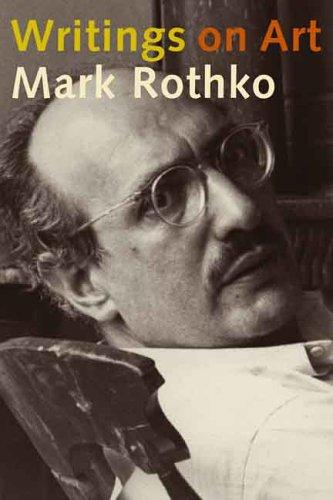
Mark Rothko spent decades writing about painting before most people knew his name. This volume, edited by Miguel López-Remiro and published posthumously, collects his essays, statements, and letters from roughly 1934 to 1969 — tracing his thinking from his figurative Social Realist period through the development of the transcendent color-field work that made him famous. The writing is dense and philosophical, far removed from any how-to manual about painting.
The core argument running through almost everything Rothko wrote is that painting should produce an emotional and even spiritual experience in the viewer — not illustration, not decoration, not formal exercise. He was deeply influenced by Nietzsche's analysis of tragedy and by Jungian ideas about myth, and he believed that art capable of moving people had to connect to something ancient and universal. His famous later canvases — those hovering rectangles of color — were his attempt to create conditions for that experience without representation getting in the way.
Rothko was scornful of critics who read his work as purely formal or optical. He wanted presence, not aesthetics. His letters and public statements push back repeatedly against collectors who treated his paintings as decoration and against the art world's tendency to flatten meaning into style. His famous refusal to sell paintings to the Four Seasons restaurant — recounted here through correspondence — is one of the better-documented cases of an artist refusing to let his work be misused.
Reading Rothko's prose alongside his biography adds a layer of pathos. He grew increasingly convinced that the transcendent project he'd committed to was being misunderstood, co-opted, or simply ignored. The late writings carry a heaviness that mirrors the darkening of his palette in the Seagram Murals and the Harvard Reds. For anyone interested in what an abstract painter actually thought he was doing, and why he believed it mattered, this collection is an essential primary source.
The big ideas
- 1.
Rothko believed painting should be capable of tragedy, not merely beauty — he wanted his work to produce a confrontation with mortality and suffering, not pleasure.
- 2.
His shift from figurative to abstract painting was not a formal experiment but a response to his conviction that representation had become inadequate to express what he needed to express.
- 3.
Nietzsche and myth were central references: Rothko read The Birth of Tragedy carefully and saw color-field painting as the modern equivalent of ancient ritual experience.
