Memoir · Book club
Yes Please book club questions
Here are 12 book club questions for Yes Please by Amy Poehler, ordered to open easily and end somewhere worth arguing about. Copy them, print them, or bring them up one at a time.
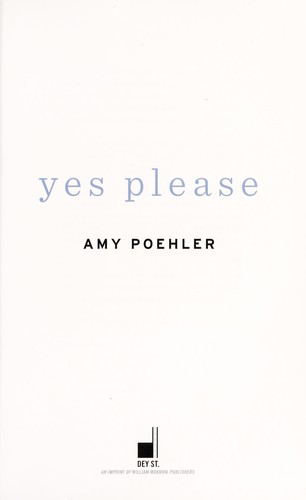
Yes Please is Amy Poehler's memoir-ish collection of essays about her life, career, and the things she's figured out along the way.
Amy Poehler · 2014 · 5h 30m
Full summary and key takeaways →The 12 questions
- 1.
Poehler describes improv training as the best preparation for her career. What activity or discipline in your own past has shaped how you handle uncertainty?
- 2.
She argues that 'good for her, not for me' is the most useful phrase for navigating other people's choices. Where in your life do you struggle to apply it?
- 3.
The book is deliberately non-linear and disorganized in places. Does that format work for you in a memoir? Why or why not?
- 4.
Poehler is candid about the specific pressures women face in entertainment. Do you see analogous dynamics in industries you know well?
- 5.
She writes about the difference between a real apology and a performed one. Think of an apology you've given or received. Which was it?
- 6.
The chapter on sleep is half-joking. But underneath it is a point about whose needs get treated as legitimate. What needs of your own do you treat as negotiable?
- 7.
Poehler says she wanted fame before she fully understood what it would cost. What did you pursue that came with costs you didn't anticipate?
- 8.
She's open about the difficulty of writing the book while it was happening. Does creative work feel more authentic when the struggle is visible, or does it undermine the result?
- 9.
The friendship between Poehler and Fey is written about warmly but not sentimentally. What does a friendship look like when genuine admiration and honest competition coexist?
- 10.
Poehler distinguishes between ambition as energy and ambition as identity. Is there a version of ambition you've seen — in yourself or others — that turned corrosive?
- 11.
She says your career is not your life. How do you actually live that distinction when your career is going well? When it's going badly?
- 12.
What would the 'yes, and' rule look like applied to your most stuck relationship or project right now?
How to run the discussion
- Pick six to eight, not all of them. An hour of real discussion covers fewer questions than anyone expects, and racing the list is what makes a book club feel like homework.
- Open with what people noticed, not what they concluded. Asking for a verdict first hardens opinions before anyone has heard each other.
- Let the disagreement run. The questions below that split a room are the ones worth the time; the ones everyone answers the same way can be skipped.
- Ask the quiet person a specific question. A direct, narrow question is far easier to answer than an open invitation to contribute.
Themes worth steering toward
If the conversation stalls, these are the threads that usually restart it.
Common questions
What are good book club questions for Yes Please?
Here are 12 book club questions for Yes Please by Amy Poehler, ordered to open easily and end somewhere worth arguing about. The strongest openers ask what each reader noticed rather than what they concluded, and the discussion usually turns on comedy, women in entertainment, self-acceptance.
How long should a book club discussion of Yes Please last?
Most groups run 60 to 90 minutes of actual discussion. That is roughly six to eight questions, not all of them, so pick the ones that suit your group rather than working down the list in order.
What are the main themes in Yes Please?
Comedy, Women in entertainment, Self-acceptance, Ambition, Friendship. Those are the threads most likely to divide a room, which makes them the useful places to steer a discussion that has gone quiet.
Picking the next one? See books like Yes Please or questions for other book club picks.
