Self-help · Book club
12 Rules for Life book club questions
Here are 12 book club questions for 12 Rules for Life by Jordan Peterson, ordered to open easily and end somewhere worth arguing about. Copy them, print them, or bring them up one at a time.
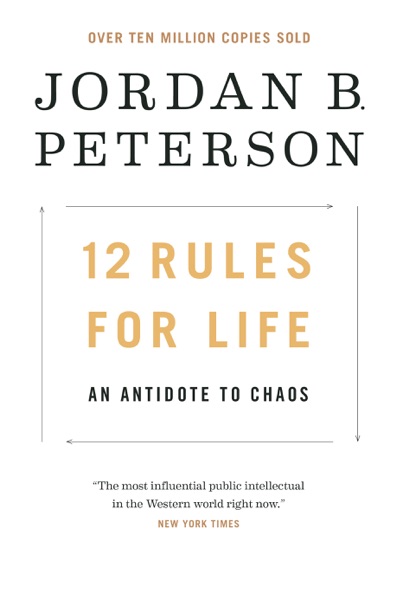
12 Rules for Life is Jordan Peterson's attempt to distill what clinical psychology, comparative mythology, the Bible, and evolutionary biology say about how to live.
Jordan Peterson · 2018 · 8h 0m
Full summary and key takeaways →The 12 questions
- 1.
Peterson argues that meaning is more important than happiness as a life goal. Does that distinction feel real to you from your own experience?
- 2.
The book's rule about telling the truth extends beyond outright lying to 'say only what you genuinely believe.' How much of your typical day involves small speech acts that violate that standard?
- 3.
Peterson's argument about responsibility resonates with many readers who feel over-explained-to and under-challenged. Do you think he diagnoses a real cultural pathology, or is his critique too broad?
- 4.
The evolutionary and mythological framings that Peterson uses — lobsters and the Bible, Jungian archetypes and neuroscience — are the most contested parts of the book. Do you find the connections illuminating or overreached?
- 5.
The rule 'clean your room' is explicitly a prescription for small, manageable steps toward order. Where in your own life would a literal or metaphorical 'clean your room' be the right intervention?
- 6.
Peterson says that comparisons with other people corrode motivation, while comparisons with your past self produce useful information. How do you currently use comparison, and does it serve you?
- 7.
Several chapters deal with raising children — specifically that parents should not be their child's friend and that children need limits. Do you find this perspective useful or problematic?
- 8.
The book is partly a clinical record: Peterson has treated many people who have destroyed their lives through evasion of responsibility. How does that clinical context change how you receive the prescriptions?
- 9.
Some readers find Peterson's book genuinely life-changing; others find it overblown and the mythological scaffolding unnecessary. What determines whether this kind of philosophically heavy self-help resonates with someone?
- 10.
Peterson frames chaos and order as fundamental categories. Can you think of a time when you moved too far toward one extreme and what it cost you?
- 11.
The book is explicitly anti-ideological in some ways but is widely perceived as politically aligned. How much does the political reception of a book of ideas affect your ability to evaluate it on its own terms?
- 12.
Peterson's core message is that individuals should focus on their own transformation before attempting to transform the world. Is that an inspiring principle, a deflection from structural problems, or both?
How to run the discussion
- Pick six to eight, not all of them. An hour of real discussion covers fewer questions than anyone expects, and racing the list is what makes a book club feel like homework.
- Open with what people noticed, not what they concluded. Asking for a verdict first hardens opinions before anyone has heard each other.
- Let the disagreement run. The questions below that split a room are the ones worth the time; the ones everyone answers the same way can be skipped.
- Ask the quiet person a specific question. A direct, narrow question is far easier to answer than an open invitation to contribute.
Themes worth steering toward
If the conversation stalls, these are the threads that usually restart it.
Common questions
What are good book club questions for 12 Rules for Life?
Here are 12 book club questions for 12 Rules for Life by Jordan Peterson, ordered to open easily and end somewhere worth arguing about. The strongest openers ask what each reader noticed rather than what they concluded, and the discussion usually turns on responsibility, meaning, order and chaos.
How long should a book club discussion of 12 Rules for Life last?
Most groups run 60 to 90 minutes of actual discussion. That is roughly six to eight questions, not all of them, so pick the ones that suit your group rather than working down the list in order.
What are the main themes in 12 Rules for Life?
Responsibility, Meaning, Order and chaos, Personal development, Psychology. Those are the threads most likely to divide a room, which makes them the useful places to steer a discussion that has gone quiet.
Picking the next one? See books like 12 Rules for Life or questions for other book club picks.
